
#airline pet travel
#pet carrier liner
#pet carriers
#pet deals
#pet travel
A cheap pet carrier liner can be a bad deal if it slips, bunches up, blocks airflow, or leaks through the soft carrier before you reach the gate. The liner is not the main travel safety item; it is a backup layer for messes inside a carrier that still has to fit your pet and satisfy the airline’s rules. Before buying a multi-pack, check the exact floor size, absorbency claim, backing material and whether you can remove it without opening the carrier in a crowded airport.
Summer travel is the reason this small product is worth checking now. Airlines continue to require pets to stay inside approved carriers during airport and onboard travel, and longer travel days make accidents, spilled water and stress drool more likely. A liner can help, but it cannot fix a carrier that is too small, poorly ventilated or hard to clean.
Why the liner matters more than the listing photo
Most carrier-liner listings look simple: a soft pad, a waterproof layer and a promise that it fits common crates or airline carriers. The problem is that soft-sided carriers vary in floor shape, taper and seam placement. A pad that is technically the right length may curl up at the ends, cover a mesh panel near the floor, or leave a gap where urine can run underneath.
For in-cabin travel, the carrier remains the controlling purchase. American Airlines says carry-on pets are limited to cats and dogs that meet size, age and destination requirements, while Delta says pets traveling as carry-ons must remain in the kennel in the airport and onboard. USDA APHIS also reminds travelers that pet paperwork and destination rules can take time, especially for international trips. A liner should support those requirements, not make the carrier bulkier or less breathable.
The checkout checks that prevent a messy trip
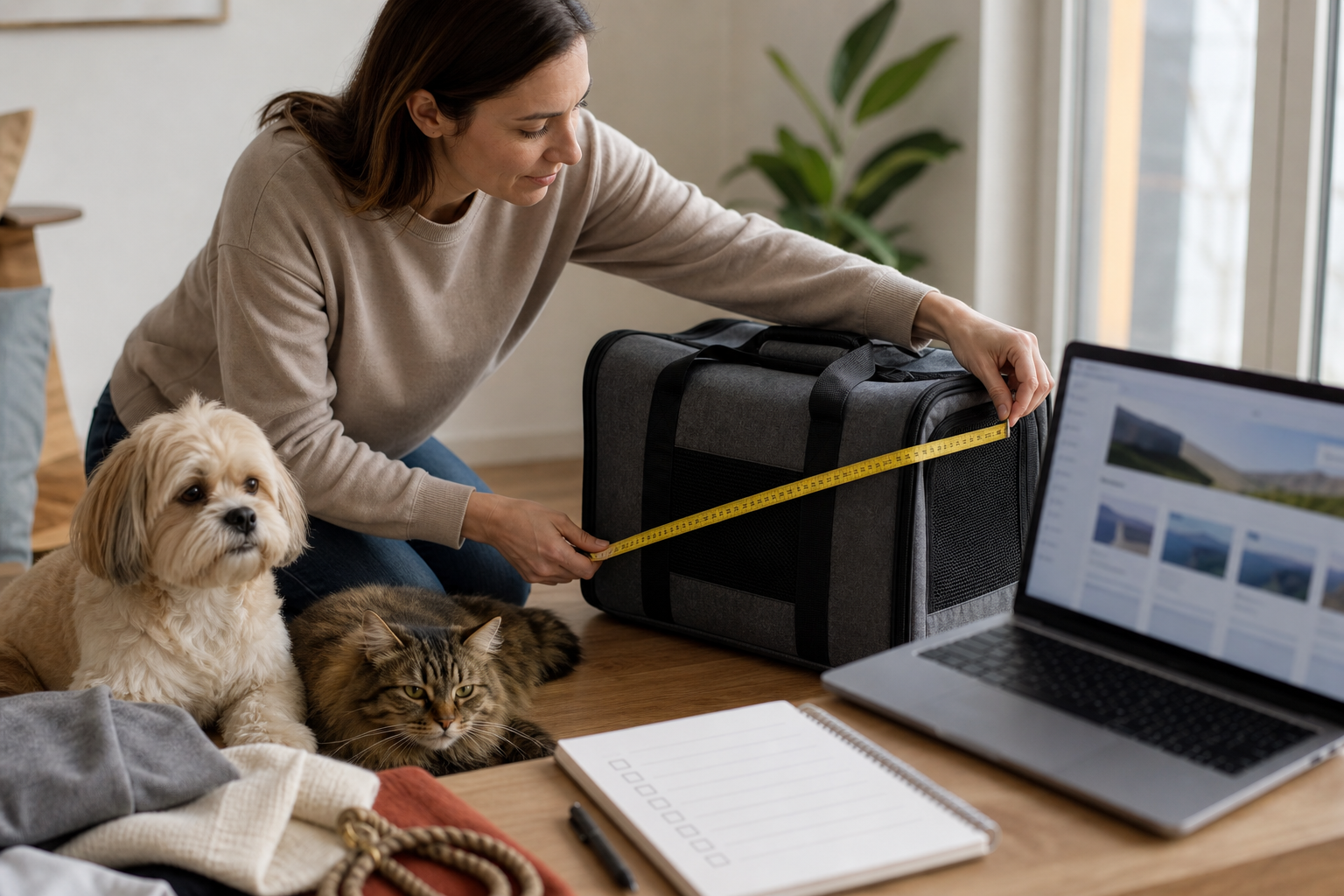
Measure the inside floor of the carrier, not the outside dimensions on the product page. If the carrier has rounded corners, a raised seam or a removable base board, measure the usable flat area. A liner that is slightly too large can bunch under a nervous cat or small dog, and a liner that is too small can let liquid reach the seams.
Check the backing. “Water-resistant” and “waterproof” are not the same shopping claim. A reusable pad also needs a clear washing and drying routine, because a liner that takes too long to dry may not be ready for the return trip. Disposable pads should be easy to swap, but they should not shred into loose fluff if your pet digs or turns around.
Think about thickness. American Airlines Cargo’s kennel guidance for transported animals says absorbent material such as blankets, towels or beds can go on the bottom, but bedding should not exceed 3 inches in height. In-cabin rules differ by airline, but the same practical idea matters: extra padding should not steal the space your pet needs to stand, turn and lie naturally.
When a deal is not really a deal
A large multipack looks cheaper until half the pads do not fit your carrier. Before paying, compare cost per usable liner, not cost per pad. If you travel rarely, a smaller pack that fits the exact carrier may beat a bulk box that sits in a closet or curls at the corners.
For washable liners, check whether the seller offers the dimensions after washing, not just the new-product size. Read the return policy before opening a sealed multipack, because some hygiene products may be hard to return after use. If a coupon only applies after a shipping threshold, do the math without adding filler items your pet does not need.
Also watch the phrase “airline approved.” A liner does not make a carrier airline approved. Airline acceptance depends on the carrier, the route, aircraft limits, pet size, reservation rules and the agent’s check on the day of travel. Treat that phrase as marketing unless the carrier itself matches your airline’s current policy.
What to avoid
Avoid scented liners for travel unless your veterinarian has already cleared the product for your pet. Strong fragrance can make a confined carrier more unpleasant, especially for cats. Avoid loose towel stacks that slide around, and avoid pads with exposed gel, beads or absorbent filling if your pet chews fabric.
Do not use a liner as a reason to skip a pre-trip carrier test. Put the liner inside the carrier at home and let your pet walk in, turn around and settle. If the pad slips, crinkles loudly or makes the carrier feel unstable, you found the problem before the airport.
Quick answers
Should I use a disposable pad or a washable liner?
Disposable pads are useful for one-way mess control and easier airport cleanup. Washable liners can be better for repeated car or hotel travel, but only if they dry quickly and fit the carrier floor after washing.
Can I put two liners in the carrier?
Only if the stack stays flat and does not reduce comfort, airflow or usable height. More layers can bunch up, trap heat or make the carrier floor unstable.
Does a leakproof liner guarantee no mess?
No. Liquid can still reach seams, zippers or the carrier edge if the liner shifts or is too small. Bring a spare liner and a simple cleanup bag for longer travel days.
Should I buy a new carrier instead?
If the carrier is too small, poorly ventilated, hard to close, cracked, or already smells after cleaning, a liner is not the right fix. Replace the carrier before spending more on accessories.
Sources
Sources last checked: 2026-07-04 04:34 Europe/Rome.