
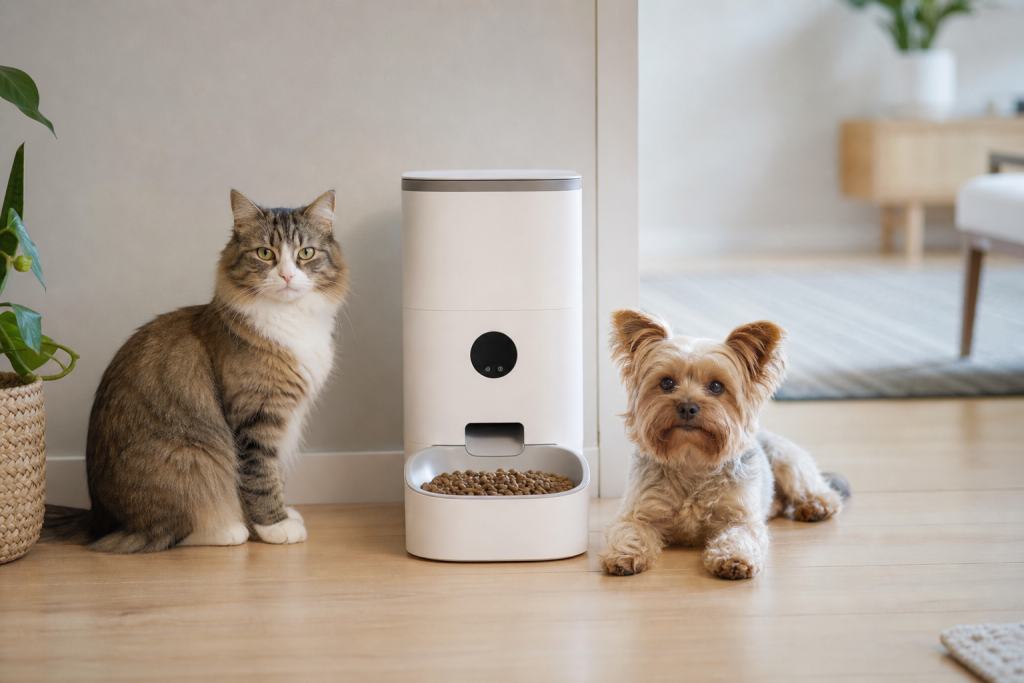
#automatic pet feeder
#kibble storage
#pet deals
#pet tech
#smart feeders
A smart feeder deal can stop looking cheap once you price the desiccant packs, check your kibble size and clean the food path often enough. The mistake is treating the feeder like a sealed pet-food vault. It is really a small appliance that needs compatible food, fresh parts and regular hygiene to keep dispensing reliably.
That matters now because app-connected feeders, camera feeders and RFID feeders are showing up in summer deal events alongside ordinary bowls and food storage bins. The discount on the device is only one part of the cost. Before you buy, check what the feeder needs every month, what happens if it jams, and whether your pet’s food actually fits the chute.
The Hidden Cost Is Usually Not the App
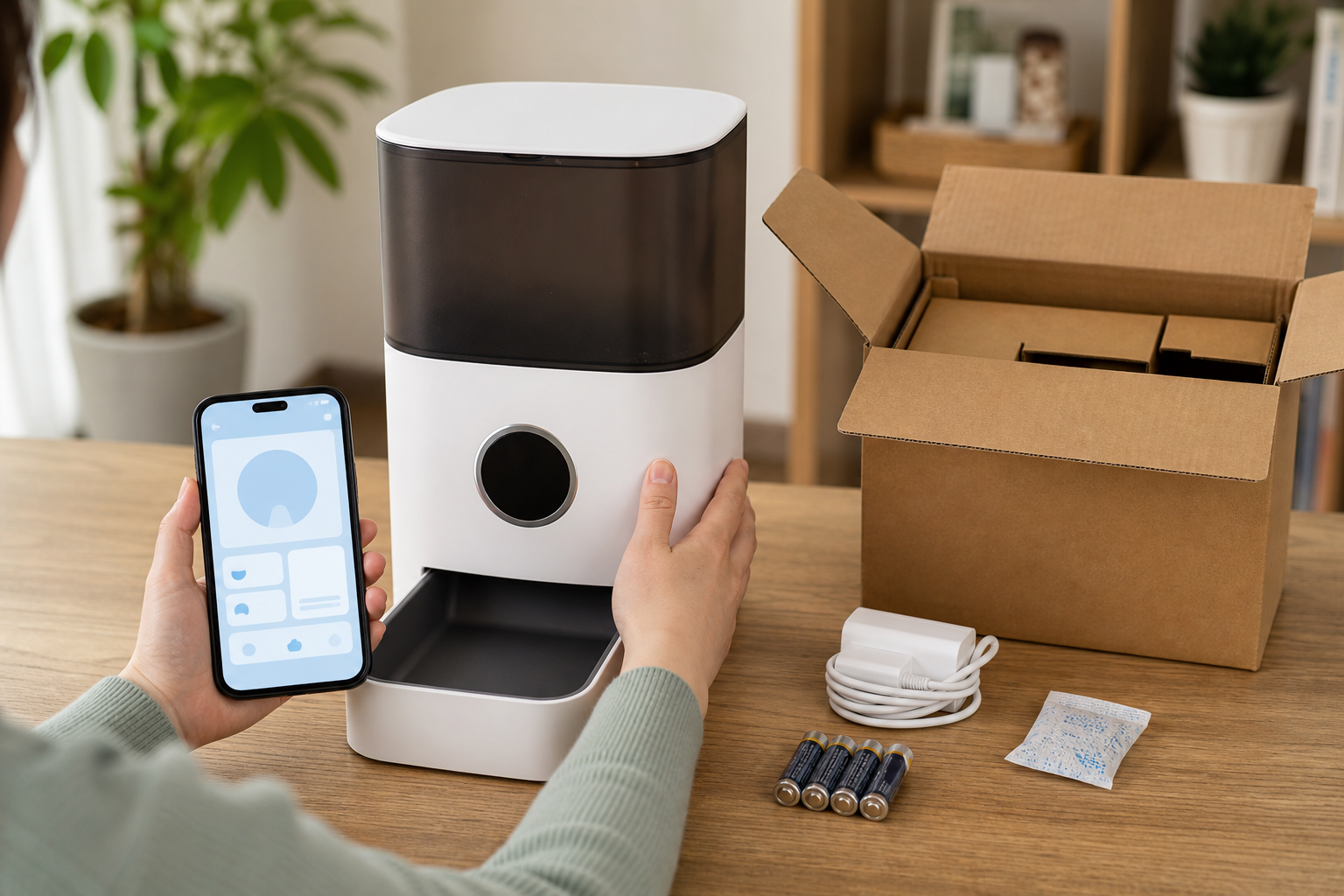
Subscriptions and cloud features get attention, but many dry-food feeders have a quieter expense: the parts that keep kibble moving and food dry. Depending on the model, that may include desiccant bags, stainless bowls, spare rotors, backup power, batteries, bowls, cameras, memory cards or replacement lids.
Petlibro’s own support page for one feeder says the desiccant bag must fit below a specific size and should be replaced every half month. Its product pages also show feeder categories built around app control, cameras, RFID recognition and accessories. That does not make the product bad. It does mean the real deal comparison should include the cost and availability of those small parts.
Check Kibble Size Before You Trust the Schedule
Automatic feeders are built around a dispensing path. If your pet’s kibble is too large, too flat, too oily, too irregular or too crumbly, the feeder can under-dispense, jam or leave dust in the chute. A manufacturer limit is not a suggestion to ignore.
For example, Petlibro lists a kibble-size range for its Granary camera feeder. That kind of detail is exactly what shoppers should look for before checkout. Measure a few pieces from your current bag, not just one perfect piece. If your pet eats a prescription diet, large-breed kibble or mixed toppers, do not assume it will run cleanly through a dry-food hopper.
The Desiccant Question to Ask Before Paying
Desiccant packs can help reduce moisture inside a feeder hopper, but they are not a substitute for safe food storage. The FDA says dry pet food should be stored in a cool, dry place, and excess heat or moisture can break down nutrients. It also recommends washing and drying storage containers between bags so leftover fats and crumbs do not stay on the surfaces.
Before buying a feeder, check:
- whether the feeder uses branded desiccant bags, generic sizes or no desiccant at all;
- how often the pack should be replaced;
- whether replacement packs are sold by the retailer you actually use;
- whether the desiccant compartment is inaccessible to pets;
- whether the manual says to empty and clean the hopper between refills.
If the feeder only looks cheap because the first desiccant pack is included, price the next six months before you call it a deal.
Buying Checklist for a Smart Feeder Deal
Use this before checkout, especially if the feeder is part of a limited-time retailer sale:
- Food type: Confirm dry food, wet food or refrigerated wet food support. Do not put wet food in a dry-food hopper unless the product is made for it.
- Kibble range: Compare the listed size range with your pet’s actual food.
- Portion size: Check the smallest portion and whether it matches your vet’s feeding plan. Ask your vet before changing amounts for weight, diabetes, kidney disease or other medical needs.
- Power backup: Look for battery backup details, battery type and whether batteries are included.
- Offline behavior: Confirm whether scheduled meals still dispense if Wi-Fi drops or the app is unavailable.
- Cleaning path: Look for removable bowls, hopper access, pump-free parts and dishwasher-safe claims for only the pieces that are actually dishwasher-safe.
- Replacement parts: Price bowls, lids, rotors, desiccant bags and power cords before buying.
- Return terms: Check whether opened feeders can be returned, who pays return shipping and whether original packaging is required.
Deal and Coupon Checks That Matter
A feeder coupon is useful only if it applies to the model and bundle you want. Many smart-feeder pages advertise bundles, app-enabled versions, camera versions, RFID versions and accessories side by side. A cheaper feeder without the right bowl, backup power or compatible accessories may be the worse buy.
Before paying, verify the final cart price, shipping threshold, return window, warranty term and whether the coupon excludes new releases or bundles. If the retailer sells replacement packs separately, add them to a mock cart. That gives you a more honest first-year cost than the feeder price alone.
What to Avoid
- A feeder with no clear kibble-size guidance if your pet eats large or unusually shaped food.
- A dry-food feeder marketed with vague freshness language but no clear cleaning or desiccant instructions.
- A camera feeder bought only for monitoring if you have not checked privacy settings, storage terms and app support.
- A feeder you cannot test before leaving for a trip. Run it for several days while you are home.
- A feeder used as the only safeguard for a pet with a medical feeding schedule. Ask your vet what backup plan you need.
Quick Answers
Are smart feeders worth it?
They can be worth it for scheduled dry-food meals, portion consistency and travel-day backup, but they are not maintenance-free. Consumer Reports found that automatic feeders have useful features, but no one feeder is perfect for every need.
Do desiccant packs replace airtight storage?
No. Treat them as a feeder accessory, not as permission to store too much kibble in a warm or humid hopper. Keep the main bag properly stored and refill the feeder with a manageable amount.
Can I use any kibble in an automatic feeder?
No. Check the feeder’s stated kibble range and test your actual food. Large, oily, crumbly or mixed food can create dispensing problems.
Should I buy a camera feeder?
Only if the camera feature solves a real problem for you. Check video storage, app permissions, Wi-Fi support, privacy settings and whether the feeder still works if the camera feature becomes less useful.
Sources
- FDA, Proper Storage of Pet Food & Treats.
- FDA, Tips for Safe Handling of Pet Food and Treats.
- CDC, About Cleaning and Disinfecting Pet Supplies.
- Petlibro, Granary Automatic Cat Feeder with Camera, used as an example of kibble-size, warranty and return details shoppers should verify.
- Petlibro, How the Air Automatic Pet Feeder Works, used as an example of desiccant-size and replacement guidance.
- Consumer Reports, Best Automatic Dog Feeders, used for current category context.
Sources last checked June 20, 2026, 07:32 Europe/Rome.