
#airline pet travel
#pet carrier checklist
#pet travel routes
The pet travel mistake is buying the carrier, ticket, ferry crossing or courier package before checking whether the route itself is approved for the trip. For dogs, cats and ferrets entering Great Britain, GOV.UK updated its approved carrier and route lists on September 22, 2026, which is a reminder that a cheap travel deal can fail before your pet reaches check-in. Verify the route first, then compare carrier size, booking rules, document timing and refund terms.
That order matters because pet travel is not one universal rule. A carrier that works for a domestic cabin flight may be irrelevant for a route where the animal must travel through an approved company, a cargo process or a named arrival point. If you shop in the wrong order, the expensive item may be the one you cannot use.
Why this matters now
GOV.UK’s page for approved air, sea and rail pet travel routes was last updated on September 22, 2026. The page says owners can use only Animal and Plant Health Agency-approved carriers and routes to bring a pet cat, dog or ferret to England or Scotland, and it notes that there are no approved routes to Wales. It also says the lists can change and that some routes may operate only at certain times.
That does not mean every pet owner is suddenly blocked from traveling. It means the first checkout question is not “Is this carrier airline-approved?” It is “Is my exact route and transport company allowed for this pet movement, on this date, with this species and paperwork?”

The checkout sequence that prevents wasted money
Before paying for anything non-refundable, build the trip in this order.
- Confirm the country rule. If the trip involves entering Great Britain, start with the official GOV.UK pet travel pages, not a third-party blog or an old forum answer.
- Confirm the approved route. Check the current air, sea or rail list for the transport company, route and arrival point. Save or print the current page for your records, because lists are updated regularly.
- Ask the travel company about extra rules. GOV.UK says pet owners must ask the travel company if it has additional rules. Those can include reservation limits, check-in windows, crate handling, assistance dog procedures, aircraft type or seasonal restrictions.
- Then buy the carrier or crate. Only after the route is confirmed should you buy a soft carrier, hard crate, liner, water bowl or document pouch.
- Check the return window before opening tags. Travel gear is often tried indoors, then returned. Make sure the retailer allows returns after a fit test and check whether shipping fees, oversized items or used-condition rules reduce the refund.
The “approved carrier” phrase can mislead shoppers
Product listings often use language such as “airline approved” or “TSA-friendly.” Those phrases do not prove that a specific airline will accept the carrier, that the pet fits comfortably, or that a route is approved for international pet entry. They are marketing shortcuts, not a booking confirmation.
The FAA says airlines decide whether pets can travel in the passenger cabin. If an airline does allow cabin pets, the container is treated as carry-on baggage and must fit under the seat without blocking the aisle. IATA’s pet travel guidance also points owners back to the airline for route, container and travel-process details.
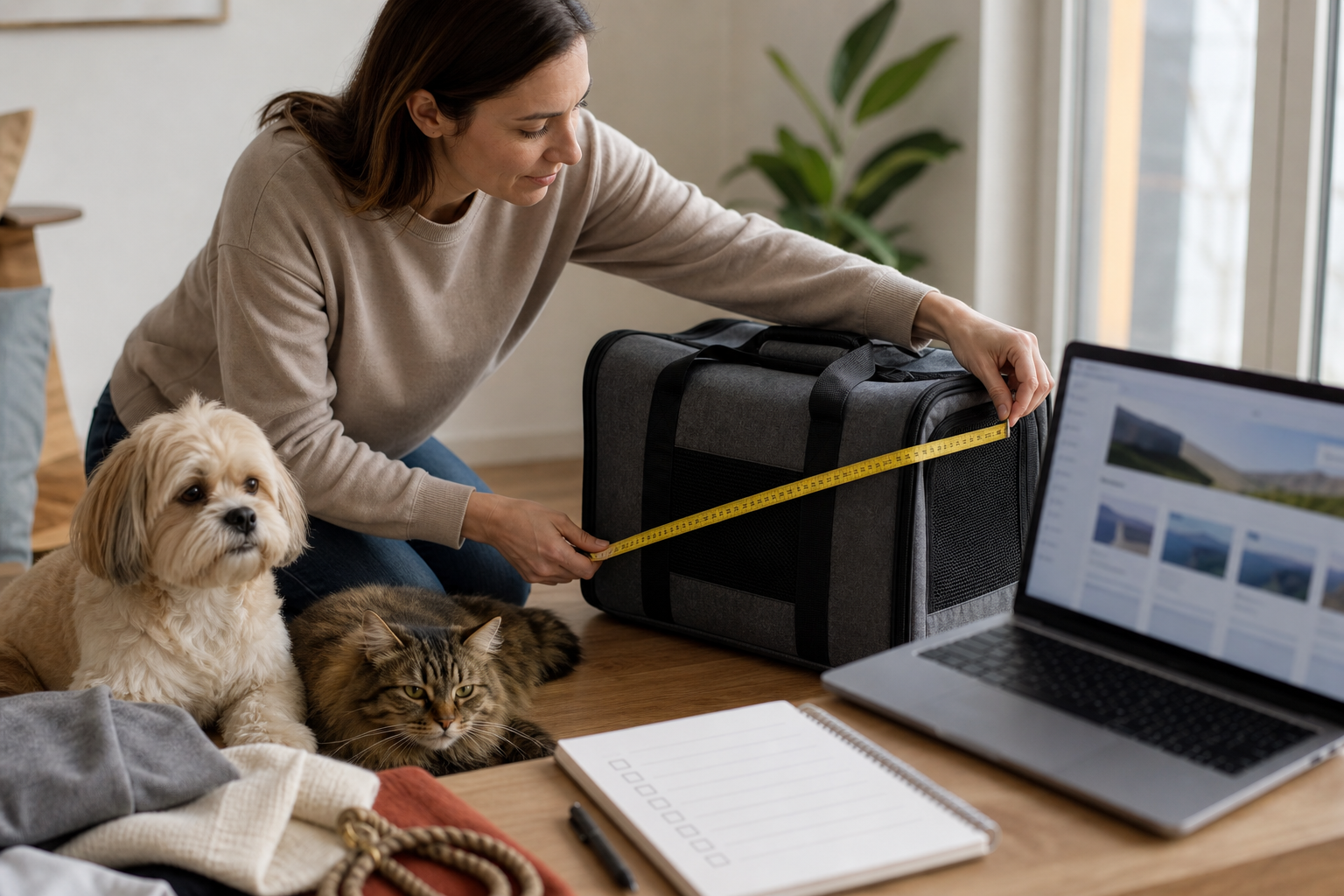
That is why the safer shopping rule is simple: do not buy a carrier just because it looks like the one in a travel photo. Match it to the transport company, route, aircraft or vessel rules, pet size and document process.
What to verify before paying for the trip
For a Great Britain route, check whether your pet is coming from a place where the approved-route requirement applies. GOV.UK lists exemptions for travel from UK countries, the Channel Islands, the Isle of Man and the Republic of Ireland. If the exemption does not apply, use the approved route list before booking.
Next, confirm the pet’s travel mode. Some trips allow an in-cabin animal. Some require cargo or a freight process. Some sea and rail operators have pet-specific check-in procedures. A discount on a passenger ticket does not guarantee a pet space, and a pet-friendly hotel at the destination does not solve a route problem at the border.
Then check timing. Pet travel paperwork can depend on vaccination dates, certificates, tapeworm treatment windows for dogs and official checks at the point of entry. This article is shopping guidance, not veterinary or legal advice, so use official rules and ask your vet, official veterinarian or travel company when your pet’s health status, age or route makes the timing unclear.
Deal and coupon checks before checkout
A travel sale can still be useful, but treat the discount as the final step, not the first one.
- Do not buy a final-sale carrier before route approval. A small saving is not helpful if the dimensions, ventilation, door style or material are wrong for the operator.
- Separate passenger fare from pet charges. Pet fees, cargo handling, document checks, crate requirements and courier services may sit outside the advertised fare.
- Check cancellation and change fees. If a pet space is refused or paperwork timing fails, the human ticket, hotel, courier and gear may all have different refund rules.
- Watch bundle language. A “pet travel kit” may include items you do not need, while leaving out the approved crate, water container, absorbent liner or document holder the operator actually requires.
- Use coupon codes only after the cart is correct. Do not let a limited-time code push you into buying before the route, pet reservation and document schedule are confirmed.
What to avoid
Avoid relying on an old screenshot of an approved route list. GOV.UK’s update history shows frequent changes, so the list you saw last month may not be the list that matters when you travel.
Avoid assuming a route to London, Manchester or another airport is accepted just because the airline sells passenger tickets there. For pet entry, the relevant question is whether that airline, airport and process are on the current approved list for your pet’s movement.
Avoid buying based only on breed or weight. Carriers and crates need enough room for the animal to stand, turn and lie naturally, and the transport company may apply its own measurement rules. Snub-nosed pets, older pets, anxious pets and animals with health issues need extra caution and a vet conversation before travel.
Avoid sedating a pet for travel unless a veterinarian specifically advises it. IATA notes that sedatives and tranquilizers are generally discouraged for animals transported by air because of possible adverse effects during transport.
Quick answers
Does “airline approved” on a pet carrier mean it will work?
No. It may mean the product is designed for common cabin rules, but the airline, aircraft, route, seat layout and pet size still control whether it is accepted.
Should I book the human ticket before confirming the pet space?
Not if the ticket is hard to change. Check the pet reservation process first, then book in a sequence that protects you if the pet space is limited or unavailable.
Do all UK-bound pet trips need an approved route?
No. GOV.UK lists exemptions for travel from UK countries, the Channel Islands, the Isle of Man and the Republic of Ireland. For other routes into England, Scotland or Wales, check the current official guidance.
Can a cheap pet courier package solve the route problem?
Only if the courier uses an approved route where one is required, explains the document process clearly and gives you written terms for cancellation, delays and responsibility for checks.
Sources
Sources last checked: September 23, 2026, 19:33 CEST, Europe/Rome.
- GOV.UK, Pet travel: approved air, sea and rail carriers and routes.
- GOV.UK, Bringing your pet dog, cat or ferret to Great Britain: travel routes for pets.
- Federal Aviation Administration, Flying with Pets.
- International Air Transport Association, Traveler’s Pet Corner.
- International Air Transport Association, IATA Guidance Supports Clearer and More Consistent In-Cabin Pet Travel.