
#pet deals
#pet hair
#pet tech
#robot vacuum
#smart home
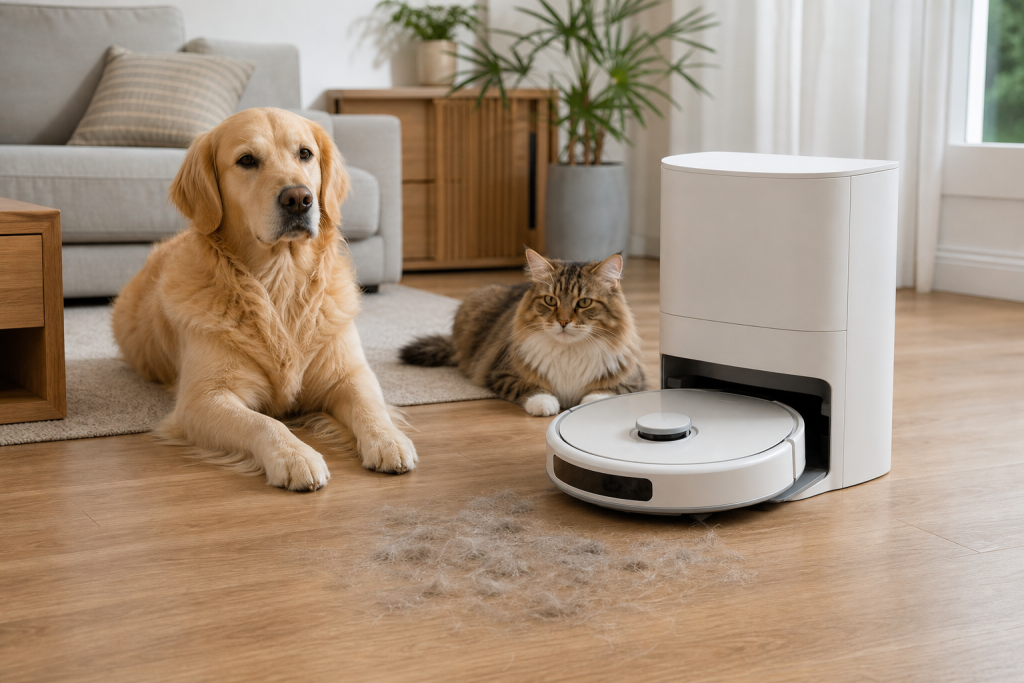
A self-emptying robot vacuum can be a good pet-hair deal, but only if you price the parts that make it keep working. The dock may empty the bin for you, yet pet hair still fills bags, clogs filters, wraps brushes and adds privacy questions if the robot maps your rooms or uses a camera. Before buying, check the replacement schedule and app controls, not just the discount badge.
Robot vacuums are getting another wave of attention in summer 2026 because new models are leaning hard into pet-hair pickup, self-empty docks, object avoidance and app-controlled cleaning. That sounds ideal for homes with shedding dogs or cats, especially when holiday sales push big discounts. The catch is that pet hair is exactly the kind of debris that can turn a low-effort gadget into a recurring supply purchase.
Why the self-empty promise needs a pet-hair reality check
“Self-emptying” usually means the robot transfers debris from its small onboard bin into a larger base. It does not mean the robot has no consumables, no cleaning schedule and no limits around long hair, litter tracking, kibble crumbs or tufts under furniture.
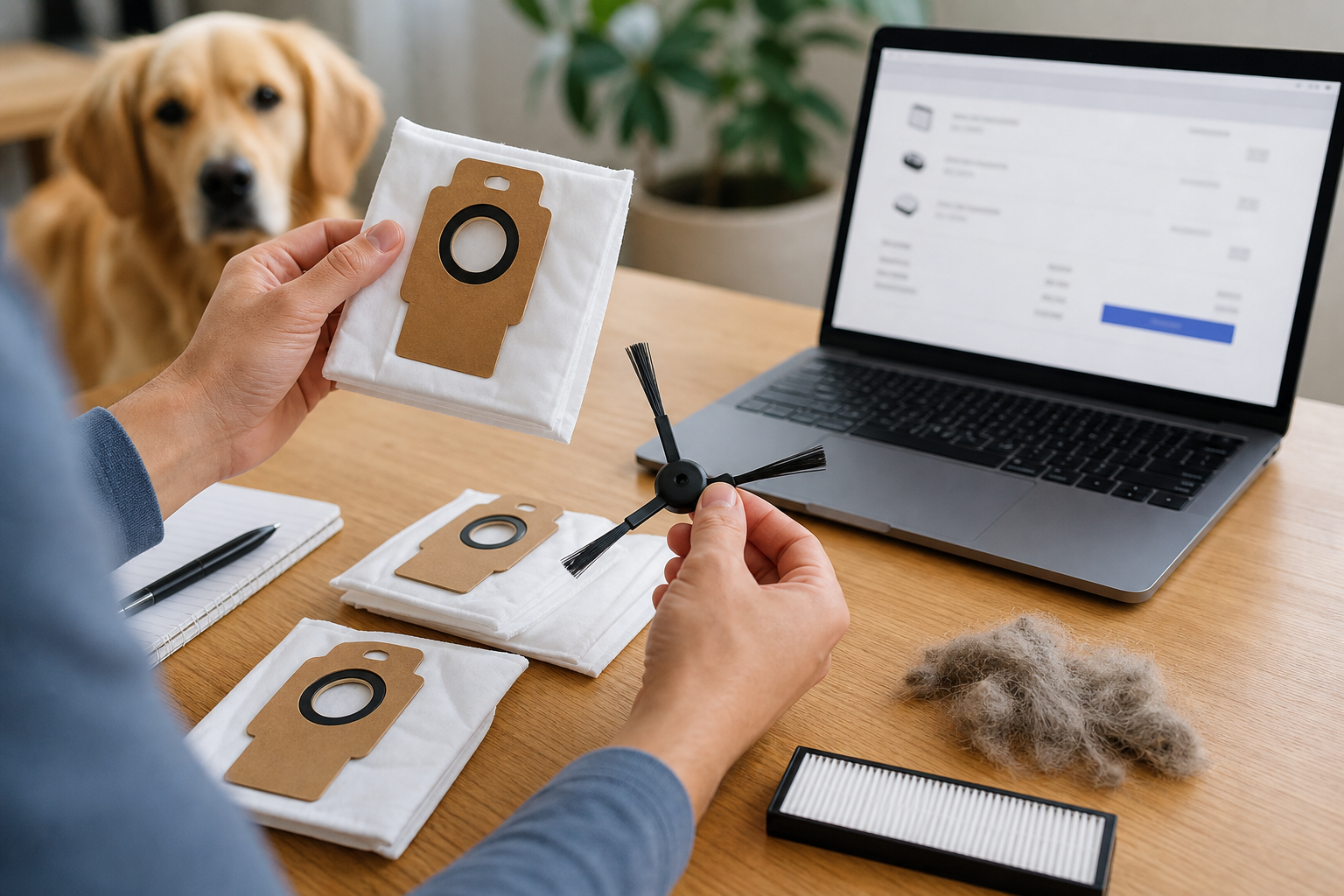
Manufacturer support pages make that clear. iRobot tells owners to clean extractors and filters more often in homes with pets, while Roborock’s maintenance guidance points owners toward regular brush cleaning and eventual roller replacement. Shark’s parts pages also show that robot vacuums can need filters, side brushes, dust cups, base parts and other accessories over time.
The checkout math most pet owners skip
Before a sale price wins, open the brand’s parts page and answer five questions:
- Does the dock use disposable bags, a washable bin or both?
- How often does the brand say to clean or replace filters, main rollers and side brushes?
- Are genuine parts easy to buy from the manufacturer or major retailers?
- Does the model have an anti-tangle brush design, and does that design still require manual hair removal?
- If the robot includes mopping, are pads, cleaning solution or dock-maintenance parts separate purchases?
For a heavy-shedding dog, a long-haired cat or a multi-pet home, replacement parts can matter more than a one-day discount. A cheaper robot with hard-to-find bags or weak brush support may be more annoying than a slightly more expensive model with available parts and clear maintenance instructions.
What to verify before paying for a deal
Start with floor type. Pet hair on hard floors is a different job from embedded hair in carpet, and many current reviews still separate bare-floor pickup, carpet pickup, obstacle avoidance and maintenance. Tom’s Guide’s latest robot vacuum testing, updated this week, highlights how different models trade off pet-hair pickup, self-emptying convenience, carpet performance, mopping and app features. Use that kind of testing as a filter, not as permission to ignore your own home layout.
Then check the dock claim carefully. “30 days,” “60 days” or similar language often depends on debris type, floor area and how much your pets shed. A compact apartment with one short-haired cat is not the same as a house with two double-coated dogs in shedding season.
Also check the return window and the warranty path before you throw away the box. Pet-hair performance problems often show up only after several real cleaning runs, when the robot has met the rugs, chair legs, litter scatter, food bowls and hair tumbleweeds in your home.
Do not ignore privacy just because it is a cleaning gadget
Many robot vacuums are smart-home devices, not just appliances. Some models build maps, connect to Wi-Fi, use app accounts and may include cameras or other sensors for navigation and obstacle avoidance. That can be useful, but it means the privacy policy and app settings belong in the buying decision.
The FTC’s general smart-device guidance recommends changing default passwords, using strong authentication when available and keeping connected devices updated. For a robot vacuum, also look for clear controls for maps, camera features, voice assistants, data sharing and account deletion. If the camera or cloud features are not worth it to you, a simpler LiDAR or non-camera model may be the better deal.
What to avoid
- Do not buy only because the listing says “pet” if it does not show replacement parts, brush type or filter availability.
- Do not assume a self-empty dock can handle unlimited fur without bags, filter cleaning or jam checks.
- Do not run any robot through pet waste, wet food spills, vomit or unknown messes.
- Do not pay extra for a camera model unless you understand where video or image data is processed and stored.
- Do not treat a robot vacuum as a full replacement for deep carpet cleaning in a heavy-shedding home.
When a self-emptying robot vacuum is actually worth it
It can be worth paying more when the robot has strong pet-hair pickup for your floor type, a dock that is easy to empty, widely available bags or filters, a brush design that reduces tangles, sensible privacy controls and a return policy long enough for a real home trial. It is less convincing when the dock looks impressive but the parts are proprietary, expensive, out of stock or poorly documented.
The practical test is simple: add the robot, the first year of likely bags or filters, replacement brushes and any mop supplies to your mental cart. If the total still fits your budget and the parts are easy to find, the deal is much more credible.
Quick answers
Is a self-emptying robot vacuum better for pet hair?
Often, yes, because the dock reduces how often you empty the small robot bin. It still needs brush, filter, sensor and dock maintenance, especially in homes with shedding pets.
Should pet owners choose bagless or bagged self-empty docks?
Bagless docks can reduce disposable bag costs, but they may be messier to empty. Bagged docks can be cleaner and easier for some households, but you need to price replacement bags before buying.
Are robot vacuum cameras a problem for pet owners?
Not automatically, but they raise privacy questions. Check whether the camera is used for navigation, remote viewing or obstacle recognition, and review app settings before putting the device in rooms where you expect privacy.
Can a robot vacuum replace a normal vacuum in a pet home?
Usually not completely. It can help with daily maintenance, but heavy shedding, deep carpet, upholstery, stairs and surprise messes still need human cleanup.
Sources
Last checked: 2026-07-03 16:34 Europe/Rome.