
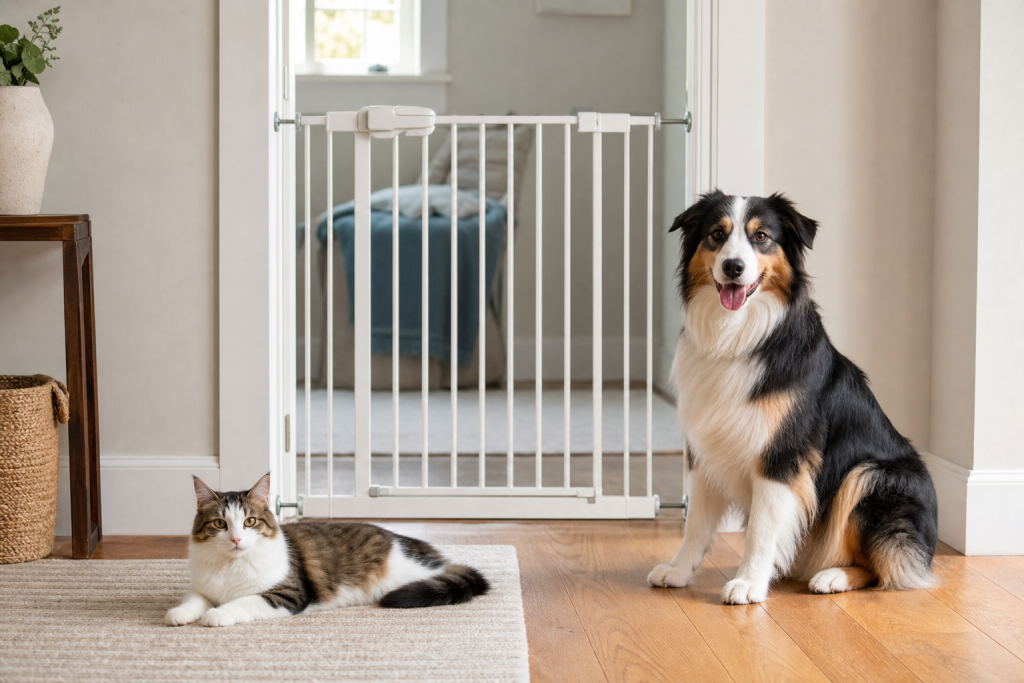
A discounted pet gate is only a good buy if it fits the exact doorway, stair landing and pet you need to block. Pressure-mounted gates can be useful for ordinary doorways, but they are the wrong shortcut for some stair placements and strong jumpers. Before checkout, measure the opening, check whether hardware mounting is required and make sure the latch, height and bar spacing match your dog or cat.
Why this gate mistake matters right now
Summer sales and Prime Day-style promotions often push bulky home products into pet owners’ carts: gates, crates, playpens, carriers and containment gear. A pet gate looks simple compared with a smart feeder or GPS tracker, but it is one of those products where the cheapest listing can fail because the opening is too wide, the wall cups are missing, the threshold becomes a trip point or the gate is being used in the wrong place.
The Consumer Product Safety Commission’s gate standard focuses on strength, latch performance, openings and pressure-mounted hardware because installation matters. AKC guidance also separates pressure-mounted gates from hardware-mounted gates, noting that hardware-mounted models are the more secure choice for stairs or larger, energetic dogs. That is the useful shopping lesson: the mounting style is not a small product detail.
The checkout detail owners miss
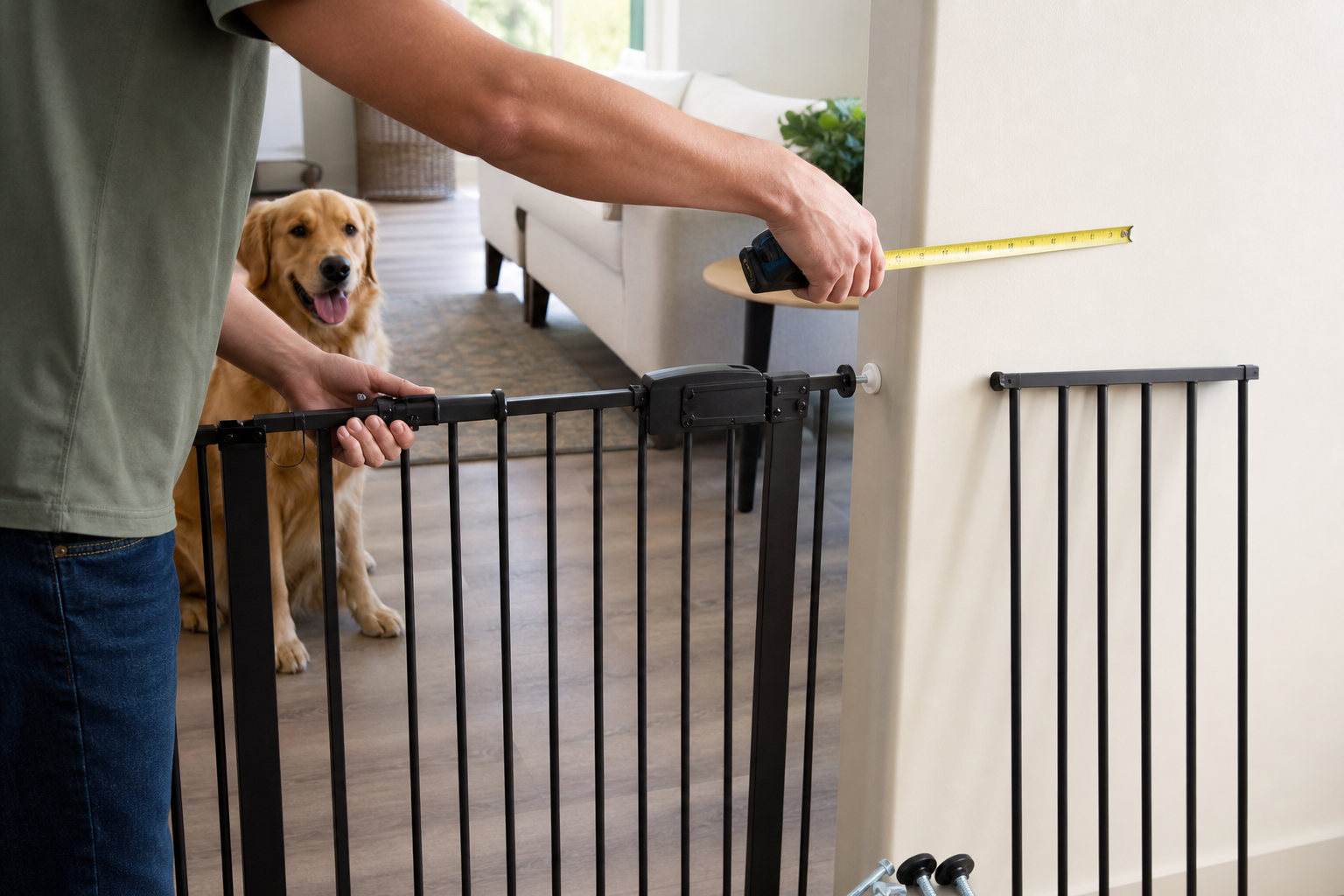
Many pet gates are sold by width range, such as a doorway span plus optional extensions. That does not mean the gate will work anywhere inside that range. You still need to check the exact measured opening at the top and bottom, the baseboard shape, whether the wall surface can hold cups or screws and whether the walk-through door leaves enough usable space.
Pressure-mounted gates stay in place by tension. That can be convenient in a rental or between two stable door frames, but it also means the gate can shift if a dog jumps, pushes or repeatedly paws at it. Hardware-mounted gates are fixed with brackets or screws, which is why they are usually the better category to compare for stair areas, wide openings and stronger dogs.
What to verify before buying a pet gate
- Placement: decide whether the gate is for a hallway, kitchen doorway, bedroom, stair bottom, stair top or open-plan space.
- Mounting style: compare pressure-mounted, hardware-mounted, freestanding and retractable gates as different tools, not interchangeable versions of the same product.
- Width range: measure the opening in more than one place and confirm which extensions are included, not just sold separately.
- Height: a low step-over gate may work for a small puppy, but it is not a serious barrier for a large dog or a cat that likes to climb.
- Bar spacing and mesh: small pets can squeeze through gaps that look harmless in listing photos.
- Latch design: look for a latch an adult can use consistently, but a pet cannot nose or paw open easily.
- Threshold: many walk-through gates have a lower rail that can become a trip point, especially in a busy hallway.
- Return shipping: gates are bulky, and a cheap deal can become expensive if the retailer deducts return shipping or excludes opened items.
Pressure-mounted vs. hardware-mounted gates
A pressure-mounted gate can be the right deal when you need temporary containment in a straight doorway and your pet is not likely to slam into it. It is also useful when drilling is not practical. The tradeoff is that the gate depends on correct tension, compatible walls and periodic checks.
A hardware-mounted gate is the better category to consider when failure would be serious, such as near stairs, or when a large dog may hit the gate at speed. It takes more work to install and may leave holes, but the extra security is often the reason to buy it.
Deal and coupon checks before paying
Do not compare pet gates by sale price alone. Compare the final cart after extensions, wall cups, shipping, taxes and return terms. A gate that looks cheaper can cost more if the extension kit is separate or if the retailer charges return shipping on a bulky box.
If a coupon code applies only to select brands or excludes sale items, verify it in the cart before trusting the banner. For same-day delivery or pickup offers, check whether the full gate and extension kit are available from the same store. Mixed fulfillment can leave you with half a setup and no safe way to use it.
What to avoid
Avoid buying a gate from photos alone. Product images often show a calm pet sitting near a perfectly square doorway, not the baseboards, stair angles, uneven walls or determined dog you actually have at home.
Also avoid using a pet gate as a substitute for training, supervision or a secure crate when those are the safer tools. If your dog is panicked, destructive, recovering from surgery or likely to jump a barrier, ask your veterinarian or a qualified trainer what kind of confinement is appropriate before relying on a bargain gate.
Quick answers
Can a baby gate be used as a dog gate?
Often, yes, but the fit depends on your dog, the gate design and the location. Check height, bar spacing, latch strength and mounting style instead of assuming a child gate automatically works for pets.
Is a pressure-mounted pet gate safe?
It can be suitable for some doorways, but it is not the right answer for every placement. For stairs, wide openings, jumpers or strong dogs, compare hardware-mounted options and follow the manufacturer’s installation instructions closely.
What if my cat jumps over every gate?
Look at taller gates, cat-specific barriers, room management and enrichment rather than buying repeated low gates. Cats that climb or squeeze through gaps can turn a cheap gate into clutter very quickly.
Should I buy the tallest gate on sale?
Not automatically. Height matters, but so do installation, latch reliability, gap size, return terms and whether people in the home can open and close the gate correctly every time.
Sources
Last checked: 2026-07-10 16:34 Europe/Rome.
- U.S. Consumer Product Safety Commission, Gates and Enclosures Business Guidance.
- Federal Register, Safety Standard for Gates and Enclosures.
- American Kennel Club, Dog Gates 101: Choosing the Right Dog Gate for Your Home.
- AAHA, Essential Tips for Pet-Proofing Your Home.
- Chewy, Pressure Mounted Dog Gates.
- PetSmart, Dog Doors, Gates and Play Pens.