
#lot codes
#pet deals
#pet food recall
#pet food storage
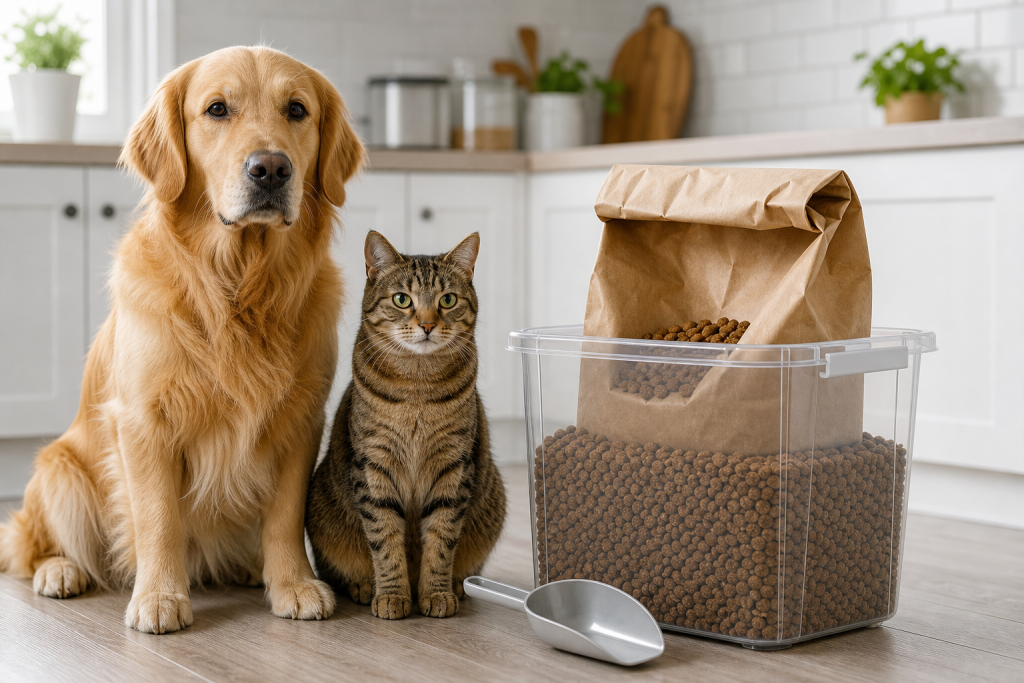
A cheap storage bin can make a pet food deal harder to verify if you throw away the original bag. The FDA says the package carries the product name, manufacturer, UPC, lot number and best-by date, which are the details owners need when a defect, complaint or recall appears. If you like decanting kibble, keep the whole bag inside the bin or save a clear photo and cutout before you pour.
That matters right now because 2026 has already brought multiple FDA-listed pet food recall and advisory notices, including dog food, cat food and milk-replacer entries. Most recalls do not mean every product from a brand is unsafe. They usually hinge on exact lot codes, package sizes, UPCs and best-by dates, so a neat pantry can become a problem if the identifying label is gone.
Why the original bag is part of the deal
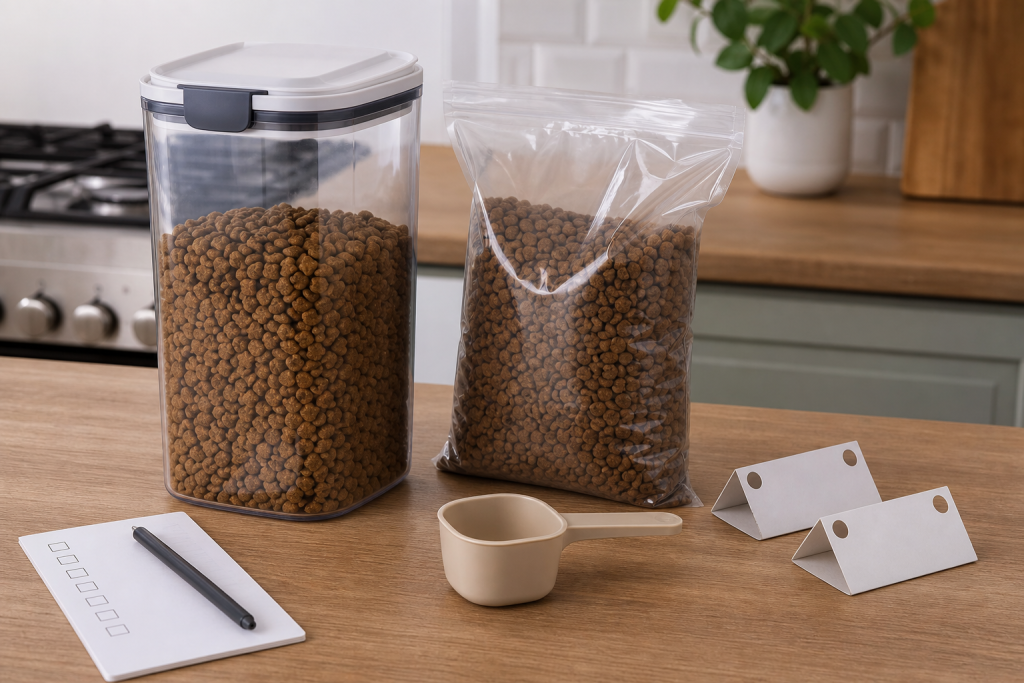
Storage bins are useful when they keep pests, humidity and curious pets away from food. The mistake is treating the bin as a replacement for the food package instead of as a second layer around it. FDA storage guidance says pet food and treats should be stored in their original container or bag so the UPC, lot number, product name, manufacturer and best-by date stay available if there is a defect or recall.
The FDA also has a separate lot-number reminder for pet owners. If food has to move into another container, FDA recommends keeping the food in the original package inside that container, or cutting out the lot number and taping it somewhere easy to find. A phone photo can help too, but it should show the full product name, lot code, UPC, best-by date, package size and purchase receipt if you still have it.
This is not only about recalls. If your dog or cat refuses a new bag, the food smells wrong, the kibble looks different or a sealed case arrives damaged, customer service and regulators may ask for the same details. A plain airtight bin with no label may preserve the food but weaken your paper trail.
The checkout checklist before you buy a storage bin
Before adding a pet food container to your cart, check whether it solves the real problem without hiding the recall information you may need later.
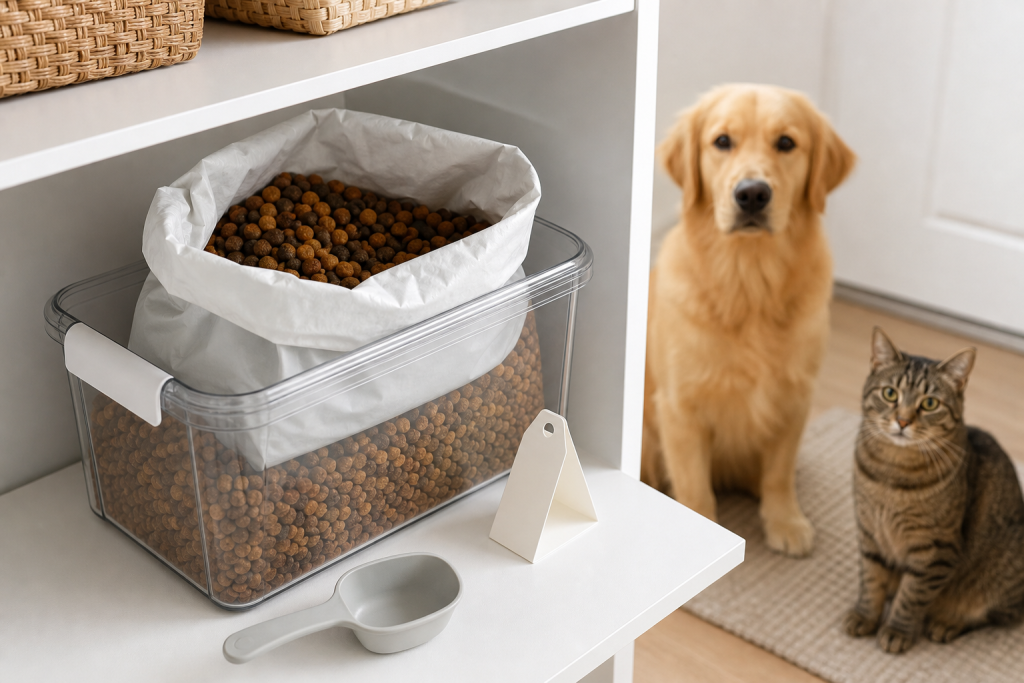
- Bag-in-bin fit: Choose a bin large enough to hold the original bag, not just the loose kibble. Measure the full bag height and width after the top is rolled down.
- Easy cleaning: Look for smooth interior surfaces and a lid you can wipe dry. Old crumbs and oils can carry odor into the next bag.
- Moisture control: A tight lid helps, but food should still be kept cool and dry. Do not park a bin in a hot garage if the food label warns against heat or moisture.
- Label visibility: If the bag must be decanted, save the lot code, UPC and best-by date before you pour. Do this for every new bag, not once per brand.
- Pet-proof latch: A bin that a dog can nose open can turn a bulk-food deal into an overeating or spoilage mess.
- Return terms: Large bins can be awkward to return. Check the retailer’s return window, packaging requirement and shipping fees before ordering a bulky container online.
When bulk food is not really cheaper
Bigger bags often look cheaper by the pound, but they only save money if your pet finishes the food while it is still fresh and identifiable. A household with one small cat may not get the same value from a huge dry-food bag as a household with two large dogs. The longer the bag sits open, the more important storage conditions become.
Do the math at checkout: price per pound, expected days of feeding, storage space, container cost and whether the retailer will accept returns on opened food. If the savings depend on buying a much larger bag than usual, make sure the food is one your pet already eats well. A sale on an unfamiliar formula can waste more money than it saves if your pet will not transition to it.
For subscription orders, take one extra step. Do not let the next shipment arrive before you have finished and documented the current bag. If you mix two shipments in the same bin, you may lose track of which lot was fed on which dates.
Recall checks need exact information
Current FDA and AVMA recall pages show why exact package information matters. Notices can name a specific brand and recipe, but they also narrow the affected product by date, lot, package size or UPC. That is the difference between a useful recall check and a panic search that treats every similar-looking bag as the same product.
The FDA’s pet food complaint guidance says the lot number is often near the best-by or expiration date and can be hard to find. The agency also says that lot number helps identify the manufacturing plant and production date. For shoppers, that means the label is not clutter. It is evidence.
If you discover a recall after discarding the package, do not guess. Check order history, delivery photos, emailed receipts, subscription shipment records and any saved label photos. If the information still is not available, contact the manufacturer or retailer with the purchase date, store or order number, product name and package size. Ask your veterinarian if your pet ate a potentially affected food and you are concerned about symptoms, especially with raw, freeze-dried, refrigerated, frozen or specialty diets.
What to avoid
Do not dump a new food into the leftover crumbs from an old one. Empty the container, wash it if the material allows, let it dry fully and start with a clean liner or the original bag. Moisture inside a sealed container is not a bargain.
Do not combine different brands, recipes or lot codes in one bin unless you have a tracking system you will actually keep. Mixing a nearly empty bag with a new one may be convenient, but it makes a recall check harder.
Do not buy a storage bin because it looks airtight in a product photo. Read the dimensions, latch details, material notes and return policy. If the listing shows a fake label, invented freshness claims or no clear size information, pick a clearer option.
Do not use storage advice as a substitute for veterinary care. If your pet becomes ill, stops eating, vomits repeatedly, has diarrhea, seems weak or has any concerning change after eating a product, contact your veterinarian and keep the food and packaging if you can do so safely.
Quick Answers
Should I pour dog or cat food into a plastic bin?
It is safer to place the original bag inside the bin and roll or clip the top closed. That keeps the recall details with the food while adding a barrier against spills and pests.
What label details should I save?
Save the product name, manufacturer, UPC, lot number, best-by or expiration date, package size and purchase receipt or order number.
Can I rely on a screenshot from the retailer?
No. A retailer page may show the recipe, but it usually will not show the exact lot code from the bag you received. Photograph the physical package when it arrives.
Does this apply to treats too?
Yes. FDA storage guidance includes pet food and treats. Keep treat packaging or save the lot and date details before moving treats into jars or training pouches.
Sources
Sources last checked: August 5, 2026, 16:35 Europe/Rome.