
#cat doors
#dog doors
#pet doors
#pet tech
#smart pet door
A smart pet door deal is only a good buy if the door fits your pet, your home and the way the access system actually works. The cheapest flap can become expensive when you add a hub, collar tags, batteries, installation parts, glass fitting, app support questions or a return that excludes a cut door. Before you order, check the opening size, microchip or tag compatibility, power needs and the return policy in the same cart.
Why smart pet doors are getting attention now
Pet owners are buying more connected gear, but the value question is getting sharper. NielsenIQ reported in April 2026 that 76% of pet parents believe pet ownership costs more than a year ago, and that shoppers are re-examining value, convenience and loyalty. That matters for smart pet doors because the sticker price is rarely the full cost.
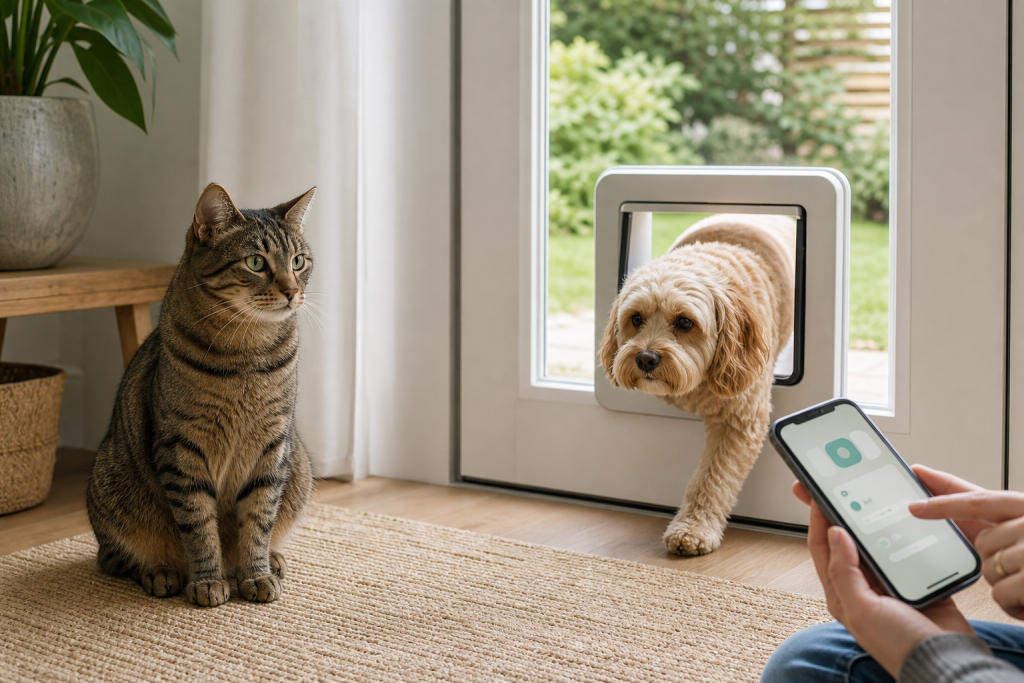
The appeal is easy to understand. A connected door can help cats and small dogs come and go on a schedule, keep some unwanted animals out, send app notifications and let an owner change lock settings without walking to the door. The risk is that product pages often highlight freedom and security while the buyer still has to solve the boring parts: measurements, microchips, collar tags, batteries, Wi-Fi, installation and what happens if the app or support changes later.
The fit check comes before the discount
Start with the physical opening, not the app. Sure Petcare’s Microchip Pet Door Connect, for example, lists a flap opening of 7.5 inches wide by 6 11/16 inches high and says that is the smallest area the pet must pass through. It is designed for large cats and small dogs, not every dog that happens to use a normal flap.
Measure your pet at the widest point, then add practical clearance for a cautious animal that may not push through cleanly on the first week. Also check the tunnel depth, exterior frame size and the kind of installation the door needs. A door, wall or glass panel are not the same checkout problem, and a glass installation can require professional help.
- Measure the pet, not just the old flap.
- Confirm the listed flap opening, tunnel depth and cutout size.
- Check whether wall liners, mounting adapters or glass accessories are sold separately.
- Read the return terms before cutting a door, wall or panel.
- Keep the packaging until the pet has used the door reliably.
Microchip door or collar tag door?
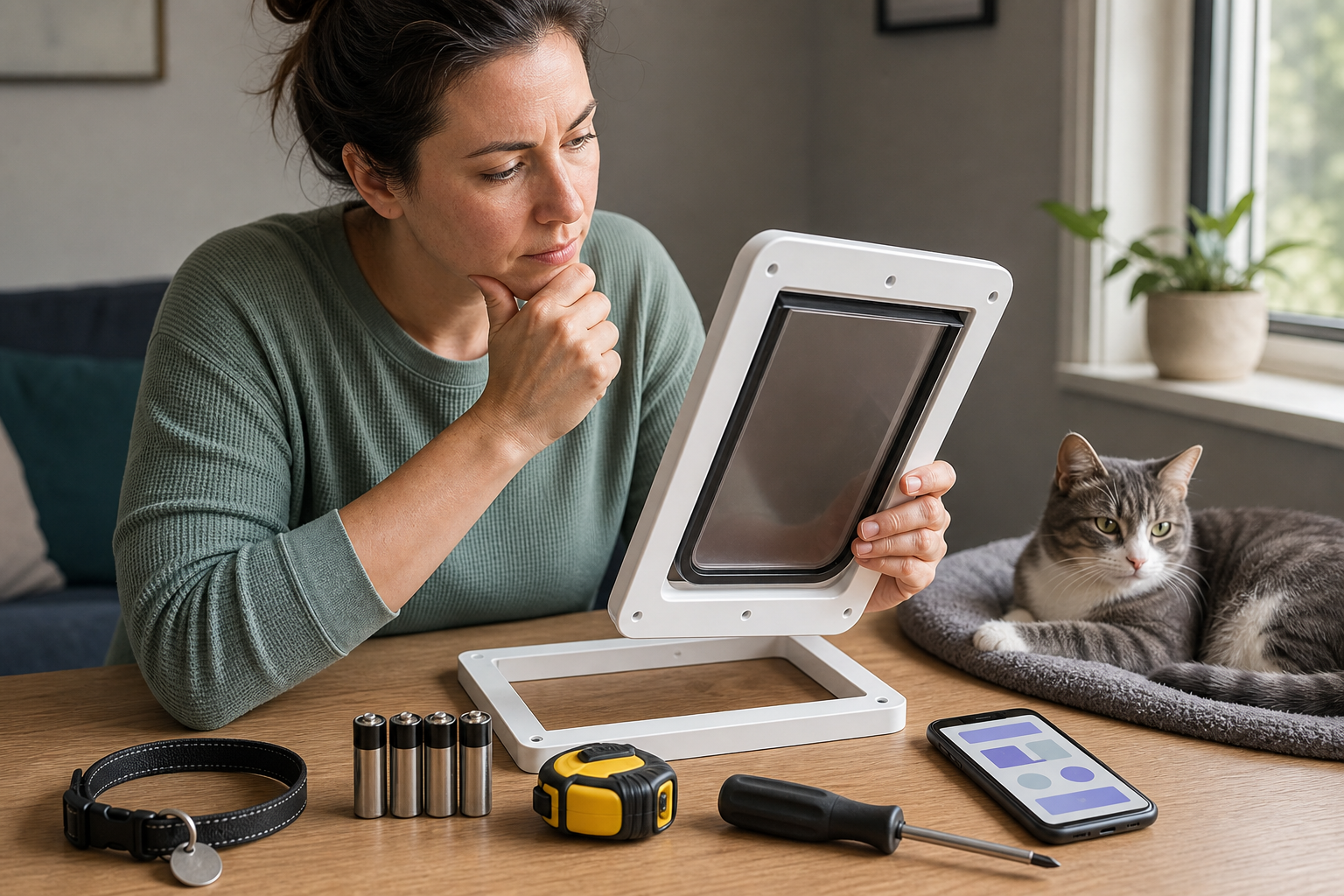
This is the shopping detail owners misunderstand most. Some doors read an implanted pet microchip. Some rely on a collar tag or electronic key. Some connected systems may need a separate hub or accessory to unlock app features. The wrong choice can leave you buying extra tags, replacing batteries or discovering that your pet hates wearing a collar.
A microchip is not a GPS tracker and does not store a full owner profile inside the pet. AVMA explains that pet microchips contain identification numbers, and AAHA’s lookup tool points users toward registries rather than showing private owner details directly. That matters because a smart door using a chip is reading an ID signal for access, not turning the door into a lost-pet tracker.
If a product says it works with common microchips, do not treat that as enough. Look for a compatibility checker or support page, and enter your pet’s chip number when the manufacturer provides that tool. If your pet is not microchipped, ask your vet about whether microchipping is appropriate before buying a door that depends on it.
The hidden costs in the cart
The door price is only one line. Sure Petcare states that its connected microchip pet door uses a Hub sold separately to link the door to the app, and that it runs on four C-cell batteries that are not included. PetSafe’s support page for a connected SmartDoor says the medium version uses four C-cell alkaline batteries and the large version uses four D-cell alkaline batteries, and it tells owners not to use lithium or rechargeable batteries.
That does not make either product bad. It means the deal calculation should include the exact system you are buying, not just the discounted door. A connected door may also need a stable router location, replacement tags, adapter kits, weather seals, a battery backup accessory or professional fitting.
| Checkout item | What to verify |
|---|---|
| Access method | Implanted microchip, collar tag, electronic key or app-controlled lock. |
| Connectivity | Whether a hub is included, sold separately or not required. |
| Power | Battery size, battery type, backup option and low-battery alerts. |
| Installation | Door, wall, screen, sliding door or glass compatibility. |
| Accessories | Extra tags, mounting adapters, tunnels, replacement flaps and weather seals. |
| Returns | Whether opened, installed or cut-to-fit items can be returned. |
Deal and coupon checks before paying
Do not judge a smart pet door coupon by the door alone. A useful discount should still leave you with the complete setup your pet needs. If a retailer offers a bundle, compare the included tag count, hub, installation accessories and shipping cost against buying the pieces separately.

- Check whether the promo applies to accessories, not just the main door.
- Compare shipping, oversize handling and return shipping.
- Look for warranty length and whether installation mistakes are excluded.
- Read recent support notes for battery, app and connectivity requirements.
- Save the product page and order details in case a bundle arrives incomplete.
Security, privacy and app support
A smart pet door is a connected home device, so treat it like one. The FTC advises owners of internet-connected devices to change default usernames and passwords, use two-factor authentication where available, update device firmware and apps, and disable features they do not use. It also warns shoppers to ask how long a manufacturer will provide software updates before buying a smart product.
For a pet door, that question is practical. If app control, schedules, logs or remote locking are the features that justify the premium, you need to know what still works if the app changes, the hub fails or updates stop. Also check whether shared app access can be limited, especially if pet sitters, roommates or family members will use it.
What to avoid
- A door that is barely wide enough for your pet today.
- A tag-based system for a cat that regularly loses collars.
- A microchip system bought before checking the chip number and manufacturer guidance.
- A connected door with no clear battery, hub, app or update information.
- A bargain listing that uses brand-like photos but does not show the actual manufacturer, warranty or support path.
- Installing the door permanently before the pet has practiced with supervision.
FAQ
Is a smart pet door worth it?
It can be worth it for multi-pet homes, indoor-outdoor cats, small dogs, curfew routines or households dealing with unwanted animal entry. It is less convincing if you only need a simple flap, your pet is too large for the opening or the connected features depend on accessories you do not want to maintain.
Will a microchip pet door track my pet?
No. A pet microchip is identification technology, not GPS. A connected door may log entries and exits when the pet uses that door, but it does not show where the pet is outdoors.
Should I choose microchip access or collar tag access?
Choose microchip access if your pet is chipped, compatible and does not reliably wear collars. Choose tag access if the door size or system you need requires it, but include replacement tags and tag batteries in the real cost.
What is the first checkout question?
Ask whether the exact product in the cart includes everything needed for your home and pet. If the answer requires a separate hub, adapter, tag, battery type or professional installation, price that before treating the offer as a deal.
Sources
Last checked: 2026-05-30 19:34 Europe/Rome.
- Sure Petcare, Microchip Pet Door Connect.
- Pawport, smart pet door product and fit information.
- PetSafe support, SmartDoor Connected Pet Door battery replacement.
- AAHA, Microchip Registry Lookup Tool.
- AVMA, Microchipping Your Pet brochure.
- FTC, Securing Your Internet-Connected Devices at Home.
- FTC, How long will your smart device get software updates?.
- Pet Food Processing, NielsenIQ pet cost and value trend report coverage.