
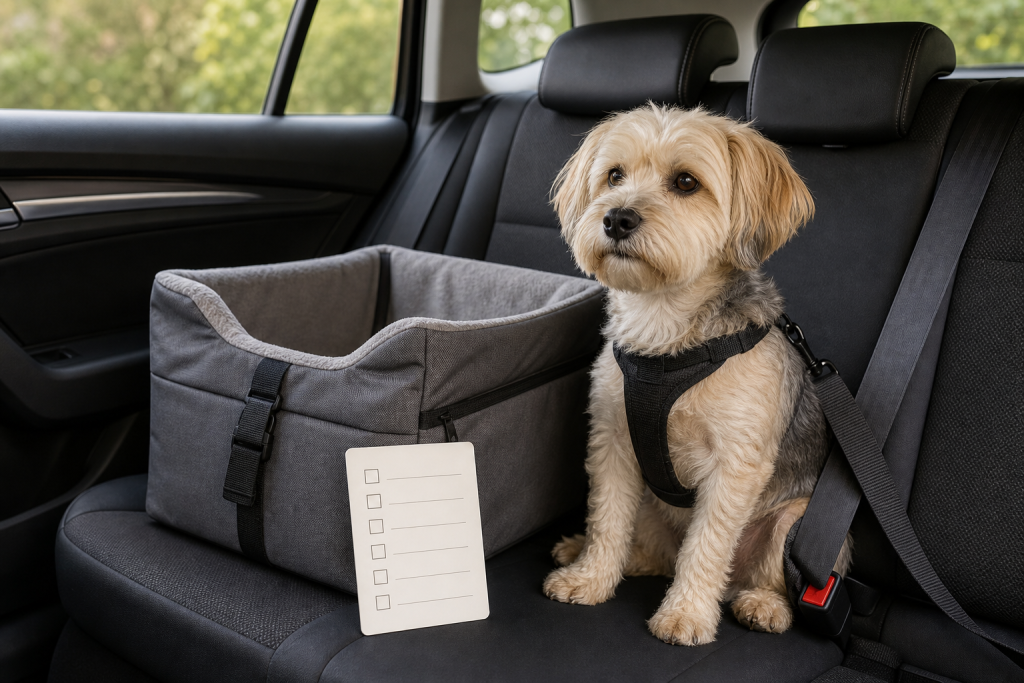
A dog booster seat deal can be useful for comfort and cleaner travel, but it is not automatically the same thing as crash protection. Before you buy one, check whether it is only a raised bed, whether it must be used with a separate harness, and whether any crash-safety claim is backed by independent testing. A lower sale price is not much help if you still need to buy the restraint that makes the ride safer.
Summer travel is pushing dog car seats, booster totes and back-seat beds back into deal sections. People highlighted a PetSmart dog car seat sale on July 16, 2026, and PetSmart’s current sale page is also promoting dog travel categories, same-day delivery and points offers. That makes this a good moment to slow down at checkout, especially if the product photo makes the seat look more protective than the fine print actually says.
What a booster seat usually does well
A booster-style dog seat can give a small dog a defined place to sit, raise the dog high enough to see out, protect upholstery and make quick trips feel less chaotic. For anxious or wiggly dogs, that structure can be genuinely useful.
The problem is the word “seat.” In everyday shopping language, it can sound like a child car seat. In pet travel, many soft booster seats are comfort products first. Some include a short tether, some rely on the vehicle seat belt around the shell, and some are meant to be paired with a separate harness. Those details matter more than the discount badge.
The checkout check most owners skip
Look for the restraint claim before you look at the fabric. The Center for Pet Safety says its certified products meet independent safety standards for road travel, and its certified categories include harnesses, pet travel carriers and travel crates. If a booster seat page says “secure,” “safe” or “car seat,” look for the actual testing standard, certification body and setup instructions behind that wording.
If the product does not show independent crash testing, treat it as a comfort or containment product unless the manufacturer proves otherwise. That does not make it useless. It just changes the buying decision: you may need a separate crash-tested harness or a secured carrier for the real safety job.
Measure the dog, not just the seat
Most booster seats are built for small dogs, and the limit is not only body weight. Check all of these before paying:
- Dog weight and body length: the dog should be able to sit and lie naturally without hanging over the edge.
- Seat base dimensions: compare the product footprint with your actual back seat, especially in compact cars.
- Harness compatibility: avoid clipping a travel tether to a collar. Use a properly fitted harness if the product instructions call for one.
- Attachment method: check whether the seat wraps around the vehicle seat, uses the seat belt path, anchors to the headrest or needs another restraint.
- Airbag placement: the AVMA advises keeping dogs away from the passenger seat when airbags are present.
The ASPCA’s travel guidance is clear that pets should be secured in a well-ventilated crate or carrier, and if owners skip the crate, pets should ride in the back seat in a harness attached to a secured seat belt. That is the standard to keep in mind when a plush booster looks like a bargain.
When the deal is actually useful
A booster seat discount can make sense when it solves a specific comfort problem and you have already handled restraint. It is more useful for a small dog that calmly rides in the back seat than for a heavy chewer, a dog that lunges toward windows or a dog that needs a fully enclosed carrier.
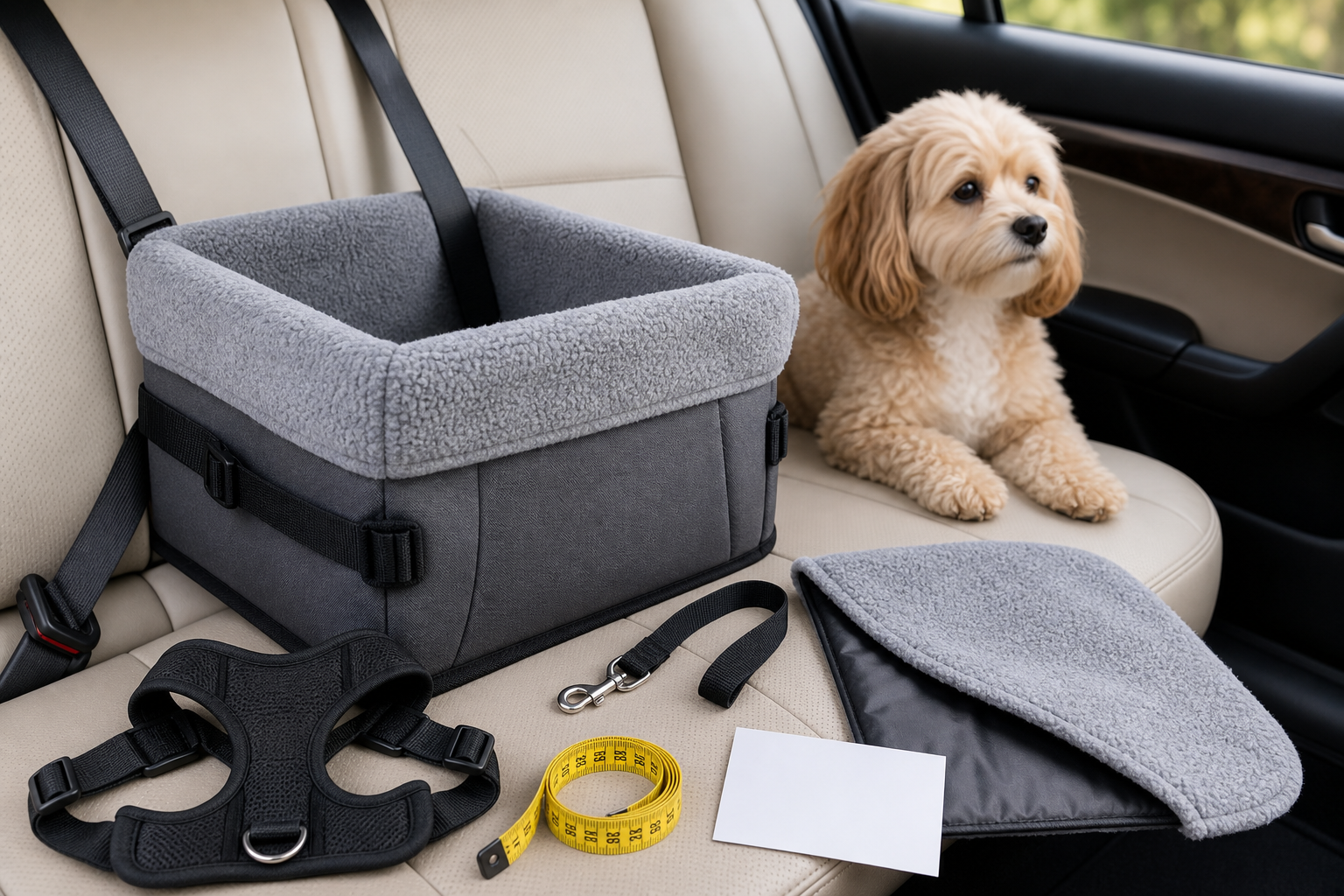
Before checkout, compare the sale price with the total setup:
- the booster seat;
- a compatible harness, if not included;
- a washable liner or replacement cover;
- shipping fees, same-day delivery fees or order minimums;
- return terms after the product has been assembled, washed or used in the car.
PetSmart’s sale page, for example, lists points offers, same-day delivery promotions, Autoship language and free-shipping thresholds, but also says exclusions may apply and selection can vary by store and online. That is normal retail fine print, and it is why the cart total matters more than the headline sale tile.
What to avoid
Do not buy a booster seat just because the dog looks cute and elevated in the photo. Avoid vague listings that do not show the attachment path, weight limit, dimensions or cleaning instructions. Be careful with any product that uses safety language but does not explain the test setup.
Also avoid using a short tether with a collar. A sudden stop can put force on the neck. If your dog cannot settle in an open booster, a secured carrier or crate may be the better shopping choice, even if it is less photogenic.
Quick answers
Is a dog booster seat the same as a crash-tested restraint?
No. Some travel products are independently tested, but many booster seats are primarily comfort and containment products. Check the manufacturer’s evidence and the exact setup required.
Can I put a dog booster seat in the front passenger seat?
That is usually a bad idea. AVMA guidance says dogs should be kept away from passenger seats when airbags are present, so the back seat is the safer default.
Is a cheap dog car seat worth buying?
It can be, if it fits your dog, attaches securely, cleans easily and does not replace a proper restraint. The cheapest option is not a deal if you need to replace it after one trip.
Should I choose a booster seat, harness, carrier or crate?
Choose based on your dog, vehicle and trip length. For safety, prioritize a secured carrier, crate or properly fitted harness system with clear testing and installation instructions. Ask your vet for travel advice if your dog is anxious, elderly, injured or has breathing concerns.
Sources
Sources last checked: July 16, 2026, 13:35 Europe/Rome.
- People, Pet Parents Call This Comfortable Dog Car Seat a “Must-Have When Traveling”
- PetSmart sale page and promotional terms links
- Center for Pet Safety, CPS Certified products
- Center for Pet Safety, pet carrier and crate crash-test research
- ASPCA, Travel Safety Tips
- AVMA, Traveling with your dog or cat