
#dog crate cover
#dog crates
#pet travel
#summer pet safety
A dog crate cover is only a good deal if it keeps the crate calmer without turning it into a hot, stuffy box. Before buying one, check airflow, fabric weight, crate fit and whether your dog chews or pulls fabric through the bars. A cheap cover can be useful for fireworks, naps and travel prep, but it should never replace supervision, training or a cooler room.
Crate-cover deals are especially tempting in summer because owners are trying to solve two problems at once: noise from fireworks, storms and travel, plus a dog who needs a quiet place to settle. The mistake is assuming that a darker crate is automatically safer or calmer. A cover that blocks too much ventilation can make a crate less comfortable right when heat and humidity already matter.
Why This Matters Right Now
Warm weather changes the crate-cover math. The American Red Cross warns that dogs can face heat stress in hot conditions, and it specifically calls out lack of appropriate shelter and hot, humid exercise as heat-stroke risk factors. Even indoors, a heavy blanket over a wire crate can trap body heat and reduce air movement, especially in a small room or a car.
Summer noise is the other reason this product keeps showing up in carts. The ASPCA recommends moving pets who fear fireworks into an interior room with soft music or other calming support. That can make a crate cover feel like an easy add-on, but the safer purchase is a breathable, washable cover used as part of a calm-space setup, not a blackout tent.
The Checkout Checks That Matter
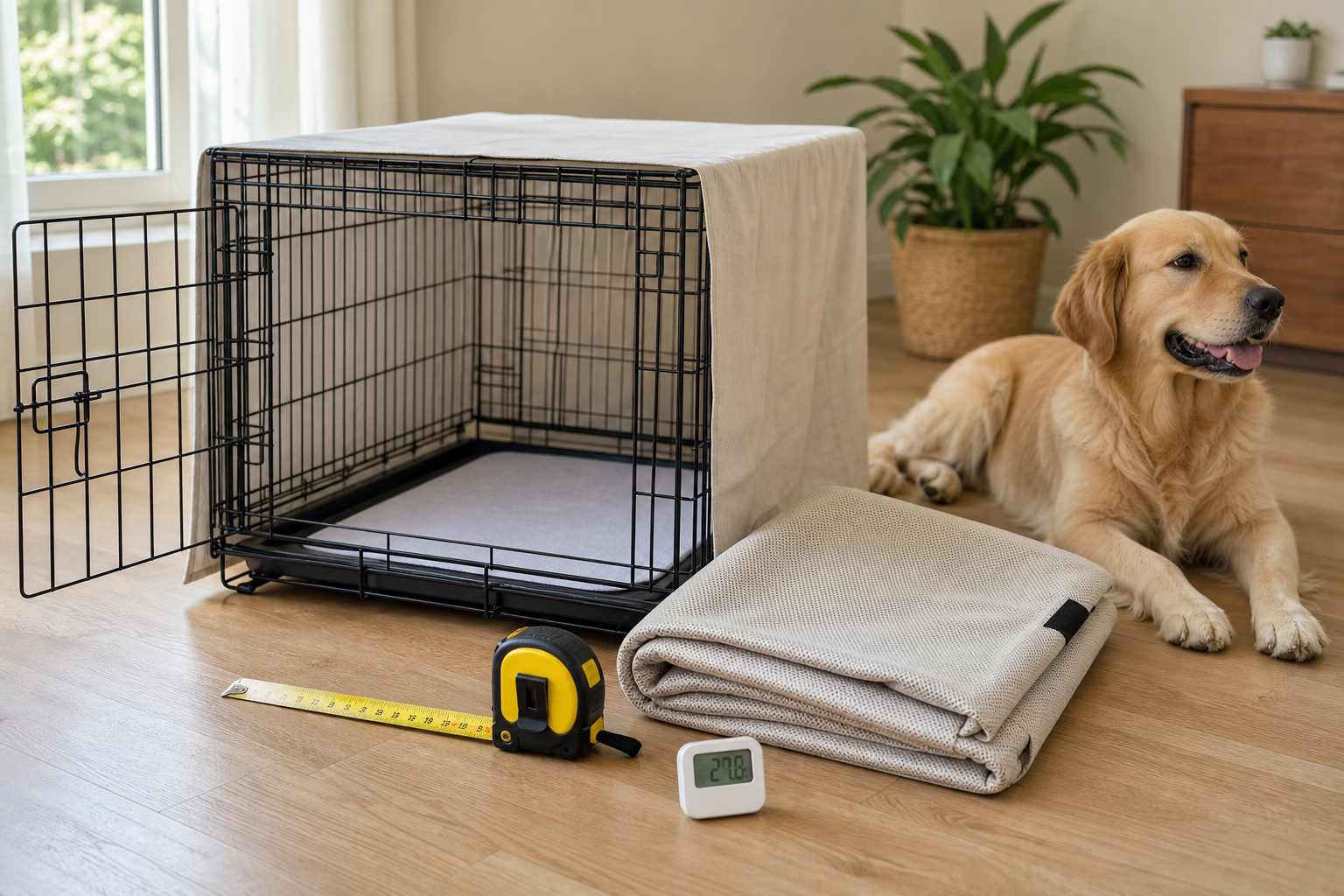
Start with the crate style. Wire crates need covers that can leave at least one large side, the front door or a top section open for airflow. Plastic travel kennels already have limited ventilation compared with wire crates, so adding a full cover can be a poor fit unless the product is designed for that exact kennel and travel conditions.
Then check dimensions. Do not rely only on the crate label, such as 36-inch or 42-inch. Measure the actual length, width and height, including handles, latches and divider panels. A cover that is too tight can pull against doors or block a latch. A cover that is too loose can slide, sag, get chewed or create gaps your dog can grab.
Fabric matters more than the product photo. Look for lightweight, breathable, machine-washable material. Be cautious with thick insulated covers, waterproof coatings, heavy fleece and decorative upholstery if your main use is summer calming. Those can be easier to clean or better for cold-weather transport, but they are not automatically the right choice for a warm room.
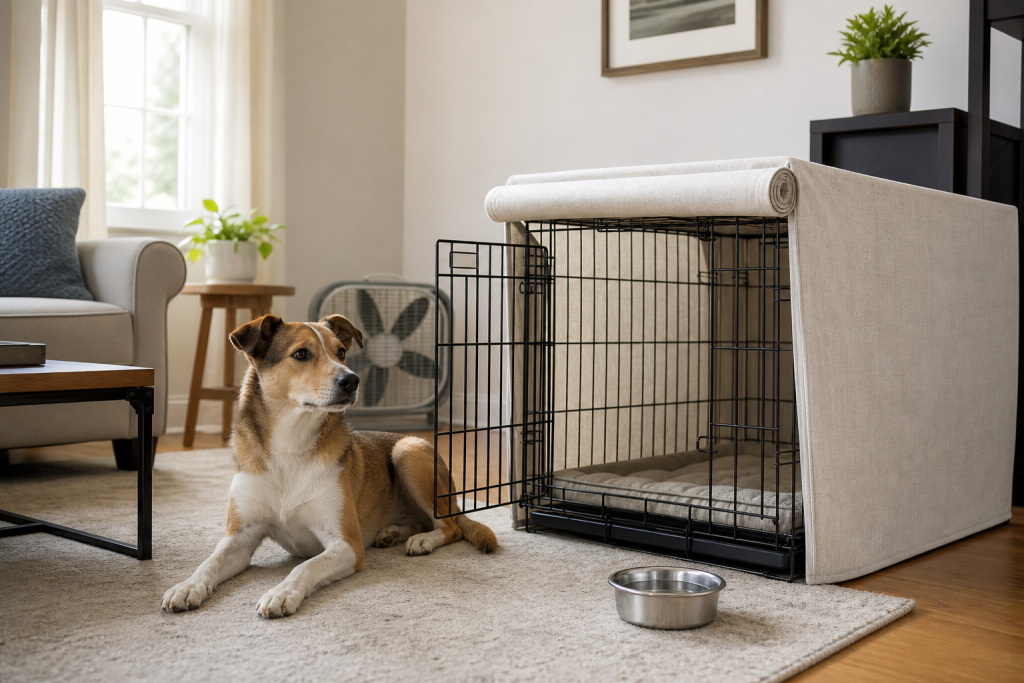
Check the opening design. The most useful covers have roll-up panels, tie-backs, snaps or zippers that let you uncover the front and at least one side quickly. If the product only shows the crate fully covered in every photo, assume you need more information before buying.
Deal Math: When The Cheap Cover Is Not Cheaper
A low sale price can disappear if the cover shrinks, stains, tears or fits only one crate size. Before checkout, compare the cover price with the crate’s replacement cost and your likely washing routine. A washable mid-priced cover may beat a cheaper decorative cover if your dog sheds heavily, drools, tracks mud or has occasional crate accidents.
Also check return terms. Crate covers are easy to mis-size, and some retailers treat used bedding or fabric items differently once opened. If you are buying for fireworks, travel or a new puppy, do not wait until the night you need it. Test the fit early, leave panels open, watch your dog’s behavior and confirm the crate still latches cleanly.
Coupons can help, but do not let a promo code decide the product. Verify the final cart price after shipping, whether the discount excludes bedding or crate accessories, and whether the cover can be returned if the sizing chart is wrong. If you need matching crate mats, clips or replacement panels, add those costs before calling the deal finished.
What To Avoid
Avoid using a blanket as a permanent cover if your dog pulls fabric through the bars, chews bedding or tends to overheat. Loose blankets can shift, block the door or become a chew hazard. A fitted cover with secured panels is usually easier to manage, but only if your dog leaves it alone.
Do not use a cover to force crate time. Humane World for Animals notes that crates should not be used as punishment and that dogs should not spend excessive time confined. If a dog panics, digs, pants heavily, drools, tries to escape or cannot settle, the answer may be training help, a different safe space or a veterinarian’s advice, not a darker cover.
Be especially careful with puppies, senior dogs, flat-faced breeds, thick-coated dogs and dogs with medical conditions. They may be less tolerant of heat or confinement. If you are worried about heat, anxiety or travel safety, ask your veterinarian what setup fits your dog.
A Better Buying Framework
- Choose breathable fabric over blackout thickness for summer use.
- Measure the crate yourself, including latches and handles.
- Prefer roll-up panels so you can uncover the front and side quickly.
- Check whether the fabric is machine washable and how it dries.
- Avoid dangling ties, loose straps and chewable corners for dogs who grab fabric.
- Test the cover while you are home before using it overnight or during fireworks.
- Keep the crate in a cool, quiet room with fresh water available outside crate sessions.
FAQ
Is it safe to cover a dog crate in summer?
It can be, but only if airflow remains good and the room is cool. Use a lightweight cover, leave openings uncovered and check your dog often. If your dog is panting hard, restless or trying to escape, remove the cover and reassess the setup.
Can a crate cover help with fireworks?
It may help some dogs by reducing visual stimulation, but it is not a complete anxiety solution. A quiet interior room, soft background sound and a positive crate association matter more than darkness alone. Dogs with severe fear should be discussed with a veterinarian before fireworks season.
Should I buy an insulated crate cover?
Only if it fits your actual use. Insulated covers can be too warm for summer rooms, cars or humid climates. For most warm-weather calming use, breathable fabric and adjustable openings are safer shopping priorities.
Can I use any blanket instead?
A blanket can work briefly for some dogs, but it is easier for loose fabric to slip, block ventilation or get pulled into the crate. If your dog chews, paws or overheats, a blanket is the wrong shortcut.
Sources
Last checked: 2026-07-06 19:33 Europe/Rome.