
#cat hydration
#dog food toppers
#pet food toppers
#pet hydration
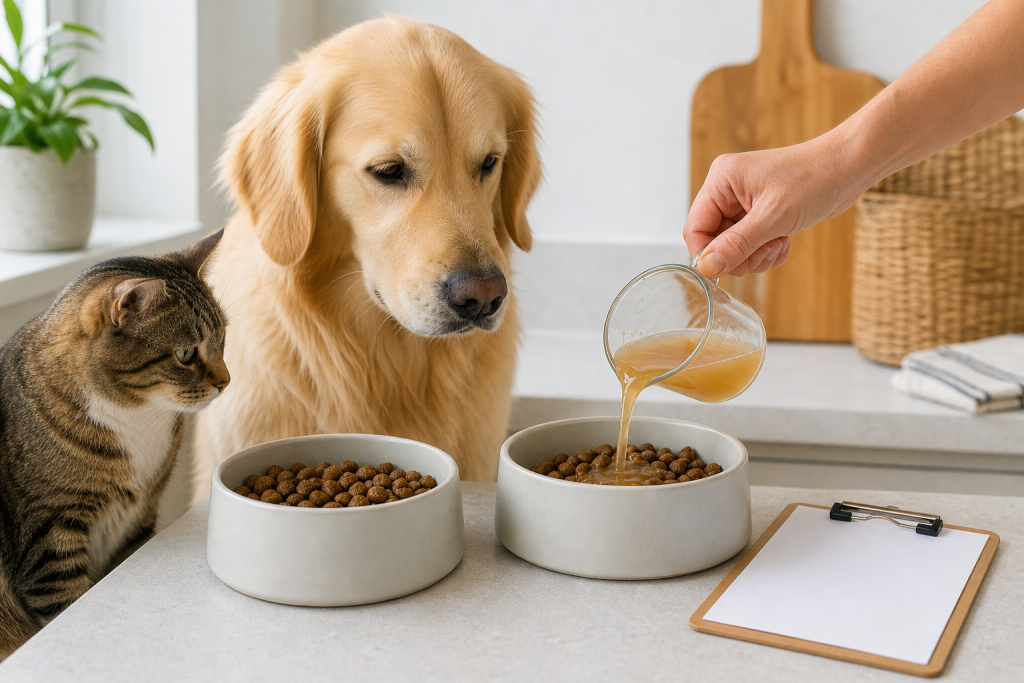
Hydration toppers can be useful, but the deal is only good if the pouch, broth or mixer stays a small add-on to a complete diet. The mistake is treating a flavorful liquid topper like a meal, then missing calories, sodium, feeding directions or the words “intermittent or supplemental feeding” on the label. Before you stock up, check whether the product is complete and balanced, how much you would actually pour each day and whether your pet needs a veterinarian’s guidance.
Why Hydration Toppers Are Getting So Much Attention
Hydration has become a visible pet-food trend in 2026, especially as summer heat, picky eating and premium food add-ons push shoppers toward broths, gravies, lickable mixers and wet toppers. Retailers now group many of these products as meal enhancers, moisture boosters or food toppers, which can make them look more essential than they are.
The useful part is real: adding moisture can make dry food more appealing and may help some pets take in more fluid. The shopping problem is that “hydration” sounds harmless, while the package may still add calories, fat, sodium, gums, supplements or animal proteins that matter for sensitive pets.
The Label Check That Matters Most
Start with the nutritional adequacy statement. If a product is labeled for intermittent or supplemental feeding, it is not meant to replace your pet’s complete and balanced food. The FDA explains that complete and balanced pet foods are formulated around AAFCO nutrient profiles or feeding trials, while AAFCO notes that many treats are not required to meet complete-diet standards.
That distinction matters at checkout. A topper can make dinner more interesting, but a cart full of discounted pouches is not automatically a cheaper wet-food plan. If the product is supplemental, it should be budgeted like a treat or add-on, not like the main diet.
Before You Buy a Multipack, Do the Serving Math
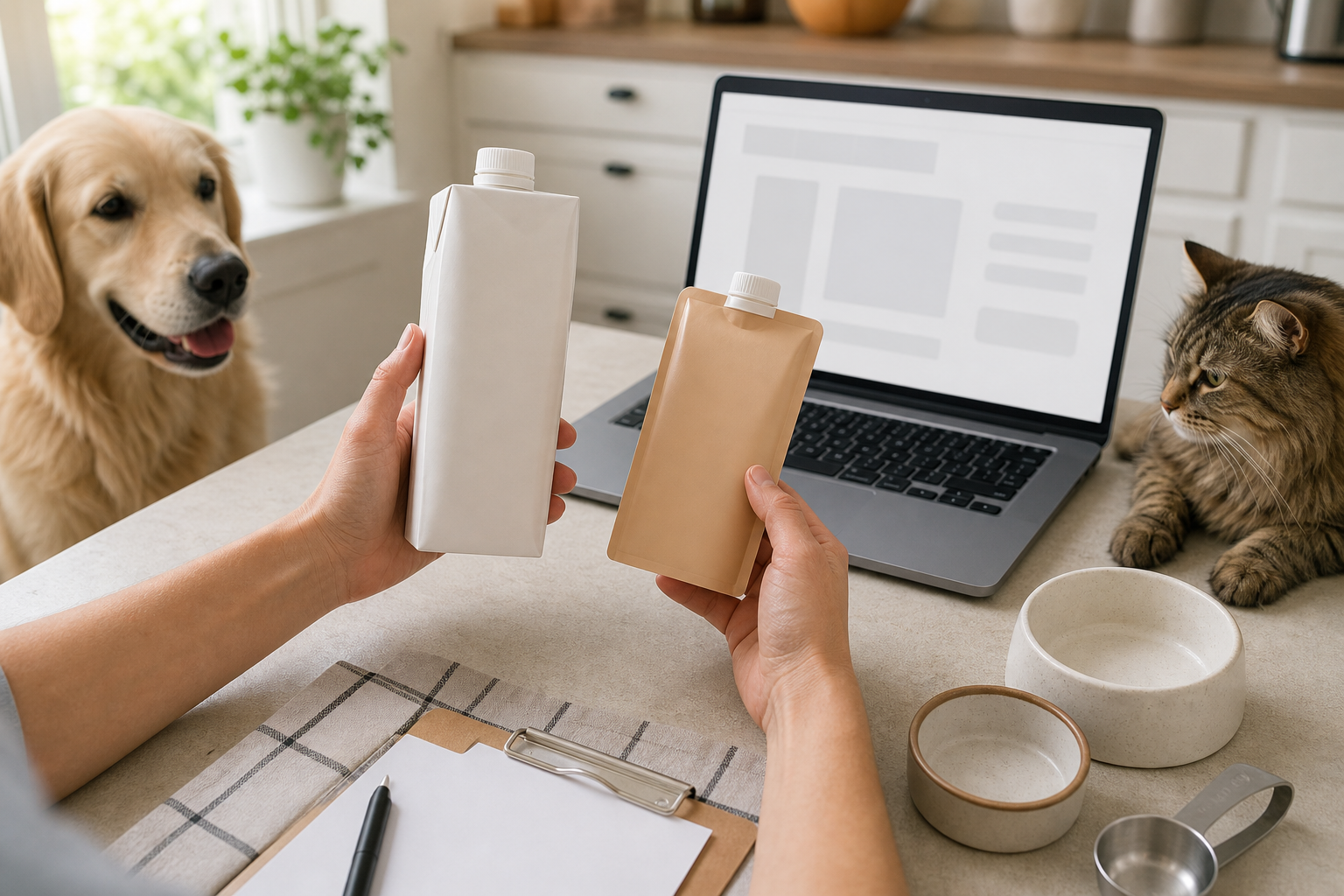
The package count can make a topper look cheap, but the daily serving size decides the real cost. Check how many teaspoons, tablespoons, ounces or pouches the brand suggests for your pet’s size. Then compare that with how long the box lasts once opened and whether the product must be refrigerated.
Small pets make this math even more important. A few extra calories can be a larger share of a cat’s or small dog’s daily intake than shoppers expect. WSAVA’s treat guidance says treats should stay under 10% of daily calories for dogs and cats, and AAHA nutrition guidance emphasizes counting calories from all food items, including snacks and treats.
If the topper has no calorie information where you can find it, treat that as a checkout warning. You should not need to guess whether a daily “hydration boost” is quietly replacing part of the balanced meal.
Ingredients to Check Twice
For broths and savory mixers, look for pet-specific formulas rather than human pantry broth. Human broths can include onion, garlic, high sodium or seasoning blends that are not appropriate for pets. For cats, also check whether the product is actually labeled for cats, not just dogs.
For pets with allergies, kidney disease, urinary issues, pancreatitis history, digestive sensitivity or a prescription diet, do not add a topper just because it is on sale. Ask your veterinarian first. A product can be safe for many pets and still be wrong for a pet with a medical diet or restricted ingredients.
Deal and Coupon Checks Before Paying
A hydration topper deal is worth considering when the product fits your pet’s diet, the feeding amount is clear and the multipack will be used before it spoils. It is less useful when the discount pushes you into a flavor your pet has never tried, a large case with a short use window or an autoship quantity you will not finish.
Before you pay, verify:
- the product is for your pet’s species and life stage;
- the label says whether it is complete and balanced or supplemental;
- calories per serving are listed or available from the brand;
- sodium, fat and protein sources make sense for your pet;
- opened storage instructions fit your routine;
- the coupon applies before shipping, taxes and subscription rules;
- returns are allowed if your pet refuses the flavor.
What to Avoid
Avoid buying a hydration booster because a social video makes it look like every bowl needs one. Many healthy pets eating a complete diet do not need a daily topper. Fresh water, appropriate food and a normal feeding routine still do most of the work.
Also avoid using toppers to cover up a sudden appetite change, vomiting, diarrhea, weight loss, excessive thirst, straining to urinate or other new symptoms. That is not a shopping problem. It is a reason to call your veterinarian.
Quick Answers
Are hydration toppers bad for pets?
No, not automatically. They can be a reasonable add-on when used in small amounts, matched to the species and counted within the pet’s daily calories.
Can a topper replace wet food?
Only if the product is labeled as complete and balanced for the right species and life stage. Many toppers are supplemental and should not replace a complete meal.
Is bone broth the same as a hydration topper?
Bone broth is one type of topper. The safer shopping move is to choose a pet-specific broth and check for calories, sodium, onion, garlic and feeding directions.
Should cats get hydration toppers?
Some cats may enjoy moisture-rich toppers, but cats with urinary, kidney, digestive or prescription-diet needs should have diet changes cleared with a veterinarian.
Sources
Sources last checked July 1, 2026, 22:36 Europe/Rome.
- FDA, “Complete and Balanced” Pet Food.
- FDA, Pet Food.
- AAFCO, Treats and Chews.
- AAFCO, Selecting the Right Pet Food.
- WSAVA, Feeding Treats to Your Dog and Feeding Treats to Your Cat.
- AAHA, 2021 Nutrition and Weight Management Guidelines for Dogs and Cats.
- PetfoodIndustry, Hydration trends in the pet food market, June 15, 2026, used as a trend signal.
- Petco, What Pet Parents Should Know About Food Toppers, used for retailer context.