
#HEPA filter
#pet air purifier
#pet dander
#pet deals
#pet hair cleanup
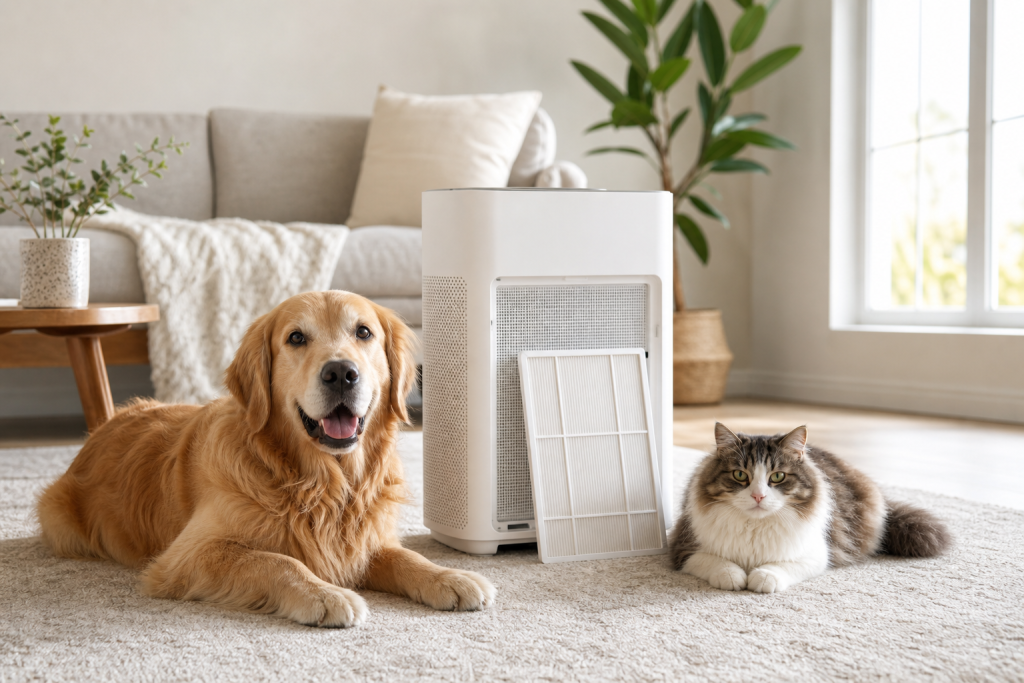
A pet air purifier deal can be a bad buy if the first replacement filter costs nearly as much as the discount saved. Before you order one for a dog or cat home, check the room size, filter type, replacement schedule, ozone or ionizer settings, and whether any smart features will keep working after the app changes. The right unit may help reduce airborne particles, but it will not replace cleaning, grooming, ventilation choices or medical advice for allergies and asthma.
Why this matters now
Pet owners are shopping for air purifiers for several overlapping reasons: shedding season, indoor dander, litter dust, cooking odors, wildfire smoke and longer stretches of closed-window weather. Search interest also tends to rise when people see “pet hair” and “HEPA” claims attached to sale prices.
The useful question is not whether an air purifier sounds pet-friendly. It is whether the machine is sized for the room where your pet actually spends time, whether the filter is a real ongoing cost you can tolerate, and whether the product claims match what air cleaners can reasonably do.
The filter bill is the hidden cost
Many air purifier deals discount the machine, not the maintenance. A lower checkout price can disappear if proprietary filters are expensive, hard to find, replaced more often in pet homes, or excluded from coupon codes.
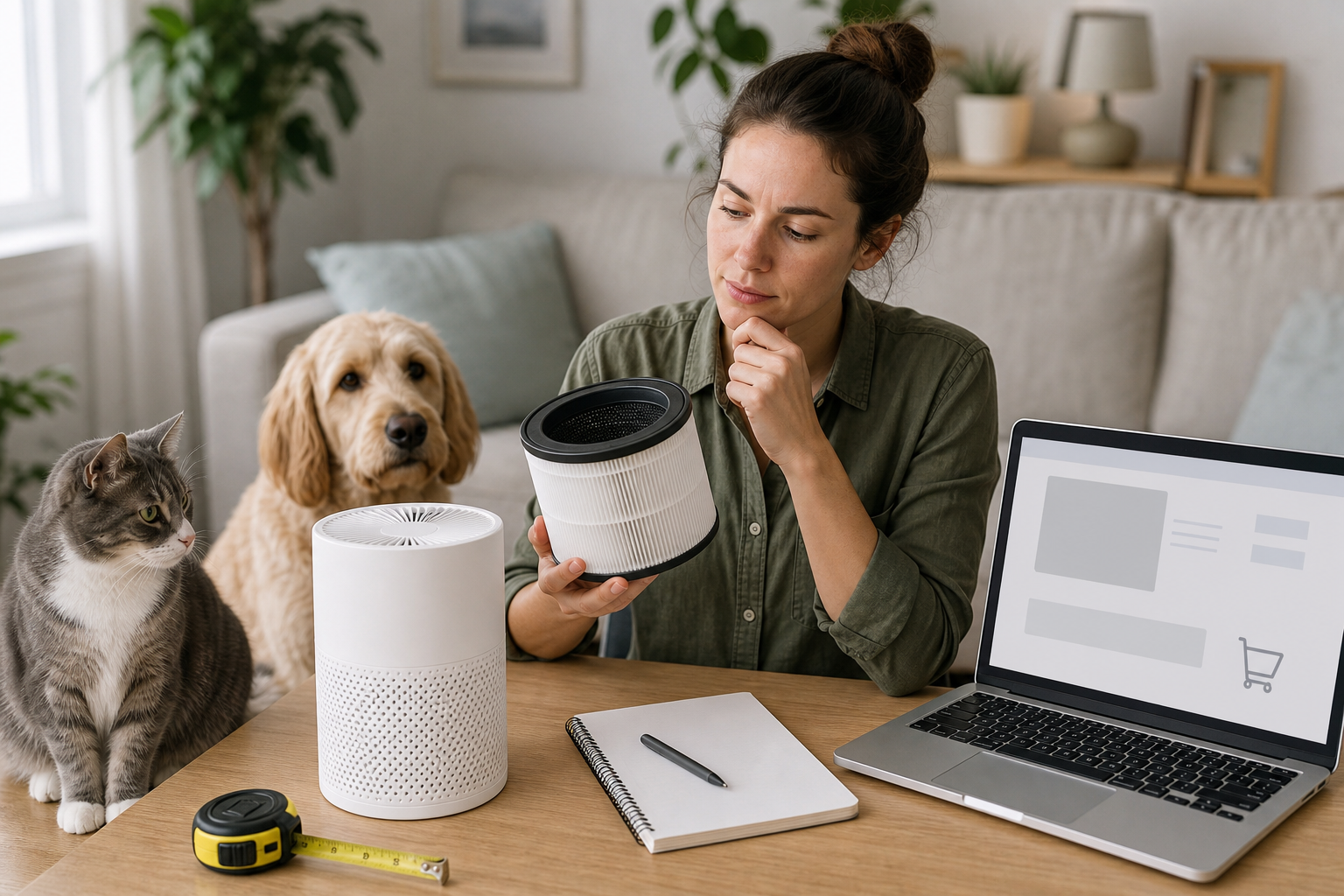
Before buying, write down the exact replacement filter model number and search for it separately. Check whether the seller lists a normal replacement interval, whether a pre-filter can be cleaned, whether the main filter is disposable, and whether third-party filters would void support or reduce performance. If the filter is out of stock now, assume that will be a real ownership problem later.
Do not rely on vague language such as “HEPA-like” or “pet filter” without reading the specs. EPA explains that HEPA is a pleated mechanical filter type used in portable air cleaners, and its air-cleaner guidance emphasizes matching the device to the space and pollutant you are trying to reduce.
Room size beats a big pet label
A compact purifier beside a litter box may be useful in a small room, but it will not clean the air in an open-plan home just because the box shows a dog or cat. Look for the square-foot rating and the clean air delivery rate, then compare that with the actual room, door position and how often you will run the unit.
For a pet home, placement matters too. A purifier blocked by curtains, furniture, a crate, a couch or a pile of toys cannot move air well. A unit placed where a dog can knock it over or a cat can sit on the outlet is also a poor deal, even if the filter spec looks good.
Pet hair, dander and odor are not the same problem
Pet hair is the visible mess, but dander and smaller airborne particles are different. An air purifier may help capture particles that pass through the unit, while hair on rugs, bedding and upholstery still needs cleaning. AAFA recommends HEPA filtration and regular cleaning as part of reducing pet allergens, not as a one-step cure.
Odor claims need extra caution. A particle filter is not the same thing as an activated carbon or gas-phase filter. If the product promises to solve litter-box odor, wet-dog smell or smoke without explaining the filter media and replacement plan, treat that as marketing until the specifications back it up.
Check ozone, ionizer and smart features
Some air purifiers include ionizers or other optional settings. Before using those in a pet area, read the manufacturer instructions and EPA guidance about air-cleaner technologies. If you are buying for a household with respiratory concerns, ask a qualified health professional about the right indoor-air plan rather than relying on a product listing.
Smart air purifiers add another buying check. If the model depends on an app for schedules, filter alerts, air-quality readings or remote control, look for the support policy before you pay. The FTC has warned that many smart-product makers do not make software-update duration easy to find, which matters when a connected device may lose features over time.

What to verify before checkout
- Room rating: confirm the square footage and whether the rating assumes a closed room.
- Filter type: distinguish true HEPA, HEPA-style wording, pre-filters and carbon filters.
- Replacement cost: price the exact filter model, not just the purifier.
- Availability: check whether filters are sold by the retailer, the brand and at least one backup seller.
- Noise: a purifier that is too loud to run near your pet’s favorite room will not help much.
- Safety: confirm stable placement, cord management and whether pets can reach the intake, outlet or controls.
- Returns: check whether opened air purifiers and replacement filters can be returned.
- Smart support: for app-connected models, look for update, privacy and account-dependency details.
Deal and coupon checks
A coupon is useful only if it lowers the total cost of the setup you will actually use. Compare the purifier, a spare filter, shipping, return terms and any subscription default before treating the sale as a win.
Watch for bundles that include only one filter type when the machine uses several. Also check whether the advertised discount applies to replacement filters, because some retailers exclude consumables or subscriptions from promotional codes. If free shipping requires a bigger cart, do not add low-value pet supplies just to reach a threshold.
What to avoid
Avoid buying an air purifier as a substitute for veterinary care if your pet is coughing, wheezing, lethargic or struggling to breathe. Avoid using it as a substitute for medical care if a person in the home has allergy or asthma symptoms. The right response may involve a veterinarian, physician, cleaning routine, HVAC filter, smoke plan, medication or another intervention.
Also avoid units that hide the filter model, make broad “pet odor eliminated” promises without specifications, require a subscription you did not intend to keep, or rely on an app when the basic controls should work from the device itself.
Quick answers
Will an air purifier remove pet hair?
It may catch some airborne hair and particles that pass through the unit, but it will not remove hair already on floors, bedding, furniture or clothing. Vacuuming, brushing and washing pet bedding still matter.
Is a bigger purifier always better for pets?
Not always. A larger unit can move more air, but it may be louder, more expensive to run and harder to place safely. Match the device to the room your pet actually uses.
Should I buy a smart air purifier?
Only if the core controls work without the app and the brand provides clear support information. Smart alerts can be convenient, but they should not turn a simple filter replacement into an account or software problem.
Can an air purifier cure pet allergies?
No. It may be one part of an allergen-reduction plan, but allergies and asthma should be discussed with a qualified health professional.
Sources
Last checked: 2026-06-03 01:33 Europe/Rome.
- U.S. Environmental Protection Agency, Air Cleaners and Air Filters in the Home.
- U.S. Environmental Protection Agency, What is a HEPA filter?.
- U.S. Environmental Protection Agency, Frequent Questions About Wildland Fire Smoke for Individuals.
- Asthma and Allergy Foundation of America, Allergic to Your Pet? Learn About Dog and Cat Allergies.
- Federal Trade Commission Consumer Advice, How long will your smart device get software updates?.
- Chewy, return policy.
- Petco, returns.