
#airline pet travel
#pet carrier
#pet deals
#pet in cabin
#pet travel
A pet-in-cabin fee does not guarantee that your dog or cat can fly if the route, aircraft, seat, carrier, documents or day-of-travel behavior does not meet the airline’s rules. The carrier can also be rejected at check-in even when a product page calls it “airline approved.” Before you pay for a ticket, pet fee or new carrier, read the airline’s pet page and the refund terms for that exact flight.
That fine print matters right now because pet-in-cabin travel is changing quickly. Virgin Australia has added Adelaide to its Pets in Cabin trial for flights starting June 23, 2026, while major U.S. airlines still limit in-cabin pets by route, aircraft, cabin and available pet spaces. Shoppers are seeing more soft carriers, pet travel bundles and summer travel deals, but the real purchase decision is not just the bag. It is whether the airline will accept your pet, your carrier and your booking on the day you travel.
Why This Is a Shopping Problem, Not Just a Travel Rule
The expensive mistake is buying the carrier first and reading the airline policy later. A soft-sided carrier that works on one airline can be too tall, too stiff or poorly secured for another. A pet fee can also be one-way, per sector, limited by the number of pets already booked, or nonrefundable if you cancel by choice.
Virgin Australia’s current trial is a good example of how specific the rules can be. Its Pets in Cabin page says small dogs and cats must fit in an approved carrier under the seat, with a combined pet-and-carrier weight limit of 8 kg. It lists a maximum carrier size of 44 cm x 26 cm x 28 cm and says pets must remain in the closed carrier except during security screening or at animal relief areas.
That does not mean every “airline approved” carrier near those measurements is safe to buy. Virgin Australia also says supplier measurements can differ from actual size and that measurements will be checked at the airport. If the carrier is too large, cannot be secured, smells, has structural damage or lets the pet protrude from the sides, the airline can refuse carriage.
The Rules to Check Before You Pay
Start with the exact airline, route and aircraft, not a generic travel blog. American Airlines says a carry-on pet must stay in the carrier and under the seat for the entire flight, and it tells passengers to pay the fee at the airport after the airline checks that the pet and kennel meet requirements. Delta says pets in cabin are first-come, first-served, with a limit on the total number allowed on each flight, and asks travelers to have kennel dimensions ready when booking.
Check these details before checkout:
- Whether pets are allowed in cabin on your route, including international segments, Hawaii, the U.K., Australia or partner-airline legs.
- The maximum carrier dimensions for the exact airline and aircraft.
- Whether soft-sided carriers are recommended or required.
- Whether the pet must be able to stand, turn around and lie down without pushing out the carrier.
- Whether the carrier counts as your carry-on, and what additional personal item is allowed.
- How many pets are allowed per passenger, per carrier and per flight.
- Whether you must call, add the pet in the airline app or check in at a special counter.
- When the pet fee is collected and whether it is refundable if the pet is denied boarding.
The Emergency Clause Owners Are Talking About
Virgin Australia’s Pets in Cabin terms say that, in an emergency evacuation, cabin baggage including the pet carrier and pet must be left onboard to support a safe and swift evacuation. The same terms also say the aircraft will not be diverted if a pet becomes unwell or dies en route. Those are serious terms, and they should be read before anyone buys a carrier or pays a pet fee.
This is not only a pet-travel debate. On June 8, 2026, IATA launched its “Save a Life, Not a Bag” passenger safety campaign, urging travelers to leave all baggage behind during aircraft evacuations. A pet carrier is still cabin baggage in many airline rules. If that risk changes your decision, it is better to know before booking than at the gate.
How to Judge a Carrier Deal
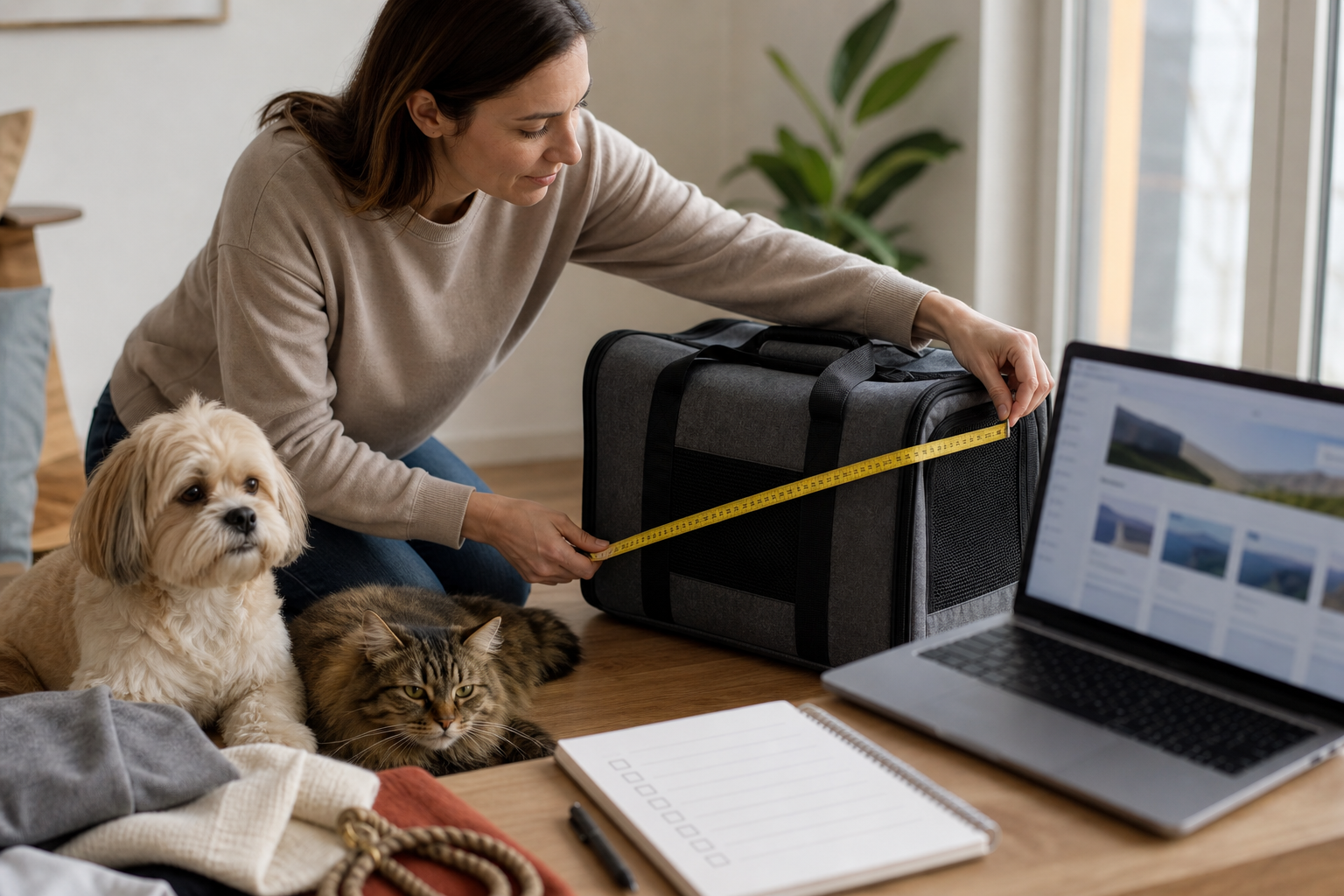
A discounted carrier is useful only if it fits both the airline and your pet. Measure the carrier at its longest, widest and highest points after it is assembled, not just folded flat. Then measure your dog or cat in a relaxed standing position and compare that to the airline’s comfort rule.
Look for a leakproof base, secure zippers, ventilation on the sides required by your airline, a removable washable pad and enough structure that the carrier does not collapse onto your pet. For airlines that require doors or openings to be sealed, avoid designs that rely on loose Velcro or flimsy closures. If the carrier has wheels, a trolley sleeve, expandable panels or a backpack frame, confirm those parts do not make it too large for the under-seat space.
Be careful with bundles that include bowls, GPS tags, fans or battery-powered extras. Some airlines restrict tracking devices, battery-operated items or accessories in the carrier. Buy the carrier first for compliance, then add travel accessories only if they are allowed.
Deal and Coupon Checks Before Paying
Pet travel purchases are easy to misprice because the costs are split across the carrier, pet fee, seat selection, vet documents, taxi or airport transport, and a backup boarding plan. Do not compare carrier prices alone.
Before you use a coupon or sale price, verify:
- The return window, especially if the carrier will not be tested at the airport until weeks later.
- Whether opened or used carriers can be returned after a short home fit test.
- Whether return shipping is deducted for bulky carriers.
- Whether a promo code excludes travel gear or requires a higher cart total than you planned.
- Whether the airline pet fee is charged per one-way sector, not per round trip.
- Whether changing flights could remove pet-in-cabin availability.
If the carrier is for one specific trip, a slightly higher price from a retailer with a cleaner return path can beat a cheaper marketplace listing with vague dimensions. Save screenshots of the carrier measurements and the airline policy you used, because policies and product listings can change.
What to Avoid
Avoid any carrier sold mainly on the phrase “airline approved” without actual dimensions, ventilation details and closure photos. Avoid hard-sided carriers unless the airline specifically allows that style for your aircraft. Avoid carriers that require force to fit under a seat, since a gate agent can still reject a bag that technically compresses but blocks safe stowage.
Do not plan to sedate a pet just to make a flight easier. Airline rules and veterinary guidance vary, and some airlines require veterinary review for higher-risk pets or sedated pets. Ask your veterinarian whether your individual dog or cat is a safe candidate for air travel, especially if they are very young, senior, pregnant, brachycephalic, anxious, recently ill or managing a chronic condition.
Quick Answers
Does “airline approved” on a carrier listing mean it will be accepted?
No. It is a marketing phrase unless the carrier matches the airline’s current dimensions, ventilation, closure and pet-comfort rules for your exact flight.
Can a pet fee sell out?
Yes. Airlines can limit the number of pets in cabin on each flight. Delta describes in-cabin pets as first-come, first-served, and Virgin Australia says pet spaces are limited.
Should I buy the carrier before booking the pet?
Check the airline policy first, then buy a carrier that matches it, then add the pet to the booking as early as the airline allows.
Is this only an Australia issue?
No. Virgin Australia’s trial is the current news hook, but the same checkout lesson applies broadly. American, Delta and other airlines have their own rules for routes, cabins, dimensions, fees and check-in.
Sources
Sources last checked June 11, 2026, 01:38 Europe/Rome.