
#cat bowls
#cat supplies
#feline acne
#plastic cat bowl
A cheap plastic cat bowl is not always a bargain if it gets scratched, holds residue or keeps you replacing bowls instead of fixing the feeding setup. Veterinary sources say switching from plastic to smoother non-porous bowls such as stainless steel or glass may help some cats with chin acne, especially when the dishes are washed daily. The better buy is usually a simple bowl you can clean thoroughly and replace only when it is damaged.
That matters now because cat bowls are a common add-on in pet carts, and sale pages make multi-packs of colorful plastic dishes look almost risk-free. They are light, cheap and easy to stack, but the lowest price is not the only cost if the bowl scratches quickly or your cat’s chin keeps getting irritated.
Why the bowl material matters
Feline chin acne is not just a dirty-looking spot under the chin. VCA Animal Hospitals describes it as a condition that can involve clogged follicles, blackheads, swelling or infection, and notes that replacing plastic dishes with smooth, non-porous options such as glass or stainless steel may help some cats when combined with daily washing.
International Cat Care gives similar practical guidance, saying ceramic or metal bowls rather than plastic can help in some cases. Veterinary Partner, from VIN, also notes that changing plastic food and water bowls to metal, glass or ceramic may reduce outbreaks when contact sensitivity is part of the problem.
That does not mean every plastic bowl causes acne, or that a new bowl is a treatment plan. It means the bowl is a reasonable shopping variable to check before you spend money on another cute multipack, especially if your cat already has black specks, crusting or irritation under the chin.
The checkout mistake with cheap cat bowls
The mistake is buying by pack size instead of surface and cleaning routine. A six-pack can look cheaper than one stainless bowl, but it may be the wrong savings if the bowls scratch, hold food film or need frequent replacement.
Before paying, check these details:
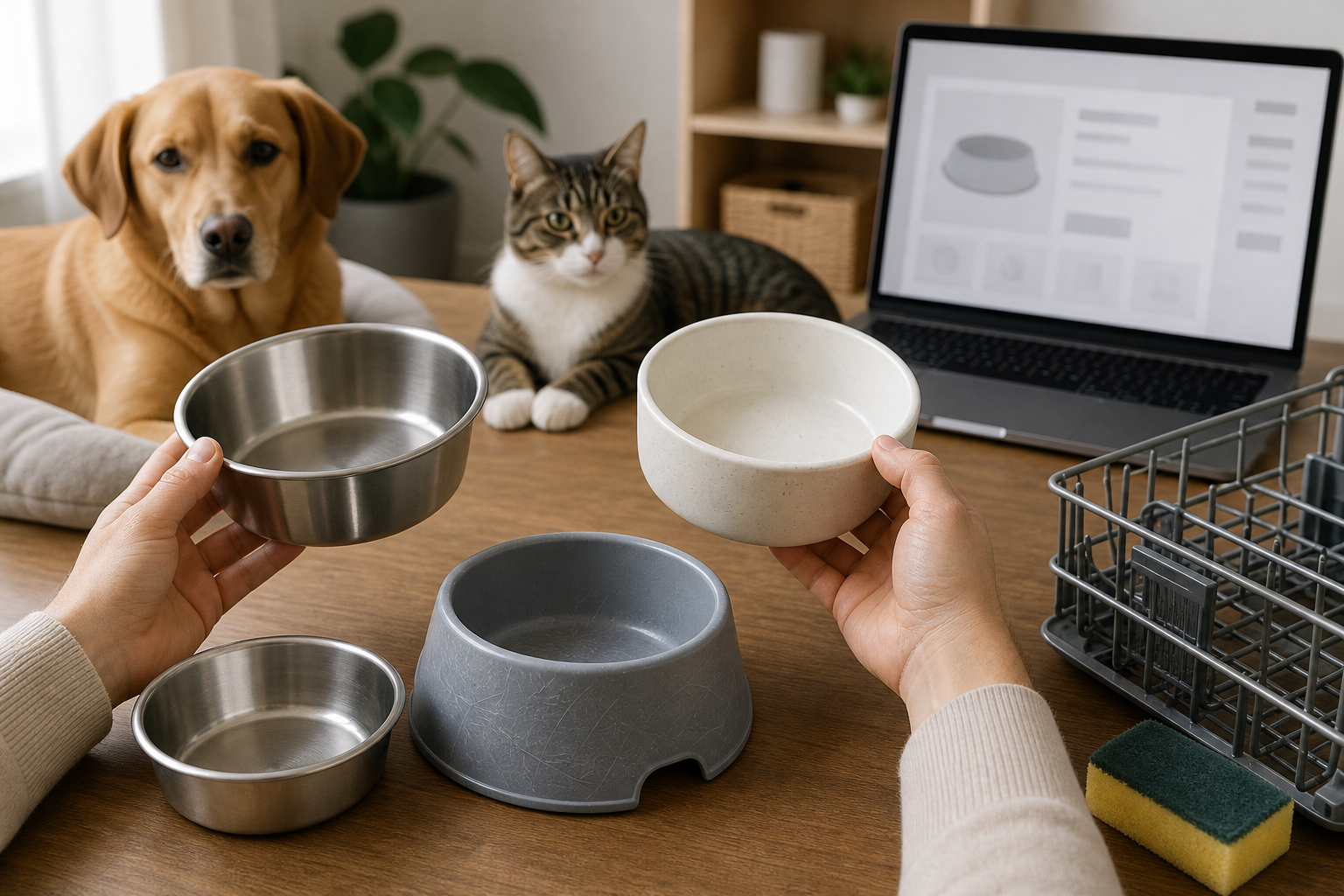
- Material: stainless steel and glass are easy to inspect and clean. Ceramic can be a good option if the glaze is intact, but chipped or cracked ceramic should not stay in the feeding area.
- Surface: avoid bowls with rough texture, deep decorative grooves or visible scratches where residue can collect.
- Shape: a wide, shallow dish can reduce chin rubbing and may be easier for some cats to use than a deep cup-shaped bowl.
- Cleaning: look for dishwasher-safe claims or a shape that can be washed thoroughly by hand every day.
- Stability: non-slip bases are useful, but make sure rubber rings can be removed or cleaned underneath.
- Backup bowls: if daily washing is the plan, buy enough bowls to rotate clean dishes instead of reusing one dirty bowl.
When a bowl deal is actually useful
A good deal is not automatically the fanciest bowl. It is the bowl that solves the actual problem in your home: easier washing, fewer scratches, better stability or a shape your cat will use without pushing food over the edge.
For most shoppers, a plain stainless steel dish with a smooth interior is easier to justify than a novelty plastic bowl. If you prefer ceramic, inspect the glaze, check whether it is food-safe, avoid chipped dishes and remember that a heavy bowl is only helpful if you can clean it comfortably.
Do not count a discount until you compare the full setup. A low bowl price can lose its advantage if you need separate mats, extra replacements, special cleaning tools or paid shipping to reach a free-delivery threshold.
Deal and coupon checks before you pay
Cat bowls are often bundled into cart promotions, Autoship-style pet supply orders or retailer sale pages. Those deals can be useful, but only if the final cart still fits what you need.
- Compare price per bowl, not just the total pack price.
- Check whether the bowl is returnable after opening or use.
- Read the care instructions before assuming it can go in the dishwasher.
- Do not buy a large plastic multipack just to unlock a coupon if you already suspect plastic is a problem for your cat.
- If a retailer offers several sizes, measure the feeding area and your cat’s usual portion before choosing the biggest discount.
What to avoid
Avoid treating a bowl swap like a diagnosis. If your cat’s chin is swollen, bleeding, painful, oozing, losing hair or not improving, ask your veterinarian. Similar-looking skin problems can need a real exam, and human acne products are not a safe shortcut for cats unless your vet specifically tells you to use one.
Also avoid keeping scratched bowls because they were cheap. Once a plastic dish is visibly scratched, cloudy or rough, it is no longer the same deal you bought. The same logic applies to chipped ceramic. If food residue is hard to remove, replace the dish instead of trying to make a worn bowl last forever.
Quick answers
Are plastic cat bowls always bad?
No. The cautious shopping point is that plastic can be harder to keep smooth over time, and several veterinary sources recommend switching away from plastic in some feline acne cases.
Is stainless steel better than ceramic?
Stainless steel is durable, smooth and easy to inspect. Ceramic can work if it is intact and easy to wash, but chipped or cracked ceramic should be replaced.
Do I need an expensive cat bowl?
Usually not. A simple smooth bowl that your cat uses and you can wash daily is often a stronger buy than a decorative bowl with grooves, seams or hard-to-clean parts.
Should I buy acne wipes instead?
Do not jump straight to medicated wipes or skin products without checking with your vet, especially if the chin looks sore or infected. A cleaner feeding setup can be a low-risk shopping change, but skin treatment is a medical decision.
Sources
Sources last checked: 2026-07-15 01:35 Europe/Rome.
- VCA Animal Hospitals, Chin Acne in Cats.
- International Cat Care, Acne and Stud Tail.
- Veterinary Partner, VIN, Feline Acne.
- Purina, Best Type of Cat Bowl.