
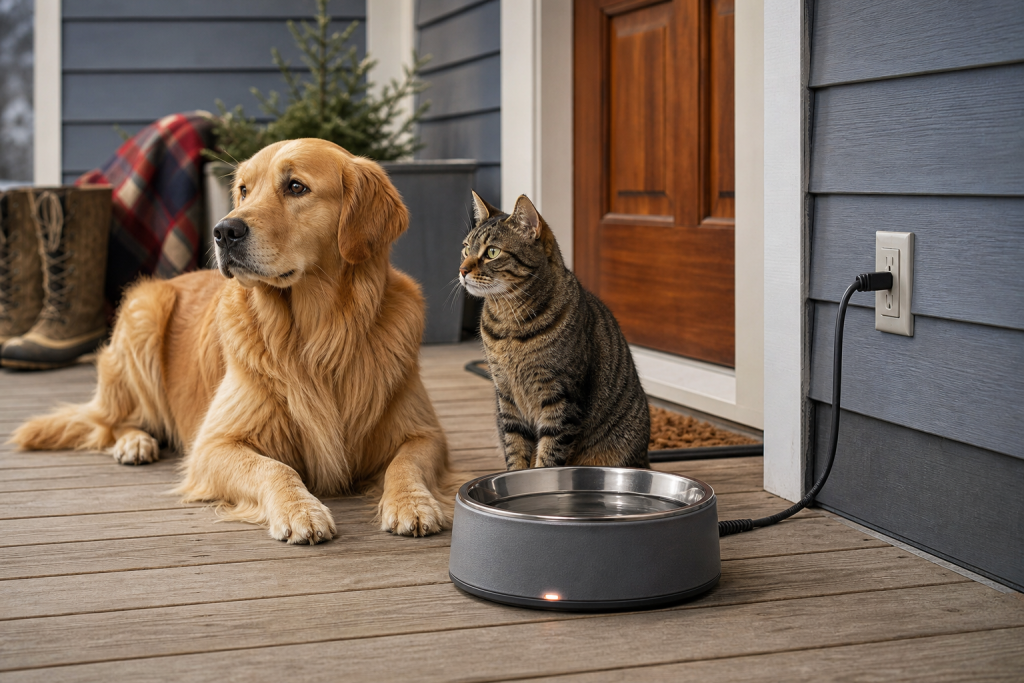
#heated pet water bowl
#outdoor pet water
#pet tech deals
#pet winter supplies
A heated pet water bowl is only a good deal if the cord, outlet location and outdoor rating fit the place where your dog or cat actually drinks. The hidden catch is that many bowls have short cords, no removable heating element and safety instructions that make permanent extension-cord setups a bad idea. Before you buy one on sale, check the placement first, not just the bowl size.
That may sound like winter shopping in July, but it is exactly when clearance bins and early seasonal listings can tempt pet owners into buying the wrong setup. A heated bowl is a small electrical appliance that sits near water, pets and weather. The bargain disappears fast if you need an electrician, a different bowl size or a safer sheltered location after the first freeze.
Why this matters before cold weather
Cold-weather pet guidance still starts with a simple rule: cats and dogs should not be left outside in dangerous conditions. A heated bowl does not make an outdoor space safe by itself, and it should not be treated as a substitute for shelter, supervision or veterinary advice for an animal that struggles with cold.
Where these bowls can help is narrower and more practical. They can keep water from freezing for outdoor-access pets, barn cats, working dogs or supervised yard setups where fresh water is otherwise difficult to keep liquid. That makes the product useful, but it also means the buying decision is really about power, placement and maintenance.
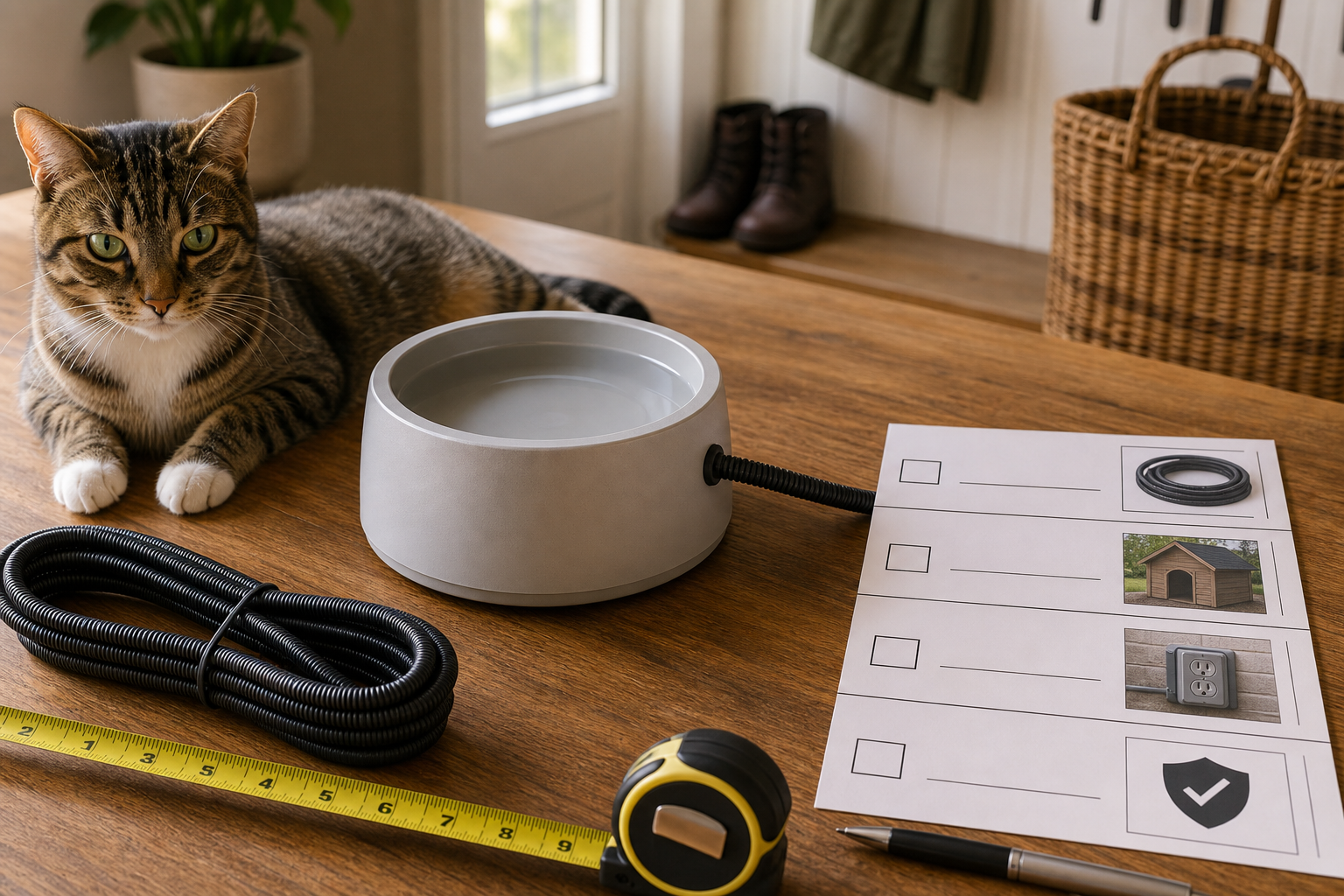
The cord check most shoppers skip
Start with the cord length. One common heated dog and cat bowl example from K&H lists a 5.5-foot protected cord, sealed electronics, thermostatic operation and outdoor use. That sounds simple until the nearest suitable outlet is across the porch, behind a door or on the wrong side of a wet walkway.
Do not assume an extension cord solves the problem. The U.S. Consumer Product Safety Commission says extension cords that lack key safety characteristics can present shock or fire risks. Electrical safety groups also warn against daisy-chaining cords, using indoor cords outdoors or routing cords through doors, windows, rugs or wet areas.
Before checkout, measure the actual run from the outlet to the bowl location. If the bowl cannot reach without a risky cord path, the cheaper model may be the wrong purchase. Look for a safer location, a different certified product or professional advice on outdoor power instead of improvising.
What to verify before paying
- Outdoor use: The listing should clearly say the bowl is designed for outdoor use, not just “heated” or “winter.”
- Safety listing: Look for a complete product safety listing or certification claim from the manufacturer, then confirm it in the manual or product page.
- Cord protection: A protected or abrasion-resistant cord helps, but it does not make the cord chew-proof or safe to leave where pets can bother it.
- Plug type and outlet: Check whether the plug matches your outlet and whether the outdoor outlet has appropriate protection for wet locations.
- Capacity: A small bowl may freeze less often but still run dry quickly. Match capacity to the pet, refill schedule and weather.
- Shelter from wind: Some product guidance recommends sheltered placement because wind can affect performance.
- Cleaning rules: Heated bowls may need wiping rather than immersion. If you usually wash bowls in a sink or dishwasher, read the care instructions first.
- Warranty and returns: Electrical pet products are worth buying from sellers with clear return windows and manufacturer support.
Deal and coupon checks
A sale price is useful only after you compare the total setup cost. Add the bowl, any safer mounting or weather protection, shipping, return shipping risk and the possibility that the cord is too short for your outlet. Do not count a coupon twice if the cart applies it only to eligible items, and do not assume a marketplace listing has the same warranty as the brand’s own store.
Check whether the retailer treats the item as seasonal, clearance or final sale. If you are buying months before cold weather, the return window may close before you can test whether the bowl fits your porch, shelter or barn setup. For a product that uses electricity around water, a cheap nonreturnable listing is not automatically a smart buy.
What to avoid
Avoid any heated bowl listing that hides the cord length, does not state outdoor suitability or makes big claims without a manual or support page. Be cautious with lookalike marketplace listings that use generic winter wording but do not name a manufacturer, warranty or safety standard.
Also avoid using a heated bowl to justify leaving a pet outside longer than is safe. If your pet is young, senior, short-coated, ill, thin, wet or reluctant to use the outdoor setup, ask your veterinarian what cold-weather routine is appropriate. The product keeps water available; it does not judge whether the pet should be outside.
Fast answers
Is a heated pet water bowl worth buying?
It can be worth buying if your pet has a safe, sheltered outdoor water spot and the bowl can plug in without a risky cord setup. It is not worth buying just because it is on clearance.
Can dogs and cats use the same heated bowl?
Some models are marketed for both dogs and cats, but capacity, height and placement still matter. A cat may avoid a noisy, deep or exposed bowl even if the label says cats can use it.
Should I use an extension cord?
Do not plan the purchase around an extension cord unless the product instructions and a qualified electrical setup support it. Outdoor electrical safety is part of the purchase, not an afterthought.
Can the bowl stay plugged in all day?
Some thermostatic bowls are designed for continuous operation, but you should follow the manufacturer manual for that exact model. Unplug it for cleaning and when the instructions say to do so.
Sources
Last checked: 2026-07-14 22:35 Europe/Rome.
- K&H Pet Products, Thermal-Bowl Heated Outdoor Water Bowl.
- Chewy, K&H Pet Products Thermal-Bowl Outdoor Heated Cat & Dog Water Bowl.
- U.S. Consumer Product Safety Commission, Extension Cords Business Guidance.
- Electrical Safety Foundation International, Extension Cord Safety.
- American Veterinary Medical Association, Cold Weather Animal Safety.