
#dog training
#dog training collars
#pet deals
#pet tech
#remote dog training collar
A remote dog training collar deal is worth pausing over because the cheapest kit is not the real decision. Before you buy, check whether the collar uses aversive stimulation, whether a reward-based trainer would solve the problem more safely, and whether the product’s fit, return terms and app support are clear. A discount can disappear quickly if the collar is unused, returned late or creates a training problem you then need professional help to unwind.
That matters right now because pet tech is crowding into summer deal events, and Amazon has confirmed Prime Day 2026 for June 23 through June 26. Remote collars, bark collars and app-connected training tools often show up beside GPS trackers, smart feeders and pet cameras, but they are not ordinary gadgets. They sit at the point where shopping, animal welfare and owner frustration meet.
Why this deal is different from a normal collar
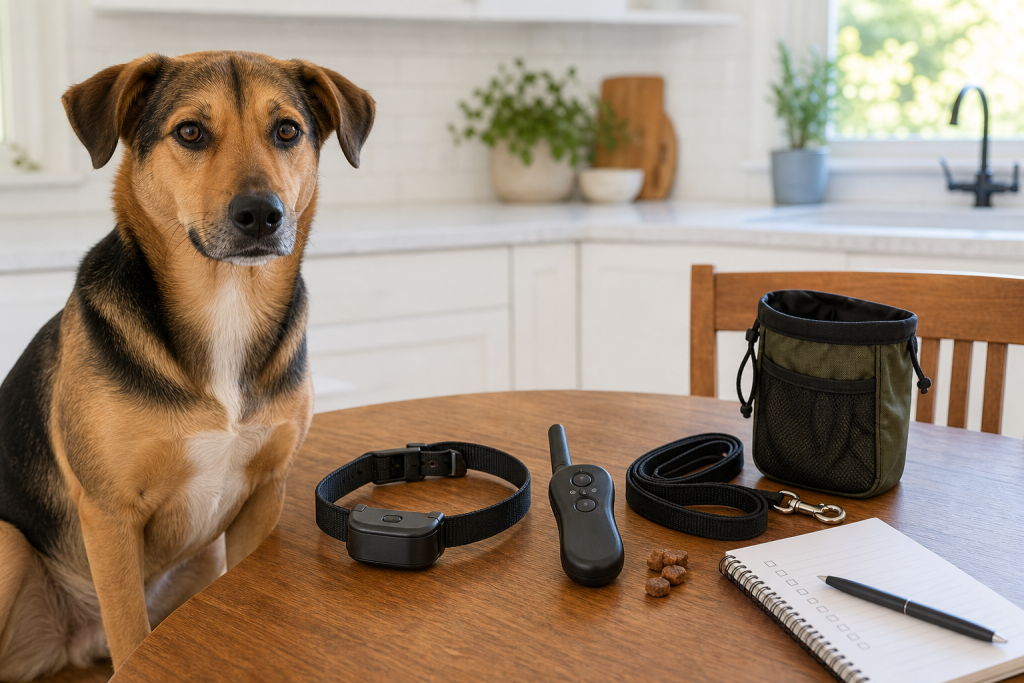
A plain walking collar or harness is mostly a fit and materials purchase. A remote training collar can involve vibration, sound, spray or electronic stimulation, and some products bundle those modes with long-range remotes, waterproof claims and rechargeable batteries.
The headline feature on many listings is range. That is the wrong first filter for most households. If the behavior problem is barking, recall, lunging, escaping or anxiety, the more important question is whether the tool is appropriate at all. The American Veterinary Society of Animal Behavior says its current position supports reward-based training and warns against aversive methods, including electronic shock collars. The RSPCA also warns that electric shock collars raise welfare concerns and can harm the dog-owner relationship.
This does not mean every product listing tells the same story. Some collars market tone-only or vibration modes, some include static stimulation, and some mix training features with GPS, app alerts or containment systems. Treat the product page as a claim to verify, not a training plan.
The checkout checks owners should make first
Start by identifying the exact modes the collar can deliver. Look for plain-language descriptions of sound, vibration, spray and static stimulation. If the listing hides the mode behind vague words such as “correction” or “stimulation,” slow down and read the manual before buying.
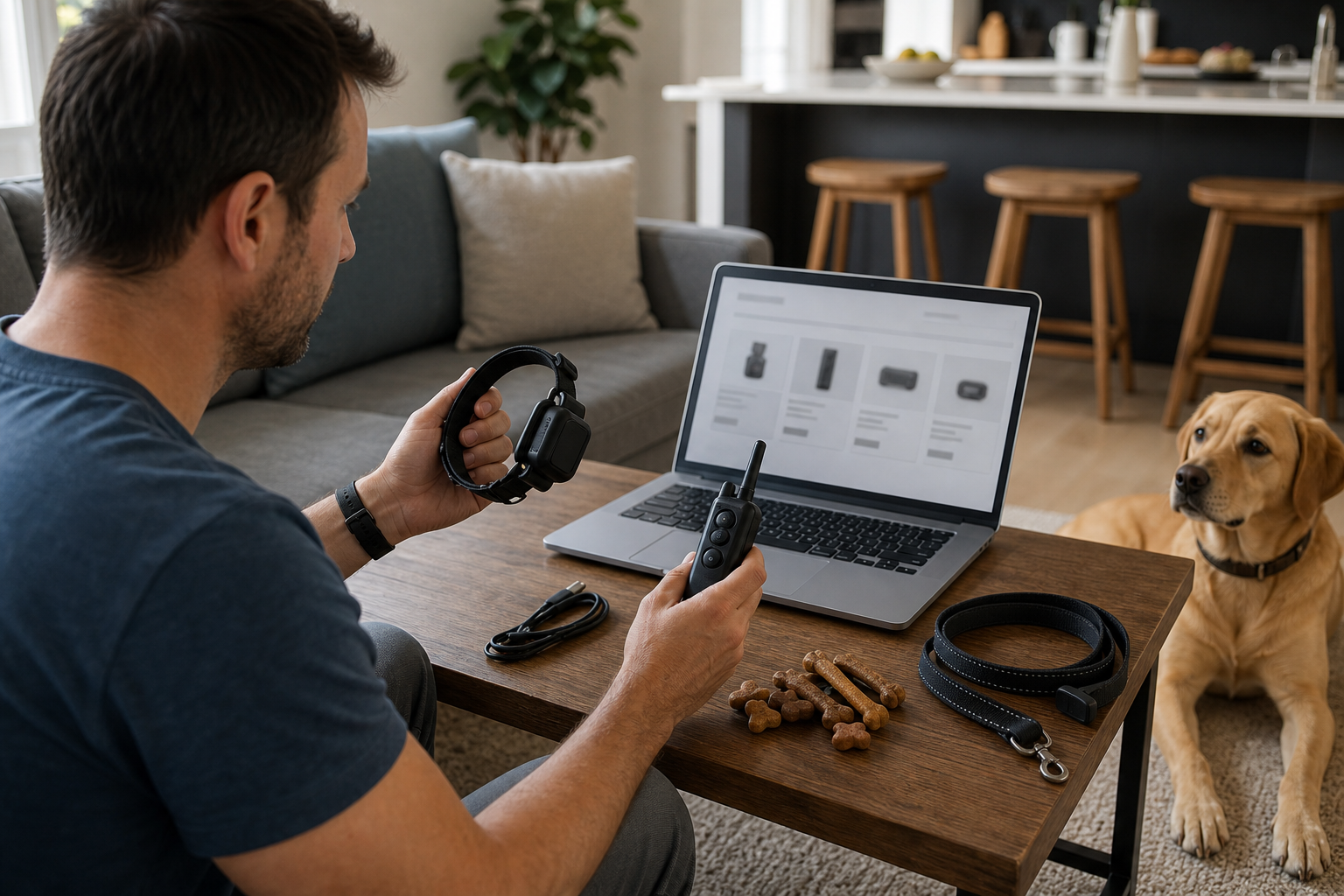
Then check fit like you would with any collar that sits on a dog’s neck for more than a short session. Confirm the weight range, neck size range, contact-point design, strap width and whether replacement straps or contact covers are sold separately. A deal on a device that does not fit your dog comfortably is not a deal.
Battery and charging matter too. A collar that needs a proprietary cable, a sealed battery or a hard-to-find replacement part can become expensive after checkout. If the product uses an app, check whether the collar works without the app, whether it needs 2.4 GHz Wi-Fi, what data the app collects and how long the company says it will support updates. The Federal Trade Commission has warned more broadly that many smart-product makers do not clearly tell shoppers how long software updates will last.
Finally, read the return policy before you open the box. Petco’s return page says many purchases can be returned within its stated window, while Chewy publishes a separate return policy for orders through its site. Amazon marketplace listings can vary by seller and product type, so check the exact listing’s return line before assuming you can test a collar risk-free.
When the better buy is not a collar
If the problem is fear, reactivity, separation distress, aggression or sudden behavior change, do not shop as if a remote can solve it. Those situations deserve a veterinarian, veterinary behaviorist or qualified reward-based trainer. A collar can mask a symptom, miss a medical trigger or add stress if the dog does not understand what is happening.
For basic skills, a group class, private lesson, long line, front-clip harness, treat pouch, whistle, clicker or better management plan may cost less than a gadget bundle. Those purchases are less exciting than a remote with a long range claim, but they are easier to evaluate and usually easier to return or reuse.
For barking, ask what kind of barking it is before buying anything. Alert barking at windows, boredom barking in a yard and panic barking when left alone are different problems. A product that reacts automatically to noise can also be triggered at the wrong time in a noisy home, multi-dog household or apartment building.
Deal and coupon checks before paying
Do not judge the deal by the crossed-out price alone. Remote collar listings often bundle a receiver, remote, charger, strap, test light, contact points and sometimes extra receivers. Compare the full kit against what you actually need.
- Check whether replacement straps, chargers and contact covers are available from the seller.
- Confirm whether the warranty requires registration, proof of purchase or buying from an authorized retailer.
- Look for the real return window, not just a general store slogan.
- Do not buy extra receivers unless you are certain the remote supports them and each dog can be trained individually.
- Be careful with coupons that require a subscription, app plan, warranty upsell or bundle you would not otherwise buy.
Prime Day and other sale events can be useful for leashes, harnesses, gates and training supplies. For remote collars, the safer move is to build your checklist before the sale starts so a short-lived price drop does not make the decision for you.
What to avoid
Avoid listings that promise instant obedience, “no more barking overnight” or guaranteed recall without training. Those are marketing claims, not responsible behavior guidance.
Avoid buying a collar for a puppy, senior dog, anxious dog or medically fragile dog without professional advice. Also avoid using any collar that causes panic, freezing, avoidance, yelping, skin irritation or a change in normal behavior. Stop and ask a professional instead of escalating the setting.
Do not buy a generic app-connected collar if the brand has no clear support site, no manual, no privacy policy, no replacement parts and no obvious way to contact support. A low price cannot compensate for a device you cannot update, return, fit or troubleshoot.

Quick answers
Are remote dog training collars worth buying?
They are not a casual checkout add-on. If a collar uses aversive stimulation, welfare groups and veterinary behavior guidance give strong reasons to choose reward-based help instead. If you are still considering one, speak with a qualified professional before buying.
Is vibration-only the same as shock?
No, but vibration can still startle or worry some dogs. Check the exact product modes and watch your dog’s response carefully. The label “humane” is not enough by itself.
What should I buy first for training?
For many owners, the better first purchase is a reward-based class or trainer session plus simple gear such as a well-fitted harness, long line, treat pouch and safe walking setup. Ask your veterinarian if the behavior is sudden, intense or linked to fear, pain or anxiety.
Can I return a dog training collar after trying it?
Maybe, but do not assume. Return rules vary by retailer, seller, product condition and timing. Check the exact product page and retailer policy before opening or using the device.
Sources
Last checked: June 5, 2026, 16:32 Europe/Rome.
- American Veterinary Society of Animal Behavior, position statements and Humane Dog Training statement
- RSPCA Knowledgebase, electric shock collars and dog welfare issues
- Federal Trade Commission, securing internet-connected devices at home
- Federal Trade Commission, smart products and software-update disclosure
- Amazon, Prime Day 2026 dates
- Petco return policy
- Chewy return policy