
#dog bowls
#dog feeding
#pet deals
#slow feeder dog bowl
A slow feeder bowl is only a good deal if it slows your dog without making meals stressful, unsafe to clean or too easy to bypass. The wrong maze depth, size or material can turn a cheap bowl into another unused pet supply. Before buying, check your dog’s muzzle shape, food type, cleaning routine and return terms.
Slow feeder bowls are getting more attention because owners are trying to solve two problems at once: dogs that gulp meals and pet budgets that need fewer failed purchases. Current pet-spending data from the American Pet Products Association shows owners are still investing in essential care, but more shoppers are value-conscious. Search-trend data also shows strong interest in slow feeder dog bowls, which makes the category tempting for deal hunters.
Why the cheapest slow feeder can miss the point
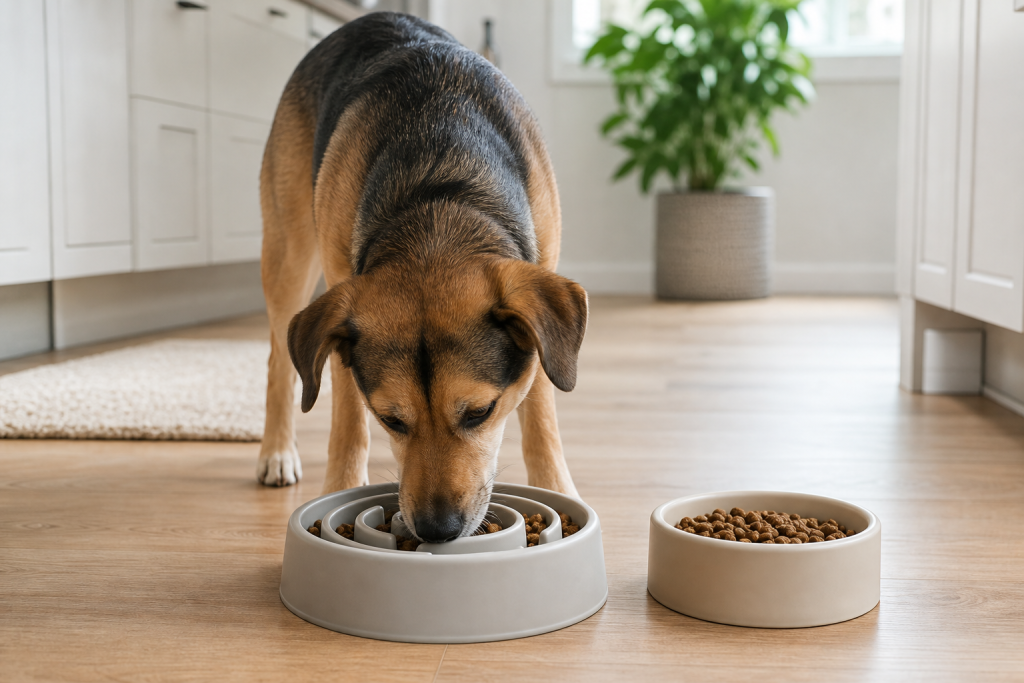
A slow feeder is not magic. It works by forcing a dog to take smaller mouthfuls, but that only helps if the pattern is usable for your specific dog. A deep maze may be frustrating for a flat-faced dog. A shallow pattern may do almost nothing for a long-muzzled dog that can still scoop kibble quickly. A lightweight bowl may slide, flip or become a toy.
Veterinary nutrition guidance from Tufts notes that fast eating can increase choking risk, air swallowing, vomiting and possibly the risk of gastric dilatation and volvulus, often called GDV or bloat. The American Kennel Club also lists slow-feed bowls, puzzle toys, muffin pans and smaller meals as ways owners may slow fast eaters. That does not mean a bowl can treat a medical problem. If your dog repeatedly vomits, retches, seems bloated, collapses, struggles after meals or has a health history that worries you, use this article as shopping context and ask your veterinarian what feeding setup is appropriate.
Check the fit before you check the coupon
Start with your dog’s face, not the discount. Short-nosed breeds, senior dogs, puppies, dogs with missing teeth and dogs with neck or mobility issues may struggle with tall ridges or tight corners. A bowl that slows one Labrador may annoy a pug, terrier or elderly mixed-breed dog.
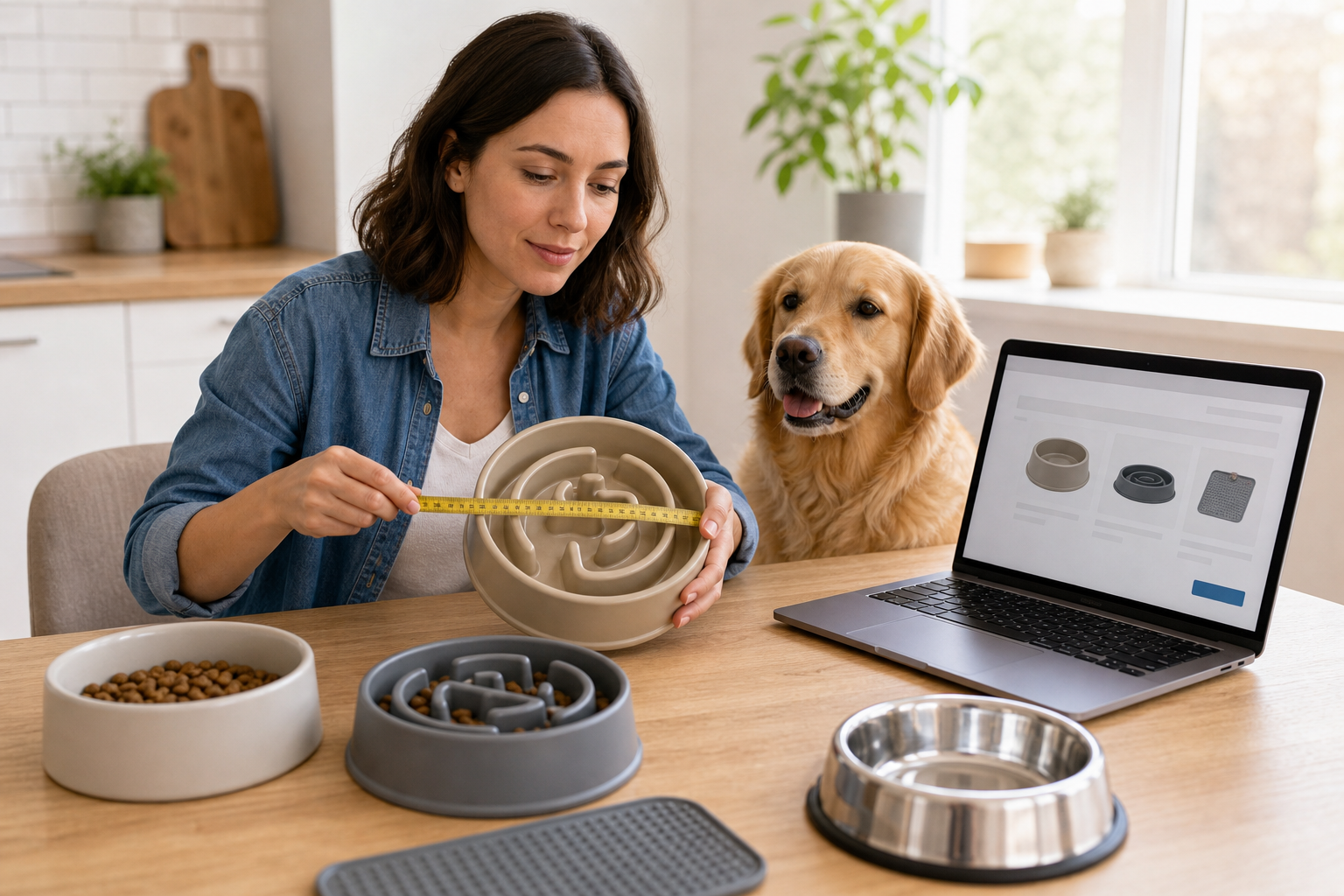
Measure the bowl diameter against your dog’s current dish and look at the spacing between ridges. Your dog should have to work a little, not wedge their muzzle into narrow channels. For wet food, fresh food or soaked kibble, choose a design you can scrub fully. Food trapped in grooves can turn a small deal into a hygiene problem.
Material matters too. Plastic is common and cheap, but it can scratch and hold residue over time. Silicone can be flexible and quieter, but some dogs chew it. Stainless steel is durable and easier to wipe, but true maze-style stainless options may cost more and can be noisier. Ceramic can feel stable, but it can chip. Whatever you choose, avoid sharp seams, rough edges, strong chemical smells and bowls that are too light for your dog.
The buying checklist
- Muzzle access: The ridges should slow eating without forcing your dog to scrape their nose or gums.
- Meal type: Dry kibble, canned food and fresh food need different groove depth and cleaning effort.
- Stability: Look for a non-slip base or enough weight that the bowl stays put.
- Cleaning: Check whether the bowl is dishwasher-safe and whether every groove is reachable by hand.
- Chew risk: Skip soft inserts if your dog destroys feeding gear or swallows pieces.
- Capacity: Make sure the listed capacity matches your dog’s measured meal, not the seller’s photo.
- Return terms: Confirm whether used pet bowls can be returned, exchanged or refunded.
When a deal is not really a deal
A slow feeder discount is useful only if the bowl fits your dog and your routine. Before paying, compare the final cart price, shipping, return window and any store-credit-only policy. A coupon that saves a few dollars can still be a poor buy if the bowl cannot be cleaned, tips over or has a maze pattern your dog ignores.
For marketplace listings, read reviews with a critical eye. The FTC recommends checking several sources, looking beyond star ratings and reviewing return and refund terms before buying online. For pet supplies, also check whether the listing shows real dimensions, material details and cleaning instructions. Vague terms such as “anti-choke” or “vet recommended” should not replace specific product information.
What to avoid
Avoid a bowl that promises to solve every fast-eating concern by itself. Feeding speed can be influenced by hunger, competition with other pets, anxiety, schedule, food type and medical issues. A bowl can slow access to food, but it cannot tell you why your dog is gulping.
Also avoid designs that are too complex for daily cleaning. If you feed wet or fresh food, tiny corners can trap residue. If your dog eats with force, flimsy plastic ridges can crack or become rough. If your dog guards food, flips bowls or eats around other pets, a slow feeder may need to be part of a broader feeding setup, not a standalone fix.
Better alternatives for some dogs
You may not need a new bowl at all. Tufts lists food-dispensing toys, snuffle mats and hand-feeding as other ways to slow meals. AKC also suggests a muffin pan or spreading kibble across a flat surface. These options can be cheaper, but they still need supervision, cleaning and a fit check. Fabric snuffle mats, for example, are not ideal for dogs that chew and swallow fabric.
For multi-dog homes, the better purchase may be a separate feeding area rather than a maze bowl. Competition can make some dogs eat faster. Feeding dogs apart, measuring portions and using smaller meals may matter more than the shape of the dish. Ask your veterinarian before making major feeding changes for puppies, senior dogs, deep-chested breeds or dogs with digestive concerns.
Quick answers
Are slow feeder bowls worth buying?
They can be worth buying for dogs that gulp kibble or meals, but only when the bowl fits the dog’s muzzle, food type and cleaning routine. They are not a substitute for veterinary advice if your dog has repeated vomiting, retching, weight changes or post-meal distress.
Is plastic, silicone or stainless steel better?
There is no single winner. Plastic is affordable, silicone can be flexible and stainless steel is durable. The better choice is the one your dog can use safely and you can clean thoroughly after every meal.
Can a slow feeder prevent bloat?
Do not treat it as a guarantee. Fast eating is one risk factor discussed by veterinary sources, but GDV is complex and can be life-threatening. Ask your veterinarian about your dog’s breed, body shape, meal schedule and risk factors.
What if my dog hates the bowl?
Stop forcing the issue and try a simpler pattern, a flatter tray, a puzzle feeder, smaller meals or hand-feeding during training. A bargain bowl that makes dinner stressful is not a bargain.
Sources
Last checked: 2026-06-04 07:32 Europe/Rome.
- American Pet Products Association, U.S. Pet Industry Reaches $158 Billion in 2025, Poised for Continued Growth in 2026
- Rising Trends, Top Pet Trends in 2026 Based on Search Data
- American Kennel Club, How to Help Your Dog Eat More Slowly
- Tufts Petfoodology, Putting the brakes on a chowhound
- VCA Animal Hospitals, Bloat: Gastric Dilatation and Volvulus in Dogs
- FTC Consumer Advice, Online Shopping
- Chewy return policy
- Petco return policy