
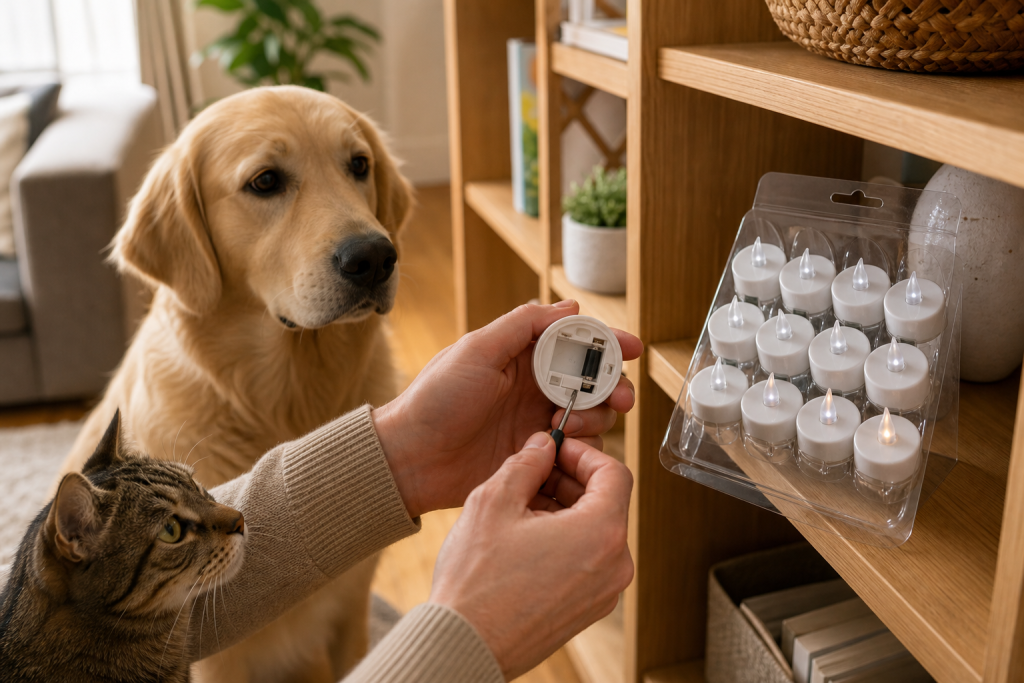
Cheap LED tea lights can be a smart swap for open flames around pets, but only if the battery compartment is secure. A new CPSC warning on August 20, 2026, shows the catch: some waterproof LED candle lights and mini tea lights used accessible coin or button batteries, which can be dangerous if a dog or cat chews or swallows them. Before you add fall, Halloween or holiday decor to your cart, check the battery design as closely as the price.
Flameless candles are popular because they look safer than real candles near tails, whiskers and curious paws. The hidden risk is that many tiny LED lights are powered by lithium coin cells. If the cover slides open easily, if spare batteries are loose in the package or if the listing skips required warnings, the bargain can create a small, shiny hazard in the room your pet explores every day.
Why This Matters Now
The timing is not theoretical. CPSC posted an August 20, 2026 product safety warning for LED Waterproof Candle Lights sold by Nii Marketplace on Shein, saying the lights contained lithium coin batteries that could be accessed easily and should be stopped and disposed of. The same CPSC recall page also listed a separate August 20 recall of JINHEZO Mini Waterproof LED Tea Lights imported by Mystic ZO, covering about 2,798 units, because the button batteries could be accessed too easily and required Reese’s Law warnings were missing.
That does not mean every flameless candle is unsafe. It does mean pet owners should stop treating all battery candles as automatically pet-safe. A real flame is one kind of risk. A loose coin battery is another.
The Checkout Check That Matters Most
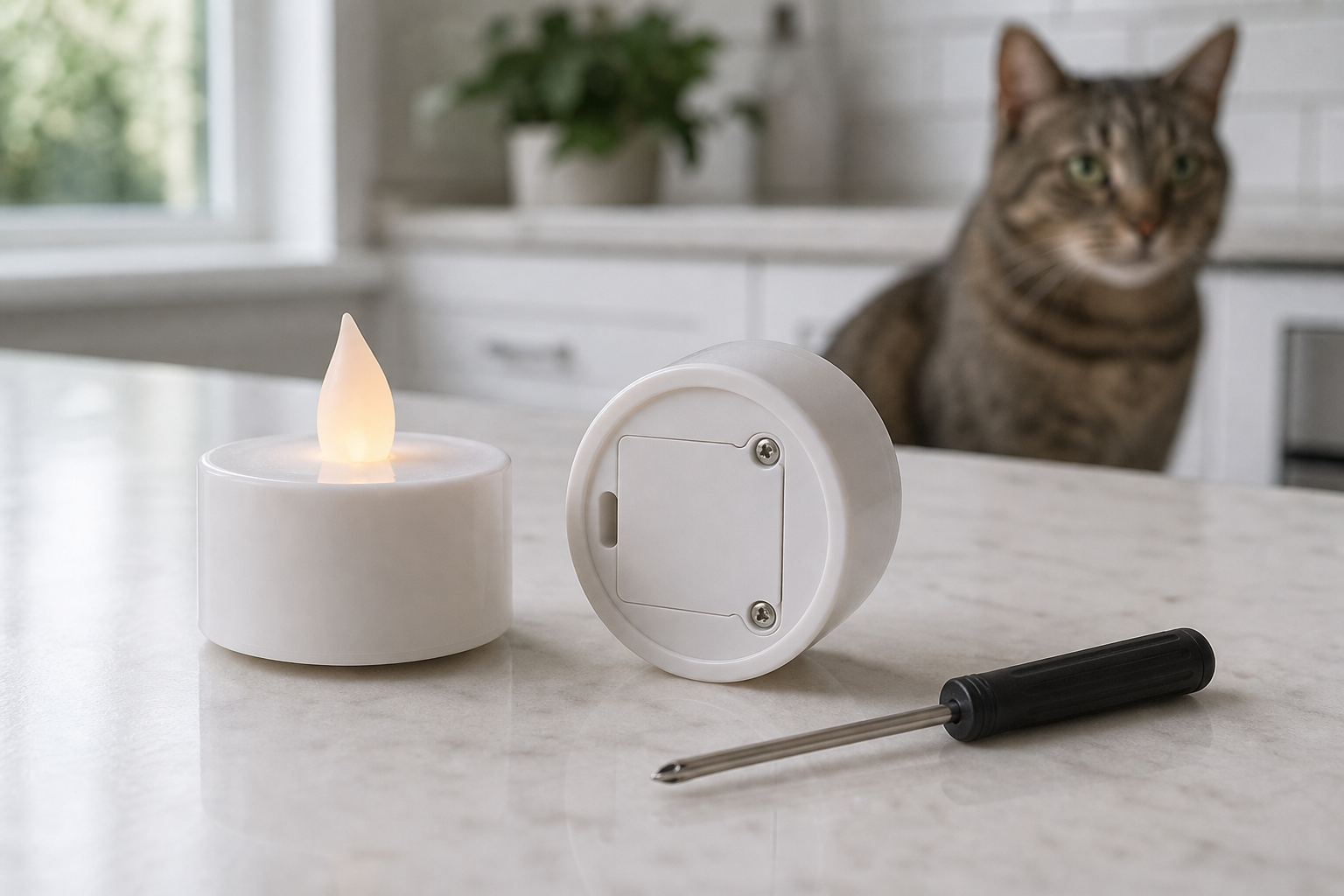
Before buying LED tea lights, look for a battery compartment that needs a tool, usually a small screwdriver or coin, or two deliberate hand movements to open. CPSC business guidance for products with button cell or coin batteries says covered products must keep these batteries from being easily accessed or released during use and abuse testing.
On a product page, the safest clues are boring but useful: a visible screw on the battery door, a clear warning label, named battery type, seller contact details and a real return path. Be more cautious with no-name multipacks where the listing shows only glowing lights in water, pumpkins or centerpieces but never shows the underside, battery door or packaging.
What To Check Before Paying
- Battery door: Choose lights with a secured compartment. Skip designs where the cover appears to twist or pop open without a tool.
- Loose extras: Avoid packs that include loose spare coin batteries in flimsy bags. If spares are included, they should be in child-resistant packaging.
- Warnings: Look for coin-cell or button-battery warnings on the package and product listing. Missing warnings are a reason to pause.
- Seller identity: Prefer listings with a traceable seller, customer support and a normal refund path. Marketplace listings can change fast.
- Placement: Put LED candles high enough that pets cannot mouth, bat, carry or knock them down.
- Waterproof claims: Waterproof does not mean chew-proof. A light made for vases, patios or centerpieces can still expose a battery if the case breaks.
Deal And Coupon Notes
A low price on a 12-, 24- or 48-pack is not automatically a good deal. Count how many lights you actually need, then compare that with the cost of buying a sturdier pack from a seller with clearer safety information. If a coupon only applies to a third-party marketplace seller, check whether the item is returnable and whether the listing identifies the exact model you are buying.
Do not stock up just because the unit price is low. Seasonal decor gets stored, spilled, stepped on and forgotten in drawers. If you would not notice a missing battery door or a loose spare cell later, buying fewer, better-labeled lights is usually the cleaner choice.
What To Avoid Around Dogs And Cats
Avoid leaving small LED tea lights loose on low tables, window sills, fireplace hearths, cat trees, mantels that cats can reach or anywhere a dog can grab a decoration. Do not leave spare batteries in treat drawers, toy bins, junk bowls or decor storage boxes where a pet can nose through them.
The ASPCA says battery ingestion can be seriously dangerous for pets, and disc-shaped button batteries can cause burns even if they are not punctured. If you think your pet has chewed, punctured or swallowed a battery, contact your veterinarian or a pet poison-control resource right away. Do not rely on a shopping article, forum thread or product review to judge whether it is safe to wait.
Better Buying Rules For Pet Homes
For a home with pets, the best flameless candle is not the one with the brightest glow or the biggest pack size. It is the one with a secured battery door, clear warnings, no loose spare cells, stable placement and a seller you can reach if there is a recall or defect.
If you already own small LED candles, check them before putting them out for the season. Turn each one over, inspect the battery door and discard damaged lights according to local battery and hazardous-waste rules. If a battery cover is missing, cracked or loose, do not leave that light in a pet area.
Quick Answers
Are LED tea lights safer than real candles around pets?
They can be safer because there is no open flame, but they are not risk-free. The battery compartment and placement matter.
Should pet owners avoid all button-battery products?
No, but products with coin or button batteries should have secure compartments and proper warnings. Store loose batteries away from pets.
Can I use LED candles in pumpkins or holiday displays?
Yes, if the lights are intact, securely closed and placed where pets cannot chew or knock them down. Recheck them before each season.
What should I do if my pet chews a battery candle?
Remove the item from the pet’s reach and contact your veterinarian or a pet poison-control resource immediately. Battery exposure can become serious quickly.
Sources
Sources last checked: August 23, 2026, 04:35 CEST, Europe/Rome.