
#cat food storage
#dog food storage
#pet food safety
#pet food storage
A vacuum-seal pet food container is not automatically a better deal than a simple airtight bin. It can help limit air exposure, but only if it stays clean, dry, correctly sized and backed up by the original bag details you may need during a recall. Before paying extra for a pump, app feature or “freshness” claim, check what happens when the seal fails or the battery dies.
Pet food storage is getting more attention because shoppers are buying bigger bags, chasing subscription savings and adding premium containers to carts during summer deal events. The hidden cost is that a fancy container can make food harder to track if you pour kibble out, toss the bag and forget the lot number. For dog and cat owners, the best storage deal is the one that protects freshness without hiding safety information.
Why This Matters Now
Current pet-supply searches show steady demand for airtight dog and cat food containers, including vacuum-seal styles that promise longer freshness. That makes sense when larger bags and autoship orders can lower the per-pound price. It also creates a practical problem: the longer food sits open, the more important clean storage, dry conditions and recall traceability become.
The FDA’s storage guidance is simple but easy to miss at checkout. Dry pet food should be kept in a cool, dry place, and if you move it into another container, the container should be clean, dry and fitted with a snug lid. The FDA also says to keep the UPC, lot number, product name, manufacturer and best-by date handy. A vacuum container does not remove that need.
The Freshness Claim To Check First
Look past the word “vacuum” and check how the container actually seals. Some products use a manual pump, some use a rechargeable automatic pump, and some are simply marketed as airtight. If the listing does not explain the gasket, pump, charging method, replacement parts or failure indicator, the freshness claim is weaker than it looks.
Capacity matters too. A container that claims to hold a certain number of pounds may be rated for small kibble, not large-breed pieces or bulky prescription diets. If you buy a 30-pound bag and the container only holds most of it, you may end up with an open partial bag anyway.
Cleaning is another deal breaker. Pet food oils and crumbs can build up inside bins, around lids and near gaskets. A container with a hard-to-remove pump or narrow corners may be less useful than a basic bin you can fully empty, wash and dry between bags.
Keep The Bag, Even If The Bin Looks Better
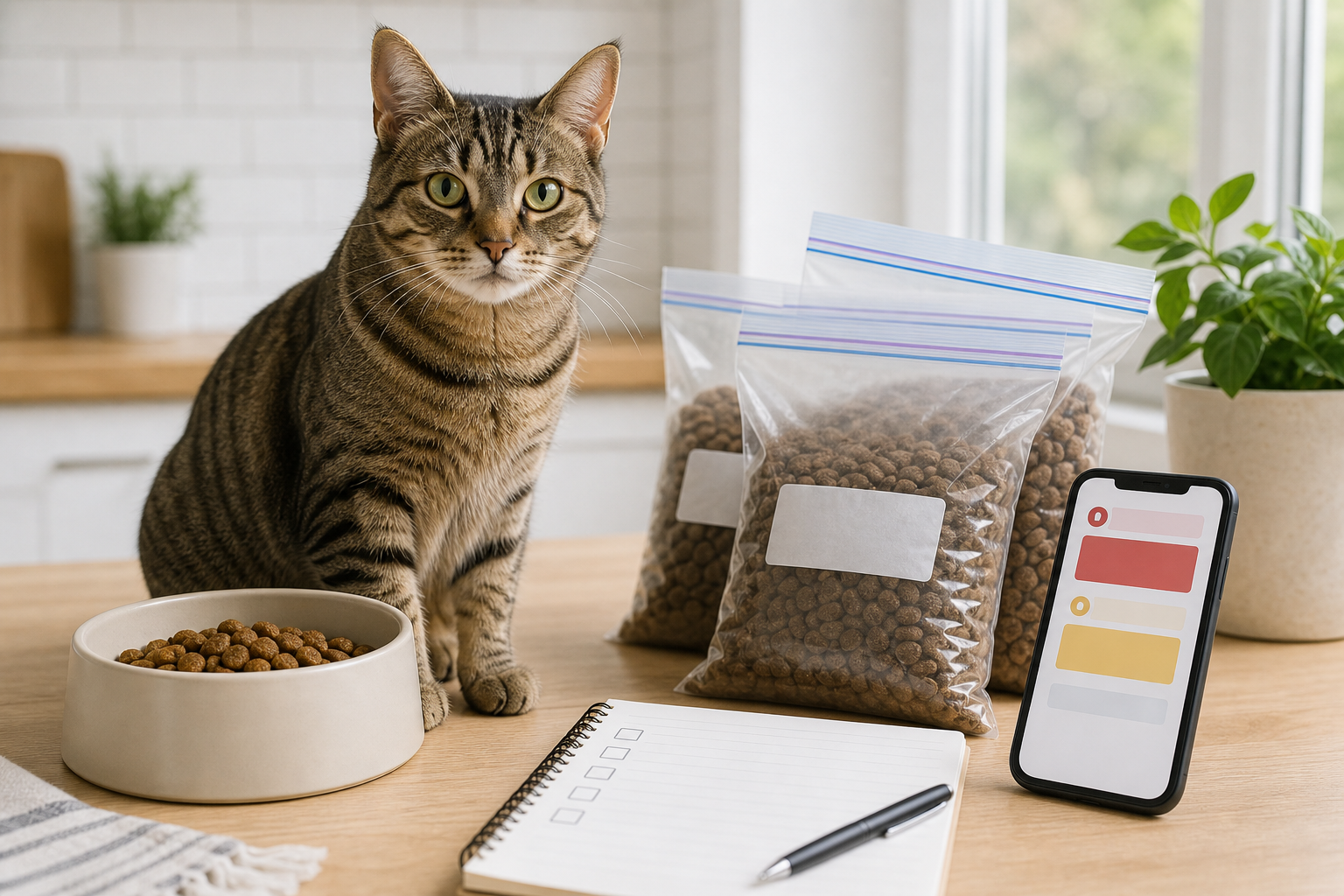
The biggest mistake is pouring the food into a beautiful container and throwing away the bag. The bag carries the lot code, UPC, best-by date, manufacturer information and feeding information. Those details are the fastest way to compare your food against a recall notice or contact the company with a problem.
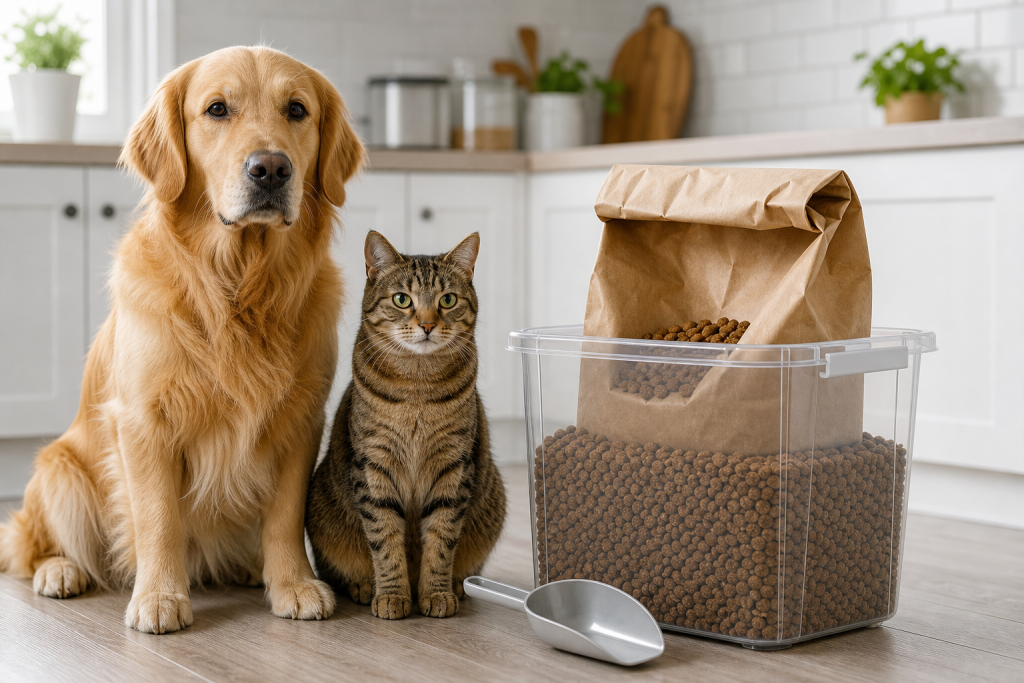
The safer approach is to place the original bag inside the container when it fits. If it does not fit, cut out or photograph the identifying panel before you recycle the bag, then tape the details to the outside of the bin or save them in a pet-food note on your phone. Update that record every time you open a new bag.
Do not mix the last scoop of an old bag into a new bag. It makes lot tracking harder and can move crumbs, oils or stale food into the fresh supply. Empty, clean and fully dry the container first.
Buying Checklist Before Checkout
- Seal type: gasket, latch and pump details are clearly explained.
- Power source: rechargeable pump, charging cable and manual backup are clear.
- Capacity: the stated volume matches your usual bag size and kibble shape.
- Cleaning: lid, gasket and corners can be cleaned and dried without guessing.
- Traceability: there is an easy way to keep the original bag or lot-code panel.
- Material: food-contact claims are clear, and strong smells or flimsy plastic are red flags.
- Return policy: opening and testing the seal will not leave you stuck with a bad fit.
Deal And Coupon Checks
A pet food storage deal is only useful if the container fits your real buying pattern. If you buy small prescription bags, a large vacuum bin may waste space and money. If you buy bulk kibble, a small premium container may still force you to keep a half-open bag beside it.
Check shipping costs because bulky storage containers can erase a small coupon. If the deal is on a marketplace listing, verify the seller, warranty, return window and whether replacement gaskets or pumps are available. A cheap automatic bin is not cheap if the seal fails and the seller disappears.
For autoship shoppers, compare the container size with the delivery interval. If food arrives faster than your pet uses it, the real fix may be changing the delivery frequency or bag size, not buying a more complicated bin.
What To Avoid
Avoid containers that make medical or nutrition claims beyond storage. A bin can help keep food covered, but it cannot make old food new, fix a poor diet match or prove that food is safe after a recall.
Avoid damp storage areas, garages that get hot, and any container that is not fully dry before new food goes in. A good seal can keep pests out, but it can also trap moisture inside if the bin is washed and refilled too quickly.
Also avoid buying by looks alone. Clear bins are convenient because you can see the food level, but they still need to be kept away from heat and direct sun. Decorative bins may fit the kitchen better, but if they hide crumbs, smell bad or cannot hold the original bag, they may be worse for everyday use.
Quick Answers
Is a vacuum pet food container worth it?
It can be worth it if the seal is reliable, the container is easy to clean and it matches your bag size. A simple airtight bin may be the better value if the vacuum feature is vague or hard to maintain.
Should I pour kibble directly into the container?
Keeping the food in its original bag inside the container is usually the cleaner traceability choice. If you pour food out, save the UPC, lot number, product name, manufacturer and best-by date.
Can storage containers prevent recall problems?
No. They can help with organization and freshness, but recalls are checked by product identity and lot details. Keep those details until the food is gone.
What is the biggest checkout mistake?
Buying the container before measuring the bag and checking the cleaning process. If the bag does not fit, the seal is unclear or the pump has no backup, the discount may not help.
Sources
- U.S. Food and Drug Administration, “Proper Storage of Pet Food & Treats,” FDA.
- AAFCO, “Product Handling Safety,” AAFCO.
- CDC, “About Pet Food Safety,” CDC.
- Amazon, dog food storage best sellers and current storage-container category signal, Amazon.
- Amazon, cat food storage best sellers and current storage-container category signal, Amazon.
- Chewy, dog food storage guidance, Chewy.
Sources last checked: July 7, 2026, 07:36 Europe/Rome.