
#cat litter box
#cat supplies
#litter box ramp
#senior cats
A cat litter ramp is only a good deal if it makes the box easier to enter, not just tidier around the floor. Many cats, especially older cats or cats with stiff joints, do better with a genuinely low-entry tray than with a steep add-on ramp that wobbles, traps litter or makes the box feel cramped. Before buying, check the entry height, ramp grip, cleaning gaps and return terms.
Why this matters now
Summer travel, house guests and schedule changes can make owners notice litter-box problems they may have missed earlier in the year. At the same time, retailers are full of ramps, steps, top-entry boxes and high-sided pans promising less tracking. The catch is simple: a product that helps your floor can make the box harder for your cat.
International Cat Care says older cats may struggle with high-sided trays and can benefit from lower sides or a cut-out side for easier access. Cornell Feline Health Center also notes that kittens and elderly cats with arthritis may need boxes with sides low enough to enter easily. That makes the checkout question less about the accessory and more about whether your cat can use the whole setup comfortably.
The checkout test: ramp, step or lower box?
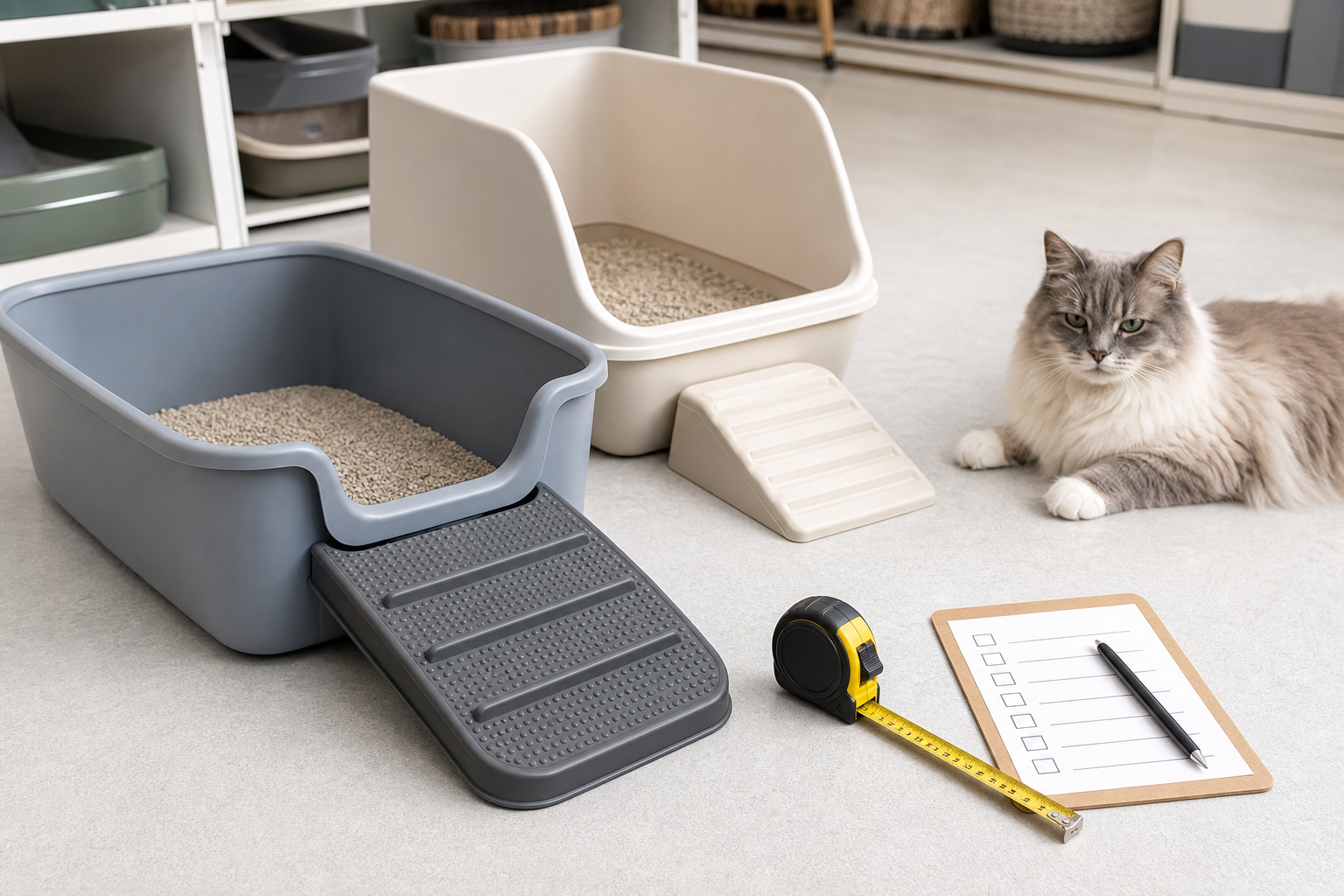
Start with the lowest-friction solution. If your cat is hesitating at a high wall, a low-entry tray may be simpler than adding a ramp to the same tall box. A ramp can help in some layouts, but it adds another surface your cat has to trust.
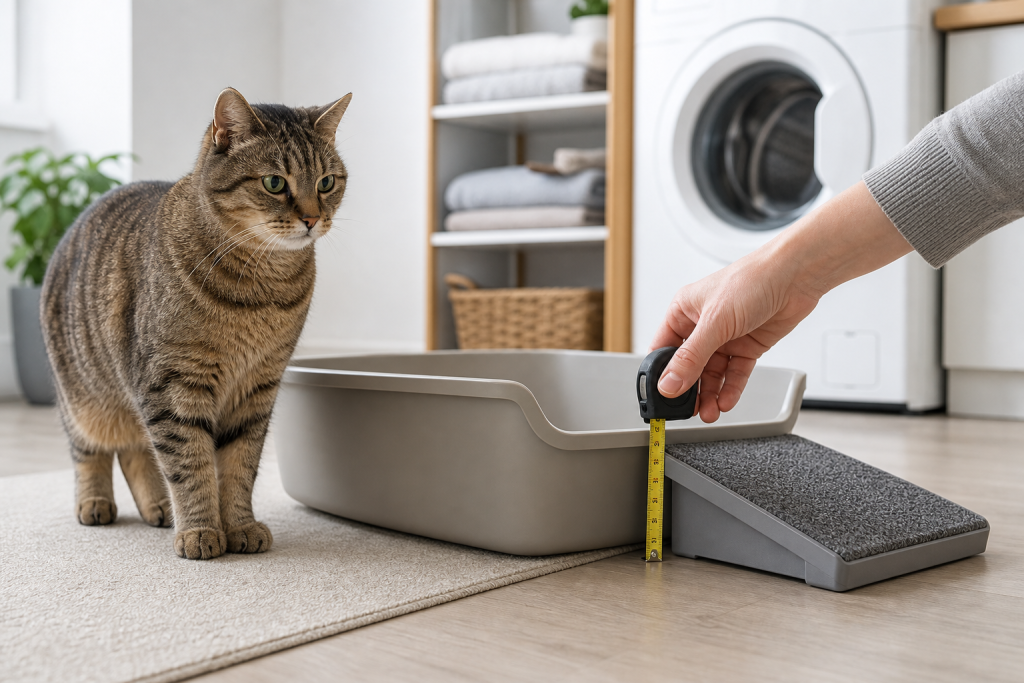
- Measure the real entry height. Do not rely on a product photo. Check the height from the floor to the usable opening, including any lip your cat must step over.
- Check the ramp angle. A short ramp can be steeper than it looks online. If it feels like a climb rather than a gentle walk-in, a stiff or cautious cat may avoid it.
- Look for grip, not just ridges. Smooth plastic steps can become slippery with litter dust. A textured, washable surface is more useful than a decorative tread.
- Compare interior space after the ramp. Some ramps or step-in designs steal room at the entrance. Cats need enough space to turn, dig and posture normally.
- Plan cleaning before you buy. Hinges, seams, removable pads and hollow steps can trap litter or urine. If you cannot rinse or wipe it easily, the deal may age badly.
Deal checks before you pay
A discounted ramp can still be expensive if you end up replacing it with a low-entry pan two weeks later. Before checkout, compare the all-in cost of the ramp plus your current box against a larger low-entry tray, especially if your cat already dislikes the current setup.
Read the return policy closely. Litter-box accessories can become hard to return once assembled, used or soiled. Check whether the seller pays return shipping, whether bulky-item fees apply and whether the product has replacement pads or non-slip inserts available separately.
Do not treat a sale badge as proof that the product fits your cat. A ramp that is too narrow, too steep or too slick is not a bargain, even if it looks cleaner in the product photos.
What to avoid
Avoid ramps that attach loosely to a box without a secure base. If the ramp shifts on the first try, your cat may remember that and refuse the setup. Also avoid designs that force your cat into a tight turn at the entrance, especially for large cats and senior cats.
Be careful with covered or top-entry boxes if the main reason for buying is mobility. International Cat Care recommends lower-sided trays for cats with arthritis or reduced mobility. Cornell notes that many cats prefer simple boxes without hoods, and that older cats may need low sides.
If your cat suddenly starts missing the box, straining, urinating more often, crying, hiding or changing litter-box habits, do not solve it only by shopping. Ask your veterinarian, because pain, urinary issues, constipation, stress and other health problems can show up as litter-box changes.
A simple buying framework
For a healthy adult cat that only tracks litter, a mat or different litter may be more relevant than a ramp. For a senior cat, kitten or cat with reduced mobility, prioritize access first: low entry, open space, stable footing and easy placement on the floor your cat already uses.
If you still want a ramp, choose one that is wide enough for your cat’s stance, has a gentle slope, has a non-slip washable surface and can be removed for cleaning. Keep the old box available during the transition so your cat is not forced into a setup it does not trust.
Quick answers
Is a litter-box ramp better than a low-entry box?
Not always. A low-entry box is often simpler because it removes the climbing problem instead of adding a new object to the entrance.
Can a ramp help a senior cat?
It can, but only if it is stable, gentle and easy to clean. For many senior cats, a lower-sided tray or a tray with a cut-out side may be the better first purchase.
Should I buy a top-entry litter box to stop tracking?
Only if your cat can comfortably jump in and out. If mobility is a concern, prioritize access over litter tracking control.
When should I call a vet?
Call your veterinarian if litter-box avoidance is sudden, repeated or paired with signs such as straining, pain, blood, unusual frequency, appetite changes or hiding.
Sources
Last checked: 2026-07-06 04:34 Europe/Rome.