
#dog harness
#dog walking gear
#no-pull dog harness
#pet deals
A no-pull harness can be a useful deal, but it is not a shortcut that trains a dog by itself. The purchase only makes sense if the harness fits your dog’s chest and shoulders, uses the attachment style you actually need and can be returned after a careful indoor fit check.
That matters right now because Prime Day and summer pet-supply roundups are putting no-pull harnesses in front of shoppers who want easier walks fast. A sale badge can make a front-clip harness look like a simple fix, but the wrong size or design can rub, restrict movement or leave you with another unused walking tool.
Why the “no-pull” claim needs a second look
No-pull harnesses usually work by changing where leash pressure is applied. Front-clip designs can redirect a dog who pulls, while back-clip harnesses are often easier for casual walking but may give strong pullers more leverage. Some models offer both clips, which can be useful if you are still figuring out what works for your dog.
The important point is that a harness is equipment, not a training plan. Best Friends Animal Society notes that no-pull harnesses can assist with loose-leash training, but they do not stop pulling without training. If a product page promises instant control and does not explain fit, adjustment or training use, treat the claim as marketing.
Measure before the discount decides for you
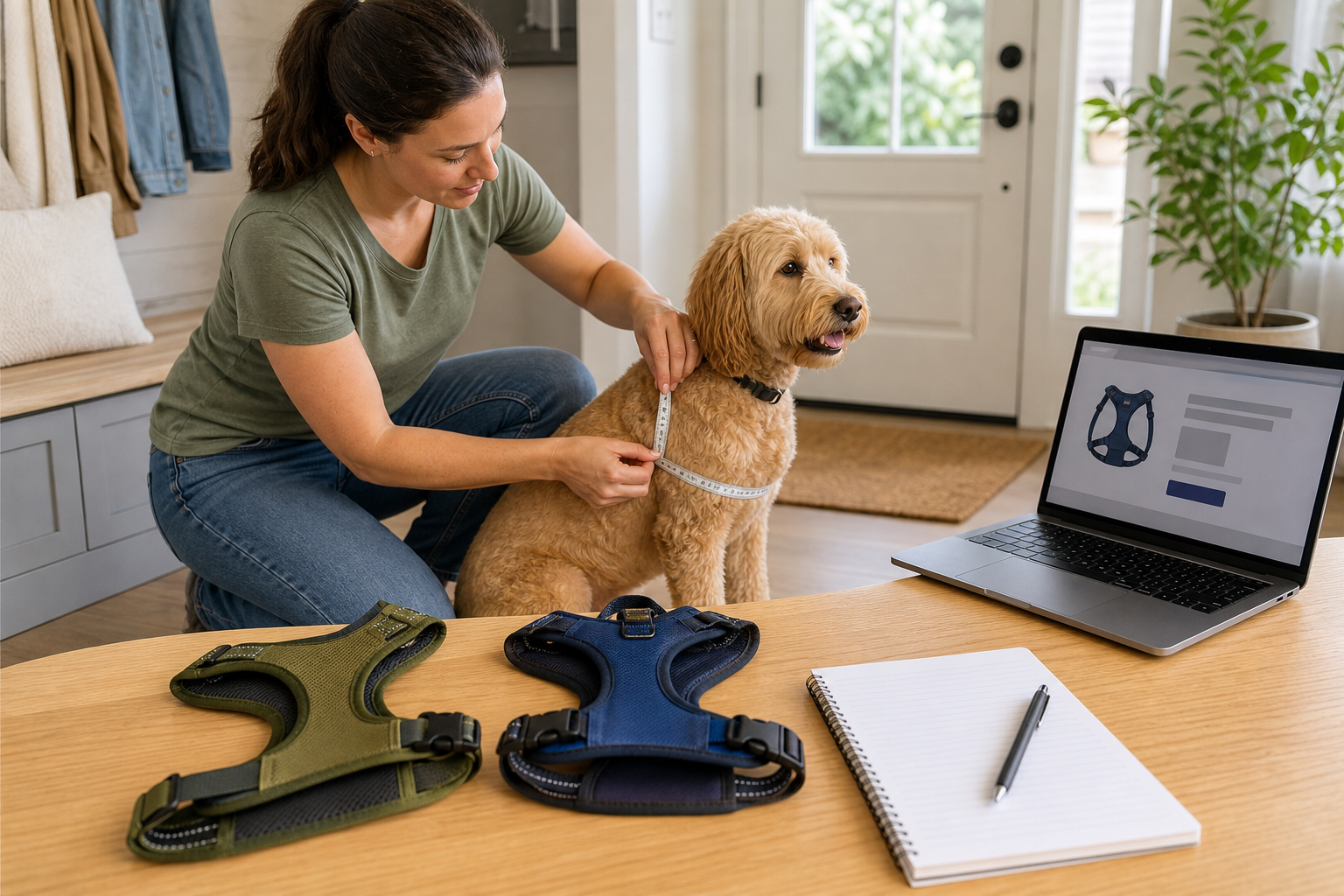
Before adding a harness to the cart, measure your dog’s girth around the widest part of the chest and compare that number with the brand’s size chart. Do not rely only on breed labels such as “small terrier” or “large lab,” because dogs of the same breed can have different chest depth, neck shape and weight distribution.
Look for multiple adjustment points, especially around the chest and shoulders. A harness that only adjusts in one place may be cheaper, but it gives you less room to solve rubbing or slipping once the dog starts moving.
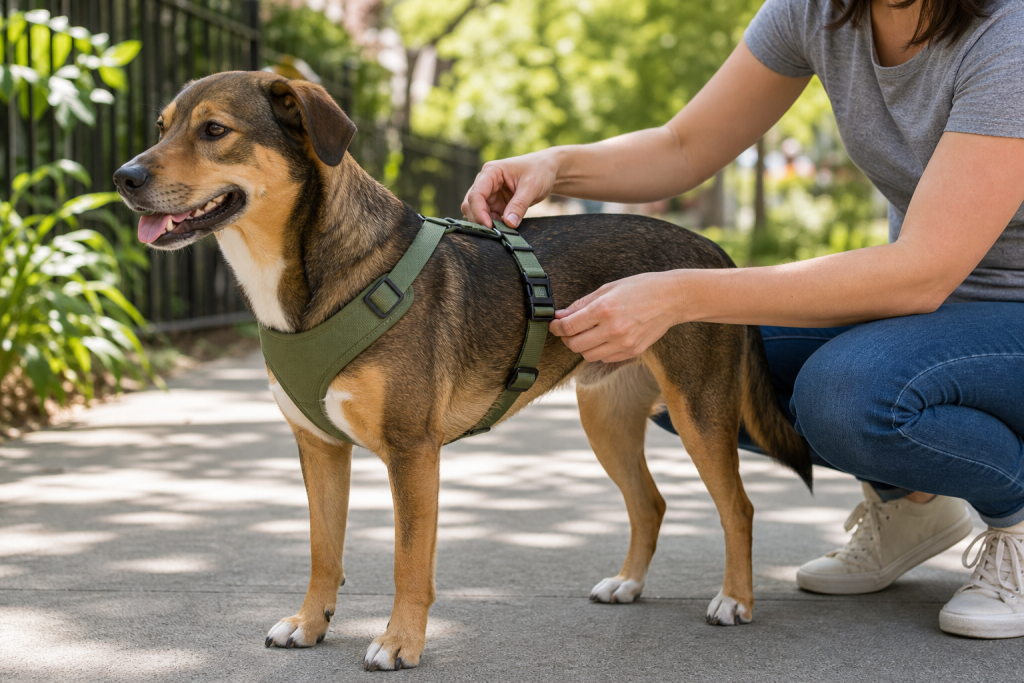
Check where the straps sit in the product photos. If the design appears to cut close behind the front legs, it may rub a short-coated or active dog. If the chest panel looks broad and stiff, make sure it will not limit shoulder movement during normal walking.
The checkout checks that matter most
- Attachment point: Choose a front clip if the goal is loose-leash help, a back clip for easier everyday walking or a dual-clip design if you want flexibility.
- Adjustability: Prefer several adjustment points over a fixed vest shape, especially for puppies, deep-chested dogs and dogs between sizes.
- Hardware: Check buckles, leash rings and stitching. A bargain is not useful if the ring twists, the buckle sits under the armpit or the straps loosen while walking.
- Cleaning: Summer walks, mud and sunscreen residue can make padded harnesses smell. Confirm whether the harness is machine-washable or hand-wash only.
- Return terms: A harness often needs an indoor try-on and a short, clean test walk. Make sure the retailer allows returns if the size chart was wrong.
When a deal is not really a deal
A cheap no-pull harness can cost more if you have to replace it after one walk. Watch for listings that hide the size chart, use vague weight ranges, show only posed photos or do not make the leash attachment point clear.
For Prime Day, marketplace and coupon deals, check the seller name, shipping date and return window before paying. Also compare the sale price with the regular price on the same model. A harness that was marked up before being discounted may not be the bargain it appears to be.
If you are using a promo code, confirm that it applies to the size and color you need. Buying the wrong size because only one color is discounted is one of the easiest ways to waste the savings.
What to avoid
Avoid buying a harness that promises to replace training, especially for a large or reactive dog. Better equipment can make walks easier, but pulling, lunging and fear on leash may need a trainer or behavior professional.
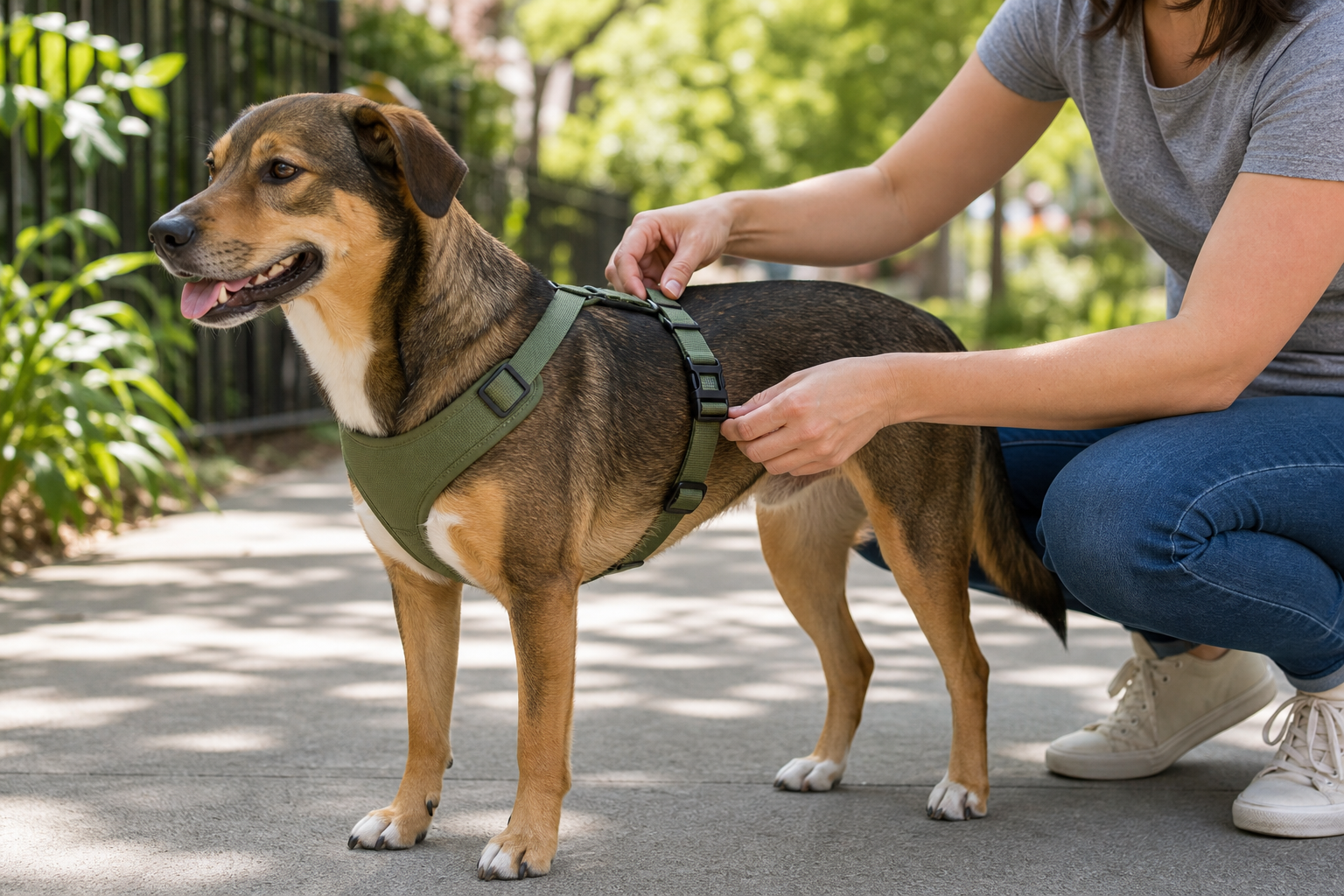
Avoid designs that are hard to adjust while your dog is calm indoors. If you cannot tighten and loosen the straps without a fight, the harness will be frustrating when your dog is excited at the door.
Avoid keeping a harness that rubs, changes your dog’s gait or causes your dog to freeze, bite at the straps or refuse to move. That does not mean every harness is unsafe, but it does mean that specific fit is wrong for your dog.
Quick answers
Is a no-pull harness better than a collar?
For many dogs, a well-fitted harness spreads pressure across the body instead of concentrating it at the neck. That does not make every harness better for every dog, so fit and training use still matter.
Should I buy a front-clip or back-clip harness?
A front clip is usually the feature shoppers want when they search for a no-pull harness. A back clip can still be useful for calmer dogs or relaxed walks, and a dual-clip model gives you more room to experiment.
Can a harness stop pulling without training?
No. A no-pull harness can help redirect pressure and make training easier, but it does not teach loose-leash walking on its own.
What if my dog is between sizes?
Check the brand’s specific advice and return terms. If the smaller size may restrict movement and the larger size may slip, choose a model with more adjustment points or look for a different cut.
Sources
Sources last checked June 24, 2026, 22:33 Europe/Rome.
- American Kennel Club, Choosing the Right Harness for Your Dog.
- RSPCA Pet Insurance Australia, How to choose the right dog harness for your pup.
- RSPCA Knowledgebase, What equipment should I use when teaching my dog or puppy to walk on a leash?.
- Best Friends Animal Society, No-pull dog harness types and leash training guidance.
- Good Morning America / ABC News, Prime Day 2026 pet deals roundup, used as a current deal-demand signal.
- Amazon, Prime Day 2026, used for current sale timing context.