
#dog crate
#dog crate cover
#fireworks pets
#summer pet supplies
A dog crate cover can help make a crate feel calmer, but it can become a bad buy if it blocks airflow, traps heat or fits so poorly that your dog pulls it inside. The cover is not the safety plan by itself. Before checkout, check the fabric, ventilation panels, size, washability and return terms, especially if you are buying it for fireworks, travel or a hot room.
Crate covers are getting attention right now because summer brings two shopping triggers at once: Fourth of July noise and hot-weather travel. Pet owners want a darker, quieter den for dogs, but a cover that looks cozy in a listing can be the wrong choice if it turns a wire crate into a stuffy box.
Why this matters before fireworks night
The American Veterinary Medical Association tells owners to keep pets indoors and away from fireworks, while quiet rooms, closed windows and secure spaces can reduce escape risk. A crate can be part of that setup for a dog who already sees it as a safe place, but a new cover should not be introduced as a last-minute fix for panic.
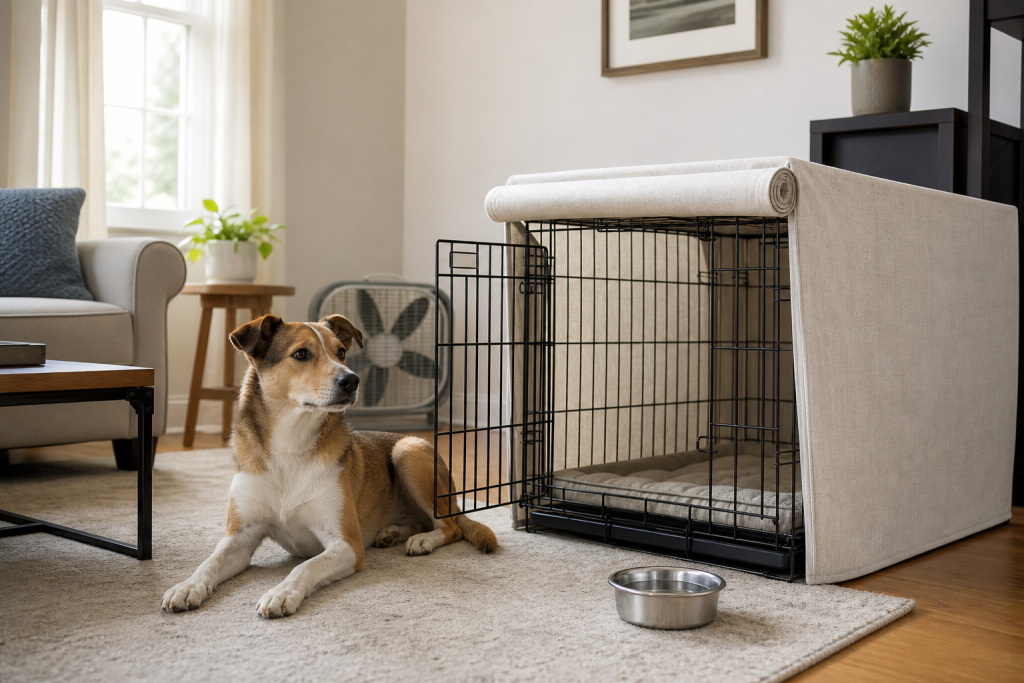
Humane World for Animals describes the crate as a safe zone when it is used properly, with a comfortable setup and no disturbance from children or guests. That matters for shopping because a cover should support the den feeling without making the crate hard to monitor, hard to ventilate or easy for the dog to chew.
The checkout checks that matter most
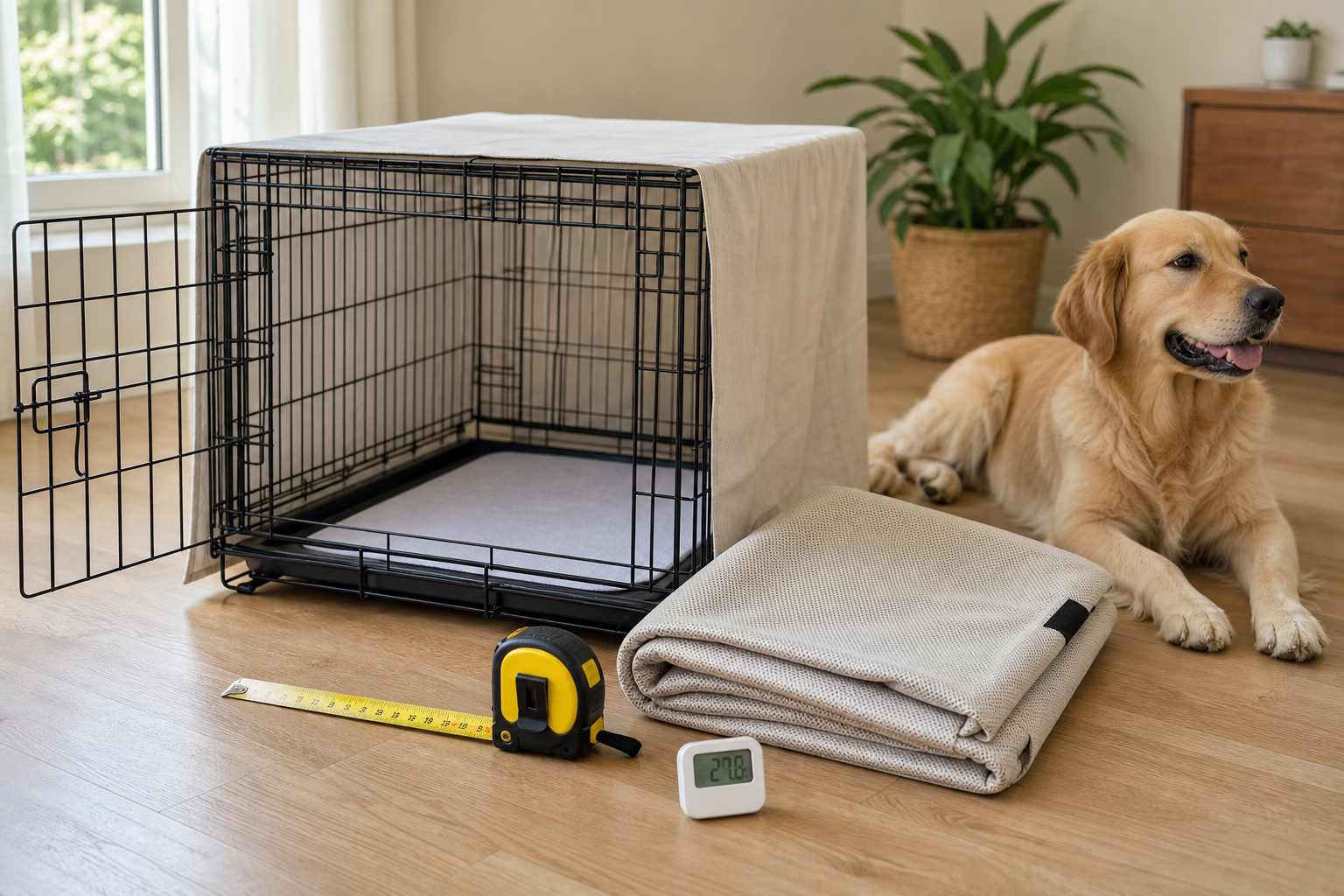
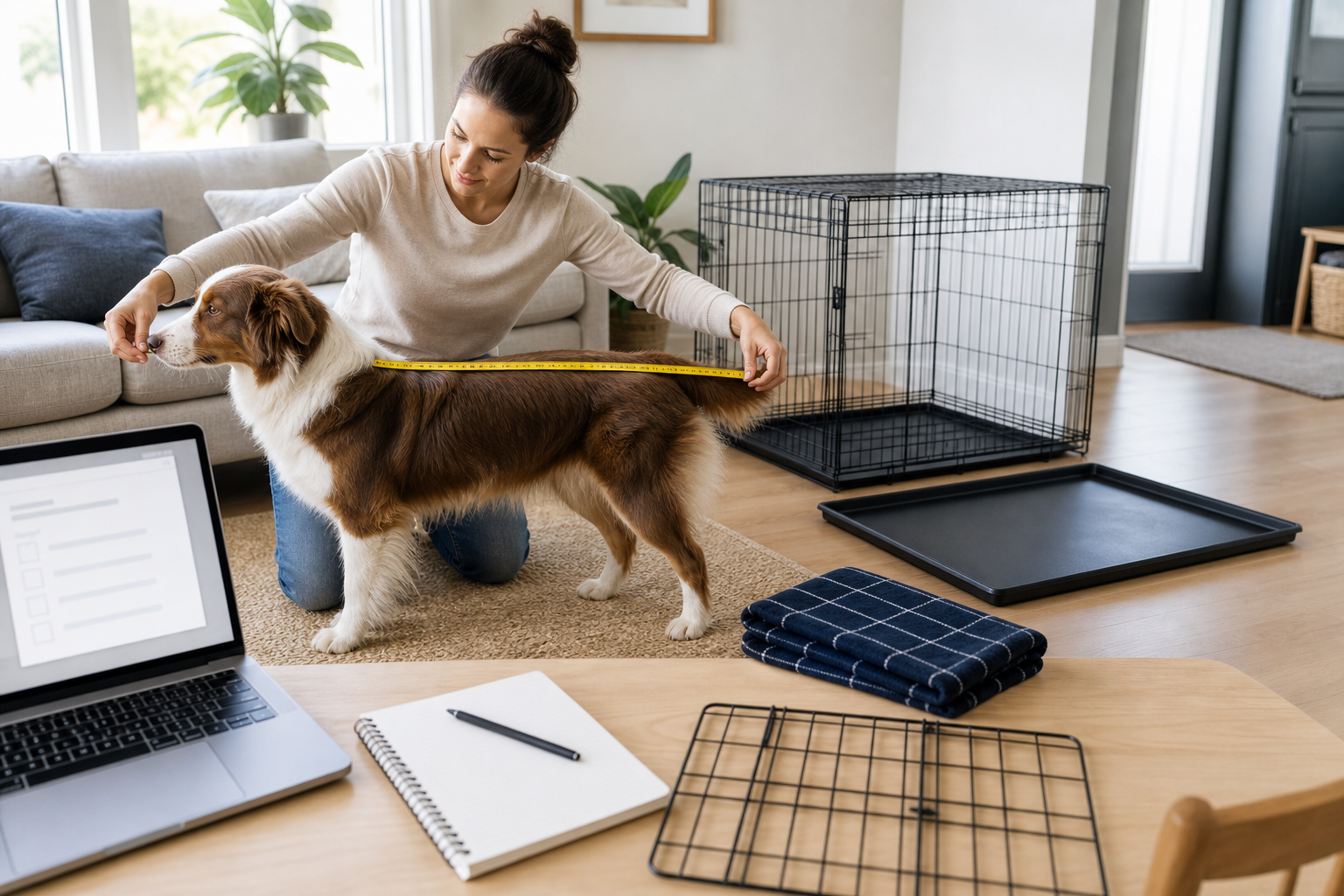
Start with the exact crate size, not the breed name. Measure the crate length, width and height, then compare those numbers with the cover’s sizing chart. A cover that is too small can pull tight over doors and latches. A cover that is too large can bunch near the floor, block vents or tempt a dog to grab loose fabric.
Look for roll-up panels or mesh sections on more than one side. A full blackout-style cover may look useful for noise and light, but airflow matters more than a perfect dark box. If the product photos show every side sealed with thick fabric, treat that as a warning unless the cover has clear ventilation openings.
Check how the cover attaches. Ties, toggles and hook-and-loop tabs should sit outside the crate and away from the dog’s mouth. Avoid dangling cords, loose straps or decorative parts that could be pulled through the bars.
For summer, lighter breathable fabric is usually the safer shopping direction than heavy insulated material. The ASPCA’s hot-weather guidance reminds owners that pets need shade, water and protection from overexertion when it is hot or humid. A crate cover should not become a shortcut for leaving a dog in a warm room, garage, car or outdoor crate.
When a deal is not really a deal
Cheap crate covers often save money by being thin, oddly sized or hard to wash. That is not always a problem, but it changes the value. Before paying, check whether the cover is machine washable, whether replacement parts exist, whether the return window allows an actual fit test and whether the listing charges extra for the size you need.
Be careful with bundles. A crate-cover-and-pad set can look convenient, but the pad may be too thin, too warm or not washable enough for a dog who sheds, drools or has accidents. If the cover is the only part you need, compare the standalone price with the bundle price instead of assuming the bigger package is better.
If you are buying through a marketplace, check the seller name, return address and recent reviews for the exact size. Generic listings often reuse the same photos across several dimensions, so reviews for a 24-inch cover may not tell you much about the 42-inch version.
What to avoid
- Do not buy a cover to force crate use. If your dog is not crate trained, covering the crate may make the space feel more stressful.
- Do not block every side in hot weather. Leave airflow and check the room temperature, especially during summer storms and fireworks.
- Do not trust “calming” claims as proof. A cover may reduce visual stimulation, but it is not a treatment for fear or anxiety.
- Do not leave chewable tabs inside the crate. Anything your dog can pull through the bars can become a hazard or a ruined purchase.
- Do not skip the door check. Make sure the cover does not interfere with latches, divider panels or emergency access.
A practical buying framework
For a dog who already likes the crate, choose a cover that leaves the front or side panel open at first. Test it during a normal afternoon before using it on a noisy night. Watch whether your dog settles, pants, paws at the fabric or tries to pull it inside.
For travel, check whether the cover is allowed for the crate setup you plan to use. A home crate cover is not the same as an airline kennel accessory, and it should not block labels, handles, ventilation holes or access points.
For multi-dog homes, buy for the individual dog, not the shared crate size. Some dogs like a darker den. Others prefer seeing the room. A deal only works if your dog actually uses the covered crate calmly and safely.
Quick answers
Should a dog crate cover all four sides? Usually no. Leaving at least one side open or using roll-up panels makes it easier to preserve airflow and check on your dog.
Can a crate cover help with fireworks? It may help some crate-trained dogs feel more settled as part of a quiet indoor setup, but it should not replace ID tags, secure doors, supervision or veterinary guidance for severe fear.
Is a blanket good enough? Sometimes, but a blanket can slip, bunch, block ventilation or be pulled through the bars. A fitted cover with roll-up panels is easier to control.
Sources
- American Veterinary Medical Association, July 4 safety.
- ASPCA, Hot Weather Safety Tips.
- Humane World for Animals, Crate training 101.
- Amazon Best Sellers pages for dog crate and enclosure covers, checked only as a current shopping-demand signal, not as a product recommendation.
Last checked: 2026-07-02 07:39 CEST, Europe/Rome.