
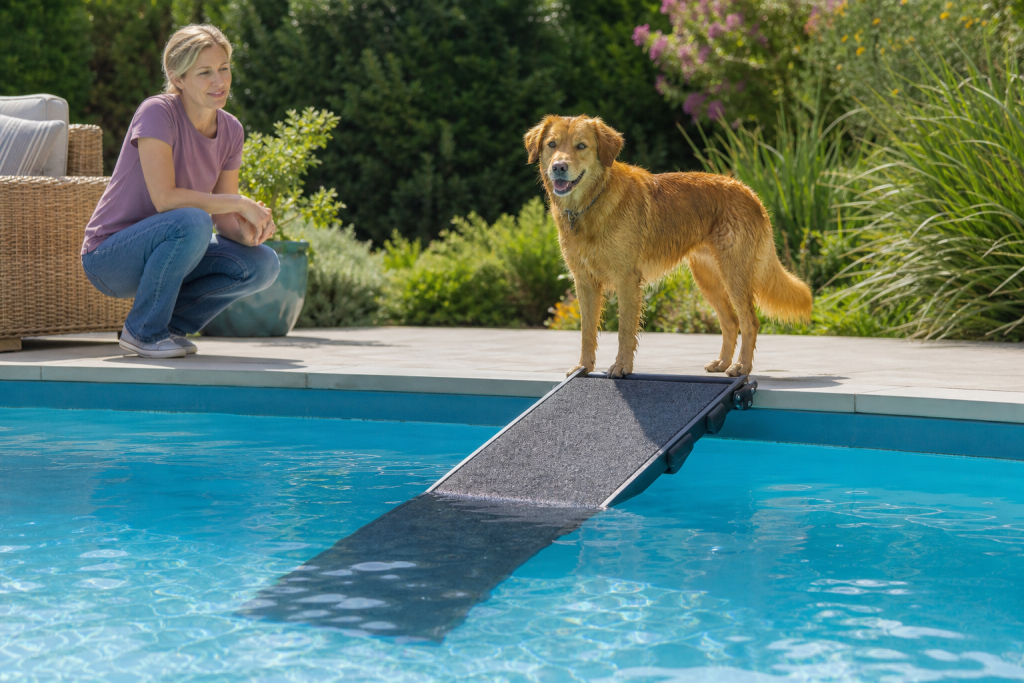
#dog pool ramp
#dog pool safety
#pet deals
#summer pet supplies
A pool ramp deal is only useful if your dog can actually find it, climb it and trust it before a stressful moment. The mistake is buying by discount or weight limit alone, then discovering the ramp shifts, the slope is too steep or your dog has never practiced using it. Treat the ramp as one part of pool safety, not a substitute for supervision.
Summer pool time is when these products start looking urgent. Backyard pools, vacation rentals and lake-house weekends can make a ramp seem like an easy checkout add-on, especially for older dogs, short-legged dogs, nervous swimmers and homes where pets can wander near water. Reliable pet-safety guidance keeps coming back to the same point: dogs need a clear exit, gradual water introduction and close supervision around pools.
Why This Matters Before You Buy
A dog pool ramp solves a very specific problem: it gives a dog a visible, repeatable way to leave the water. That is different from a couch ramp, a car ramp or a floating toy. A pool exit has to work when the surface is wet, the dog is tired and the angle from water to deck is awkward.
The ASPCA says pets should not be left unattended around pools and notes that pool covers can create their own hazard if a pet slips underneath. ASPCA Pet Health Insurance also points out that a small ramp can give panicked pets or wildlife a more accessible way out. The useful shopping takeaway is simple: the ramp must match your pool edge, not just your dog’s size.
The Checkout Checks That Matter Most
- Pool type: confirm whether the ramp is made for in-ground pools, above-ground pools, docks, boats or steps. A ramp that works on a deck edge may not anchor safely on a soft-sided pool.
- Real working load: check the listed weight limit, then leave a margin. A wet, moving dog puts different stress on a ramp than a still dog standing on dry flooring.
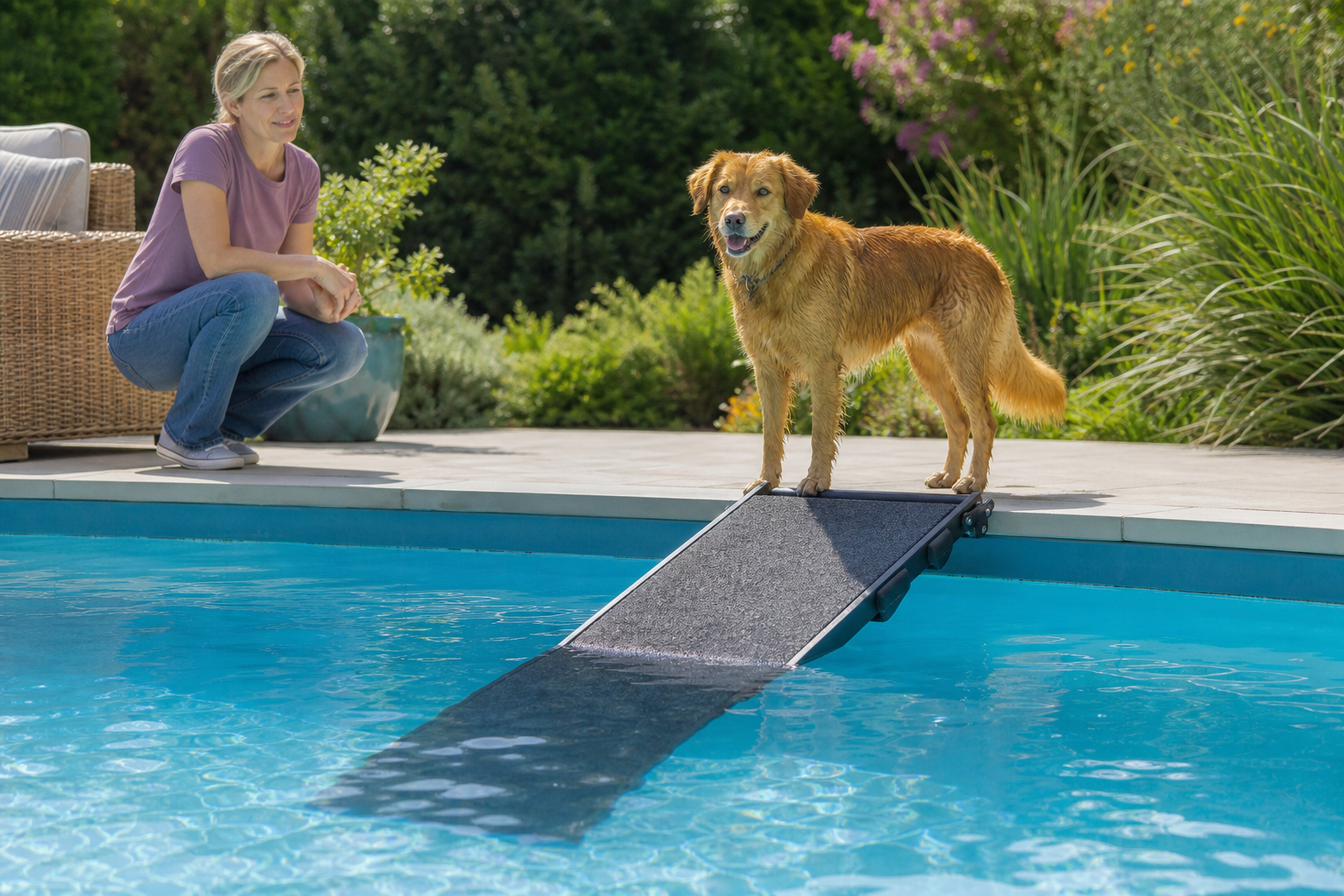
- Slope and height range: compare the ramp’s leg height or waterline range with your pool. If the angle is too steep, a nervous dog may refuse it.
- Traction: look for a wet-grip surface, raised texture or non-slip tread. Smooth plastic can become slick fast.
- Anchoring: read how the ramp is secured. Tie-downs, weighted bases or brackets should make sense for your pool edge without damaging liners or coping.
- Visibility: bright colors or a clear target area can help a dog learn where the exit is.
- Storage and weather: check whether the ramp can stay outside, whether hardware can corrode and whether replacement parts are sold.
The Deal Section: When a Cheap Ramp Gets Expensive
The first price is not the full cost if the ramp needs extra weights, a separate leg kit, anti-slip tape or return shipping. Before paying, open the sizing chart, installation instructions and return terms in separate tabs. If the listing only shows lifestyle photos but not dimensions, weight rating, anchoring method and pool compatibility, treat the discount as incomplete.
Marketplace listings can also mix indoor pet ramps with true pool ramps. A couch ramp may have carpet or felt traction that is not built for soaking, chlorine or algae. A dock ladder may be too narrow for a broad-chested dog. If you are comparing a branded ramp with a cheaper generic version, compare the usable width, water depth range, hardware, warranty and parts support, not just the headline weight limit.
What to Avoid
Do not assume a ramp makes an unsupervised pool safe. The ASPCA’s pool guidance still centers on supervision, keeping hazards away from pets and preventing access when you are not watching. A ramp can reduce risk, but it cannot guarantee that a tired, scared or disoriented dog will use it.
Also avoid buying a ramp the day before guests arrive and expecting your dog to understand it. Introduce the ramp calmly on land first, then near shallow water if appropriate. If your dog is fearful, elderly, recovering from injury or has breathing or mobility issues, ask your veterinarian before making swimming or pool access part of the plan.
A Better Buying Framework
For a small, confident swimmer in a shallow pool, a simple exit aid may be enough if it anchors securely and the dog is trained to use it. For a large dog, a senior dog or a pool with a high deck edge, prioritize stability, width and a gentle slope over the lowest price. For vacation homes, renters or seasonal setups, portability matters, but only after fit and anchoring are solved.
If your dog will be around boats, docks or deep water, a properly fitted dog life jacket may still be necessary. AKC and AAHA guidance both emphasize life jackets or flotation around boating and deeper water, especially where fatigue, currents or limited exits are possible. The ramp and the life jacket answer different problems, so one should not be used as an excuse to skip the other when conditions call for both.
Quick Answers
Is a pool ramp enough to keep my dog safe?
No. It is an exit aid. You still need supervision, controlled pool access, fresh drinking water, shade and a plan to keep pets away from the pool when nobody is watching.
Can I use a regular indoor dog ramp in a pool?
Usually that is a bad bet unless the manufacturer clearly says it is made for wet pool use. Indoor ramps may not have waterproof materials, submerged traction or safe anchoring.
What measurement should I check first?
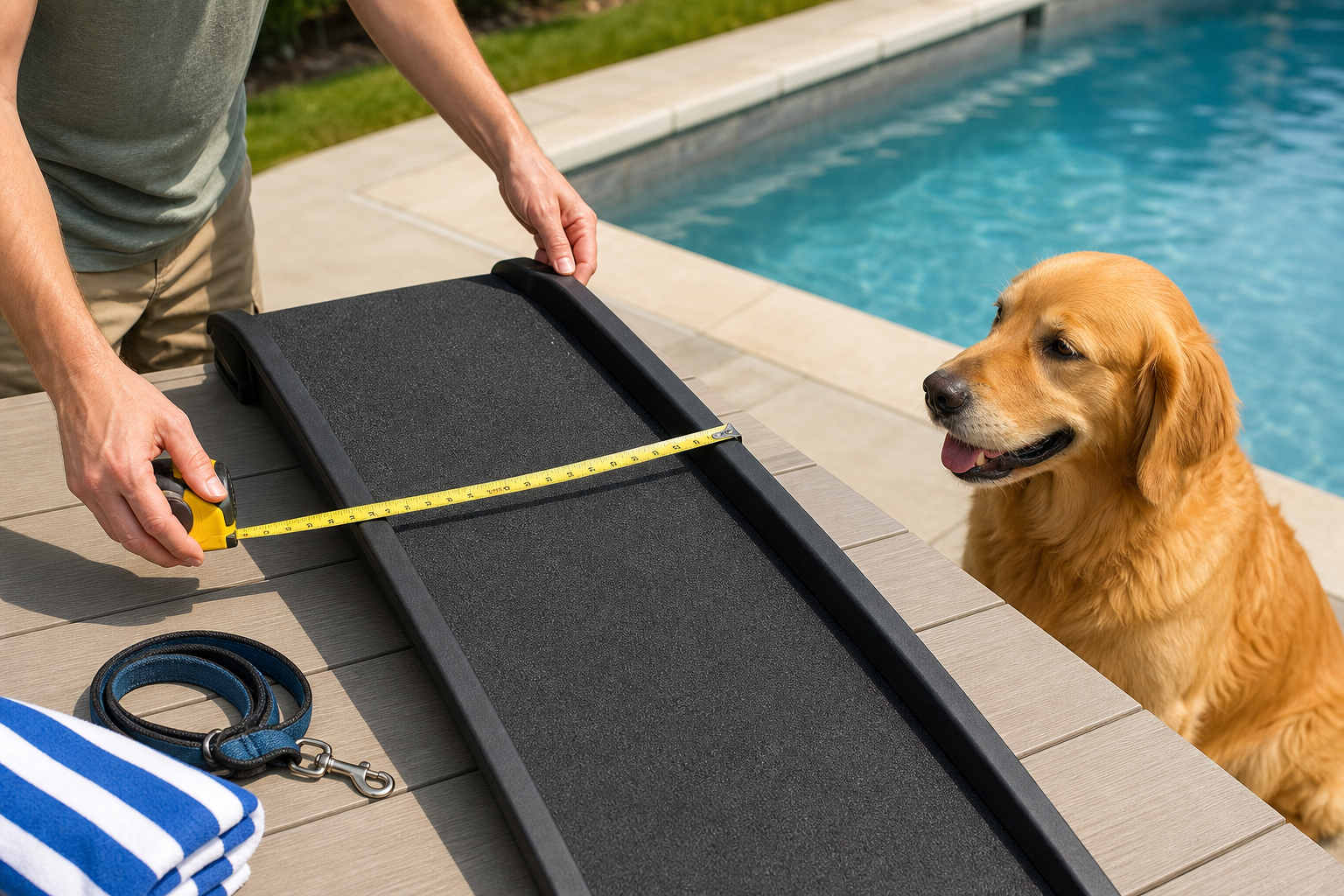
Start with your pool edge and waterline height, then your dog’s weight and body width. A ramp can be strong enough on paper and still fail if the slope or mounting point is wrong.
Should I buy the cheapest ramp if returns are free?
Only if the listing gives enough detail to verify fit first. Returning a bulky wet-use ramp can be inconvenient, and a failed setup may leave you without a working exit when summer plans start.
Sources
Last checked: 2026-07-02 04:35 Europe/Rome.
- ASPCA, Enjoy Your Summer Poolside with These Pet Safety Tips.
- ASPCA Pet Health Insurance, Water Safety for Pets.
- AAHA, Water Safety Tips for Dogs: Pools, Lakes, Beaches and Boats.
- American Kennel Club, How to Find the Right Life Jacket for Your Dog.
- Amazon Best Sellers, Dog Safety Ramps, used as a current shopping-demand signal, not as a recommendation.